Valves, regulators, flowmeters, hoses, welding and medical oxygen accessories for every gas cylinder we supply — sold by people who use them, in Khagaria, Bihar.
The Hardware Behind Every Safe Gas Cylinder
A gas cylinder is only as safe as the hardware attached to it. At Prem Gas Solutions in Khagaria we refill and rent industrial gases, medical oxygen and every cylinder that leaves our yard with a valve, regulator or connection that has to do its job under real pressure. Whether you run a welding shop near Munger, manage a nursing home in Begusarai, or need a home oxygen setup in Khagaria, this guide covers what each part does, which gas it suits, and how to keep it safe.
Gas-specific regulators, valves & connections
Welding, safety & medical oxygen accessories in stock
Expert matching for your gas type, cylinder & use
Bundled with refills, rentals & cylinder exchange
Not sure which part fits your cylinder? Tell us your gas and application.
All eleven hardware categories in one scannable catalog. Filter by category, tick the items you need to shortlist, compare them side by side, and request one combined quote on WhatsApp or in the form at the bottom of the page.
0 items shortlisted
Most Popular
Medical Oxygen
Medical Oxygen Accessories
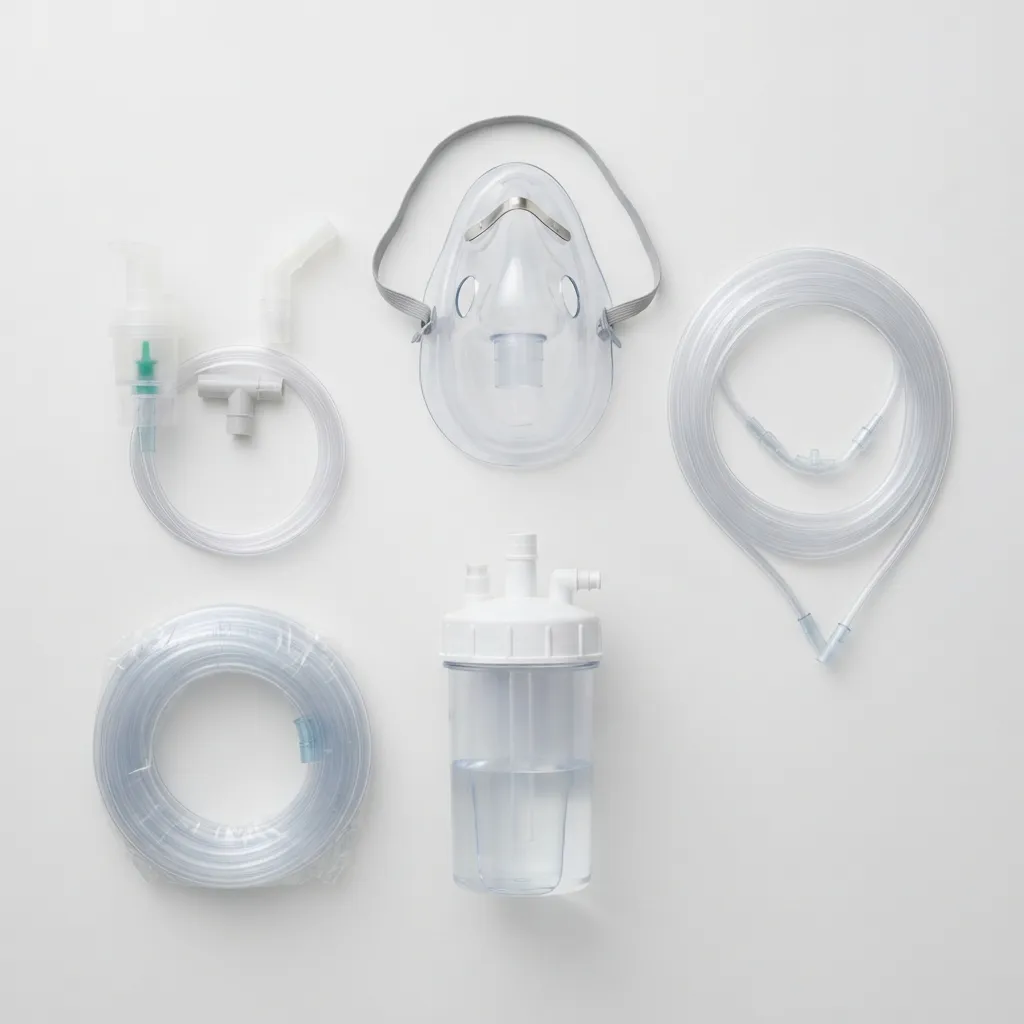
Masks, cannulas, humidifiers and nebulizer kits that deliver, humidify and medicate oxygen for home and hospital therapy.
MasksCannulasHumidifiersNebulizers
From ₹299Home & hospital oxygen
Valves
Cylinder Valves
The tap on top of the cylinder — the only thing standing between 150 kg/cm² of gas and you.
Brass bodyLH & RH threadsHigh-pressure
From ₹899Industrial & medical
Valve Keys
Cylinder Valve Keys
Detachable keys that open and close industrial cylinder valves with a firm, decisive turn.
Box-spannerT-handleMulti-head
From ₹199Common spindle sizes
Bestseller
Regulators
Pressure Regulators
Reduces high cylinder pressure to a steady working pressure your torch, machine or patient can use.
Single-stageDouble-stageGas-specific
From ₹1,499Body & delivery gauges
Flowmeters
Medical Oxygen Flowmeters
Sets oxygen flow in litres per minute — the number a doctor, nurse or caregiver actually reads and adjusts.
0–15 LPMHumidifierBarb outlet
From ₹1,299Paediatric & adult
Trolleys
Cylinder Trolleys
The cheapest safety item you'll buy — it protects the valve, your workers' backs and anyone near a falling bottle.
SingleDoubleHeavy-duty
From ₹2,499With safety chain
Hoses
Gas Hose Pipes
Colour-coded, pressure-rated hoses per IS 3933 — never interchange the oxygen and fuel lines.
IS 3933Oxygen & LPGTwin hose
From ₹349Cut to length, brass ends
Arrestors
Flashback Arrestors
Stops a flashback flame travelling back up the hose before it reaches the regulator and cylinder.
Non-return valveFlame trapMatched pair
From ₹899Per line — buy as a set
Welding
Welding Equipment
Cutting and welding torches, nozzles, tips and mixers — the business end of your whole gas setup.
TorchesNozzlesTips & mixers
From ₹1,499Matched as a set
Auditor Essential
Safety
Gas Cylinder Safety Equipment
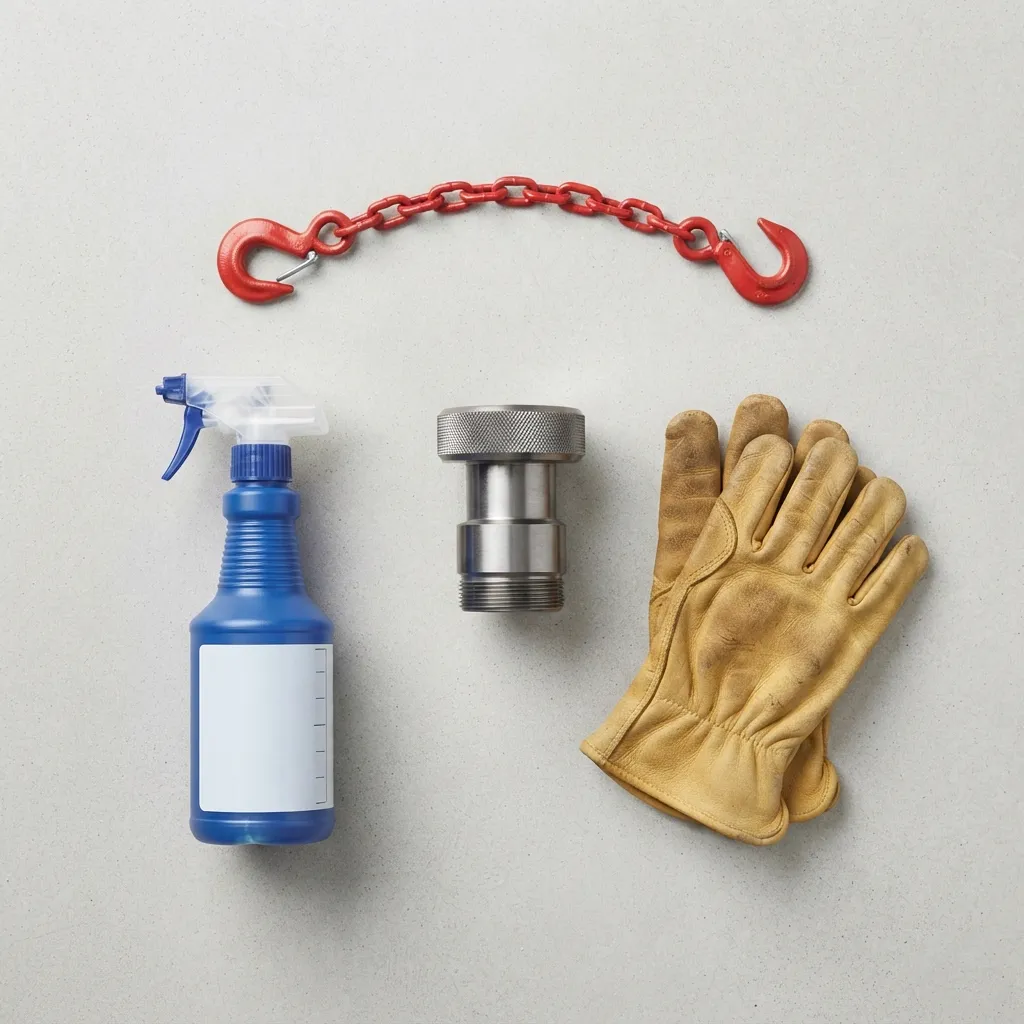
Inexpensive items that prevent the expensive accidents — caps, chains, leak detection solution and stands.
CapsChains & strapsLeak solutionStands
From ₹249Caps, chains, gloves, stands
Spares
Spare Parts & Fittings
O-rings, washers, adaptors, Teflon tape and gauges that stop a slow leak that wastes gas and money.
O-ringsWashersTeflon tapeGauges
From ₹99Small parts, big savings
Product 01Most Popular
Medical Oxygen Accessories
Medical oxygen is only useful if it reaches the patient in the right form. These accessories deliver it, humidify it and — in the case of nebulizers — turn it into medication mist. We supply the full chain used with the medical oxygen cylinders we refill.
Oxygen Masks
A mask fits over the nose and mouth and delivers oxygen at higher flow. Simple masks suit moderate needs; non-rebreather masks (with a reservoir bag) deliver higher concentrations for more serious cases. Sizes are available for adults and children.
Nasal Cannula
Two soft prongs sit in the nostrils and deliver low-flow oxygen (typically 1–6 LPM). This is the standard for home oxygen therapy because it allows the patient to eat, talk and sleep comfortably. We stock adult and paediatric sizes with soft, latex-free tubing.
Humidifier Bottle
Attaches to the flowmeter outlet and bubbles oxygen through water to add moisture. Above about 4 LPM, dry oxygen can irritate the nose and throat, so the humidifier becomes essential for continuous therapy. Keep it upright and clean it daily.
Oxygen Tubing
The flexible tube connecting the source to the cannula or mask. Lengths vary from about 2 m bedside to 15 m for room-to-patient runs. Check it regularly for kinks, hardening or cracks, and replace it when it stiffens.
Nebulizer Kit
A nebulizer turns liquid medicine into a fine mist for inhalation. When driven by oxygen, it needs a flow of about 6–8 LPM. Kits include the medication cup, mask and connecting tube — all replaceable parts we keep in stock.
Medical oxygen accessories are used wherever oxygen therapy happens: hospitals, nursing homes and clinics, ambulance and trolley setups, and — most often in this region — home oxygen therapy, where a family member runs the whole chain from cylinder to patient.
Nebulizer kits are used in the same settings for asthma, bronchitis and other respiratory treatment. All of these consumables pair with the medical oxygen we refill in Khagaria and the surrounding districts.
Why Quality Matters Here
Medical accessories are single-use or limited-life items. Sterile, sealed, correctly sized products protect the patient; cheap masks crack, tubing hardens, and cannulas irritate. We sell clean, sealed, patient-ready accessories and show you how to clean and when to replace each one.
Humidifier bottle — keep upright, fill only to the marked line, empty and rinse daily, wash weekly with mild soap.
Cannula & tubing — replace every 2–4 weeks of continuous use, or sooner if stiff, sticky or cracked.
Masks — wipe between patients and discard single-use items after the recommended period.
Regulator & flowmeter — keep clean and dry; service when the float sticks or the gauge drifts.
Tell us who it is for — an adult or a child, and the prescribed flow if you have it. We size the mask, cannula and tubing correctly, confirm the flow range, and hand you only sealed, patient-ready items.
For nebulizer use, confirm the driving flow with your doctor before purchase; we set up and demonstrate the full assembly with your cylinder before you leave.
1 / 11
Product 02
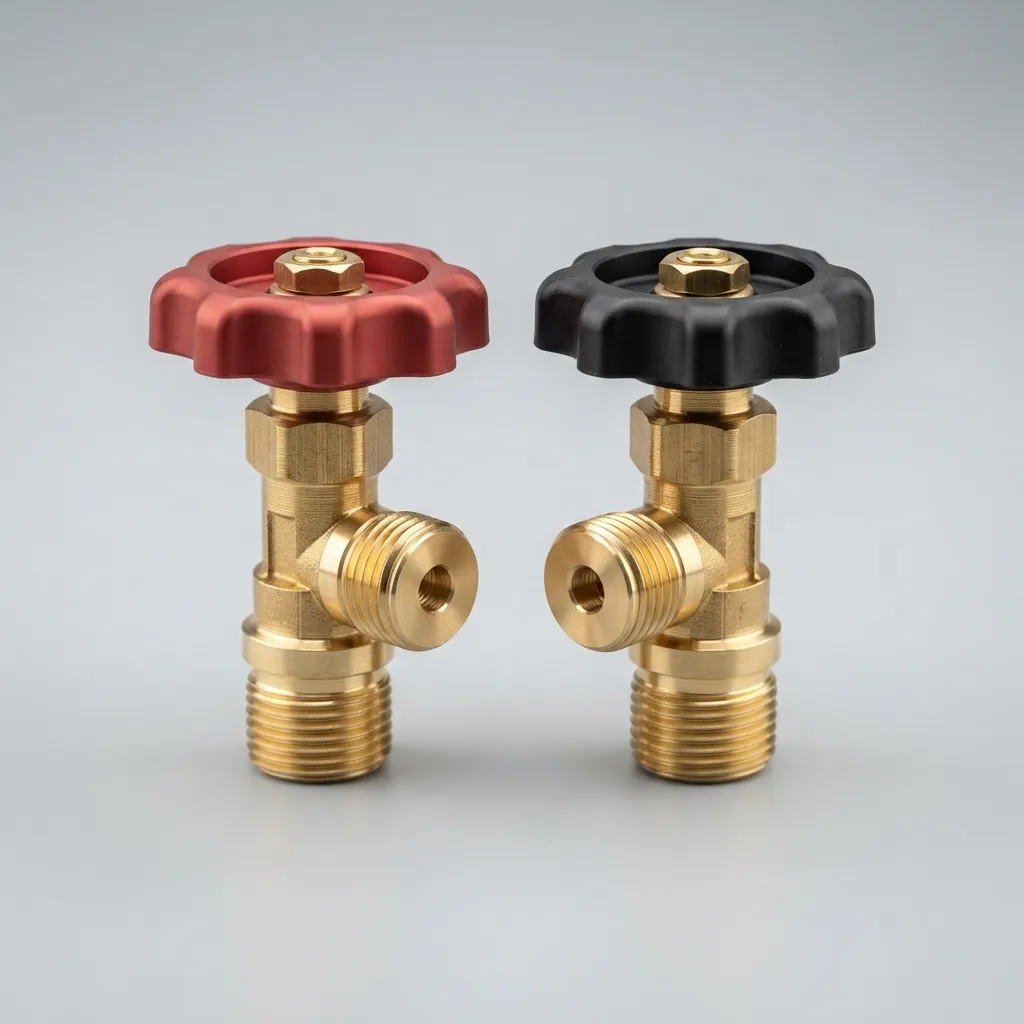
Cylinder Valves
The tap on top of the cylinder. It seals the gas inside at full storage pressure and gives you a controlled opening when you need it — in plain terms, it is the only thing standing between 150 kg/cm² of gas and you.
How It Works
Turning the handwheel opens a tapered plug or stem seat inside the valve body. When closed, a soft sealing seat presses against the brass bore and stops the gas. The outlet connection — usually a threaded port — is where your regulator or flowmeter attaches. Most industrial valves also carry a safety relief mechanism so pressure cannot build beyond the cylinder's safe limit.
Fuel gas valves (acetylene, LPG) use left-hand threads so a fuel regulator physically cannot be screwed onto an oxygen cylinder. Oxygen, nitrogen and argon valves use right-hand threads, commonly 5/8" BSP in India. This is a deliberate safety design — never force a connection. If it will not thread easily, it is the wrong valve or the wrong regulator.
Cylinder valves are fitted to every cylinder we fill — industrial oxygen, medical oxygen, nitrogen, argon, CO₂ and fuel gases — and they see the harshest duty in fabrication and welding shops, gas plants, hospitals and multi-cylinder manifolds. The valve type must match both the gas and the cylinder neck thread.
Common Issues & Replacement
Valve leaking at the outlet or spindle — worn seat or seal; replace the valve or seat kit rather than "tightening harder".
Handwheel hard to turn — dirt or a bent spindle; clean first, replace if still stiff.
Cracked or corroded body — do not use a damaged valve on a filled cylinder; get it replaced at refill time.
When to replace — after any fall, if the outlet is damaged, or when a valve fails a bubble test. Valves last many years if the cap is always fitted during transport.
Bring your old valve or a photo of the cylinder neck and regulator. We match the thread, gas type and pressure rating, then check the complete assembly during your next refill. Never buy a used valve of unknown history for a filled cylinder.
2 / 11
Product 03
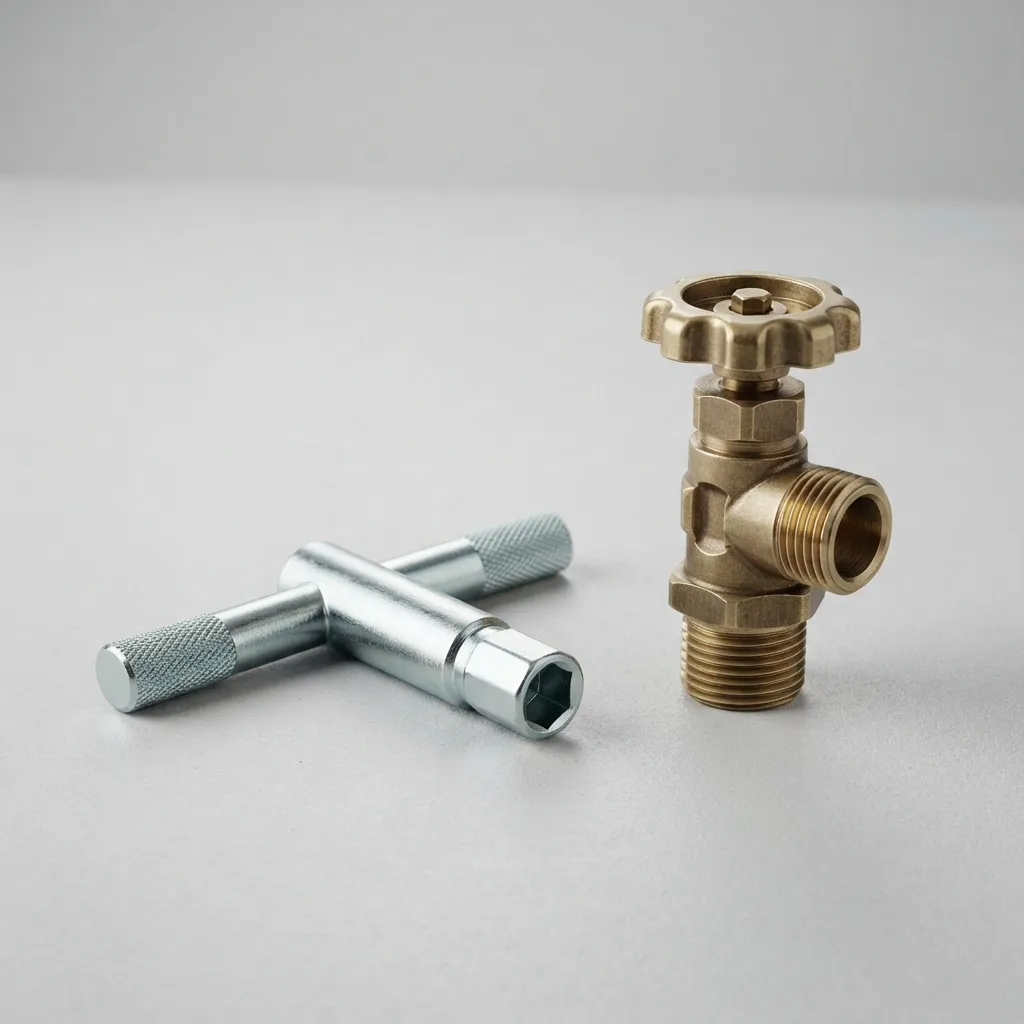
Cylinder Valve Keys
Many industrial cylinders do not have a fixed handwheel — the valve is opened with a detachable key. A valve key grips the square or six-point spindle on top of the valve and gives you the leverage to open and close it fully.
Why It Is Required
Opening a cylinder valve needs a firm, decisive turn, and closing it needs to be positive. A proper key does this safely. Using pliers, pipe wrenches or a piece of tube instead damages the spindle, strips the flats, and leaves you unable to shut the cylinder in an emergency.
Sizes & Types
Box-spanner / socket keys — the standard for most industrial cylinders; single or double-ended in common spindle sizes.
T-handle keys — more leverage, easier to hold; common on larger oxygen, nitrogen and argon cylinders.
Multi-head keys — one key with several socket sizes; useful for workshops running different cylinder brands.
Valve keys are used wherever cylinders run without a handwheel: industrial welding and fabrication shops, gas plants, farms, and cylinders stored on trolleys or in bays. Workshops running several cylinder brands keep a multi-head key so one key fits every bottle on site.
Safety Precautions
Open the valve slowly and stand to the side, away from the outlet. Open fully, then back off a quarter turn so the valve can seal properly. Keep the key chained to the trolley or in a fixed place — a missing key is a common reason a cylinder stays open overnight, which empties the bottle.
Maintenance
A steel key needs almost none. Keep it clean and check that the socket is not worn or rounded. If the key slips, stop using it immediately — it is cheaper than a damaged valve spindle.
We keep the common sizes in stock and can match a key to your valve by eye in a minute. Bring the valve spindle or a photo if you are buying for a cylinder that is not on site.
3 / 11
Product 04
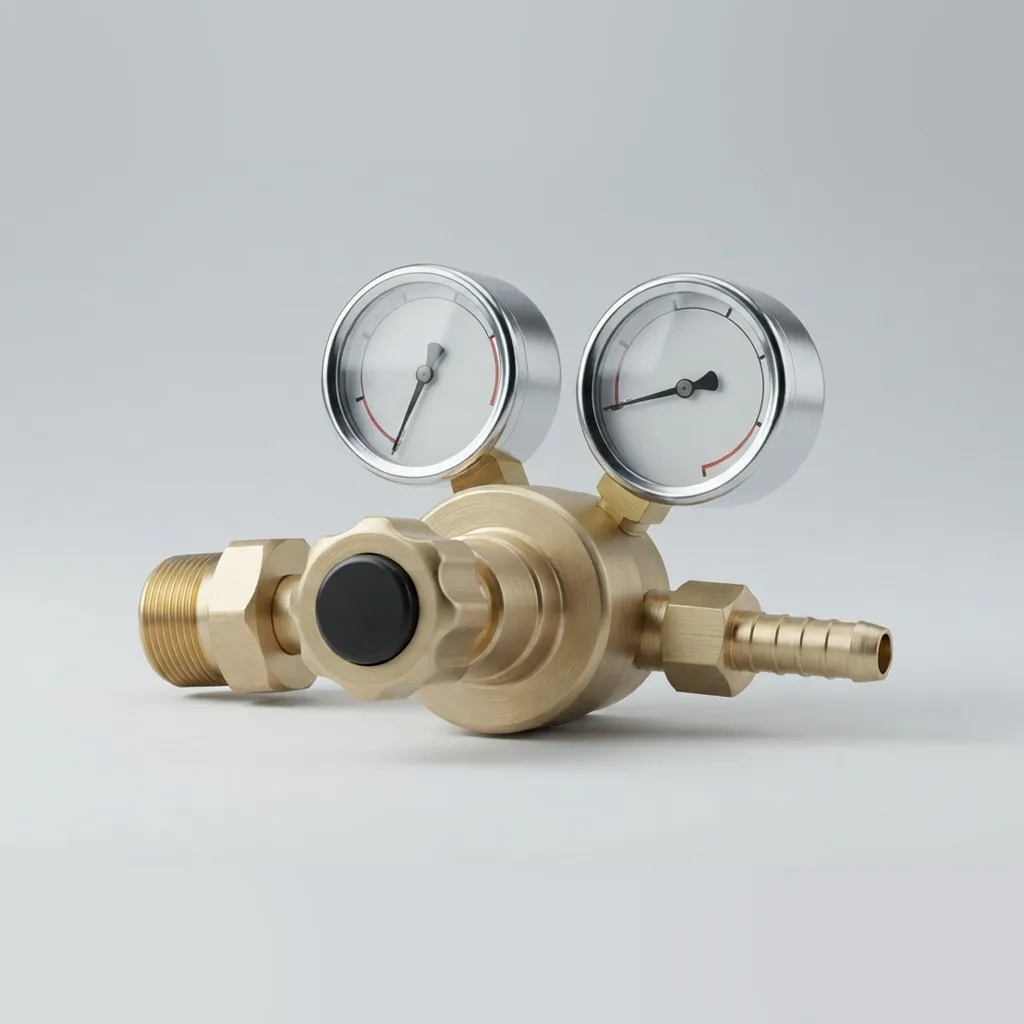
Pressure Regulators
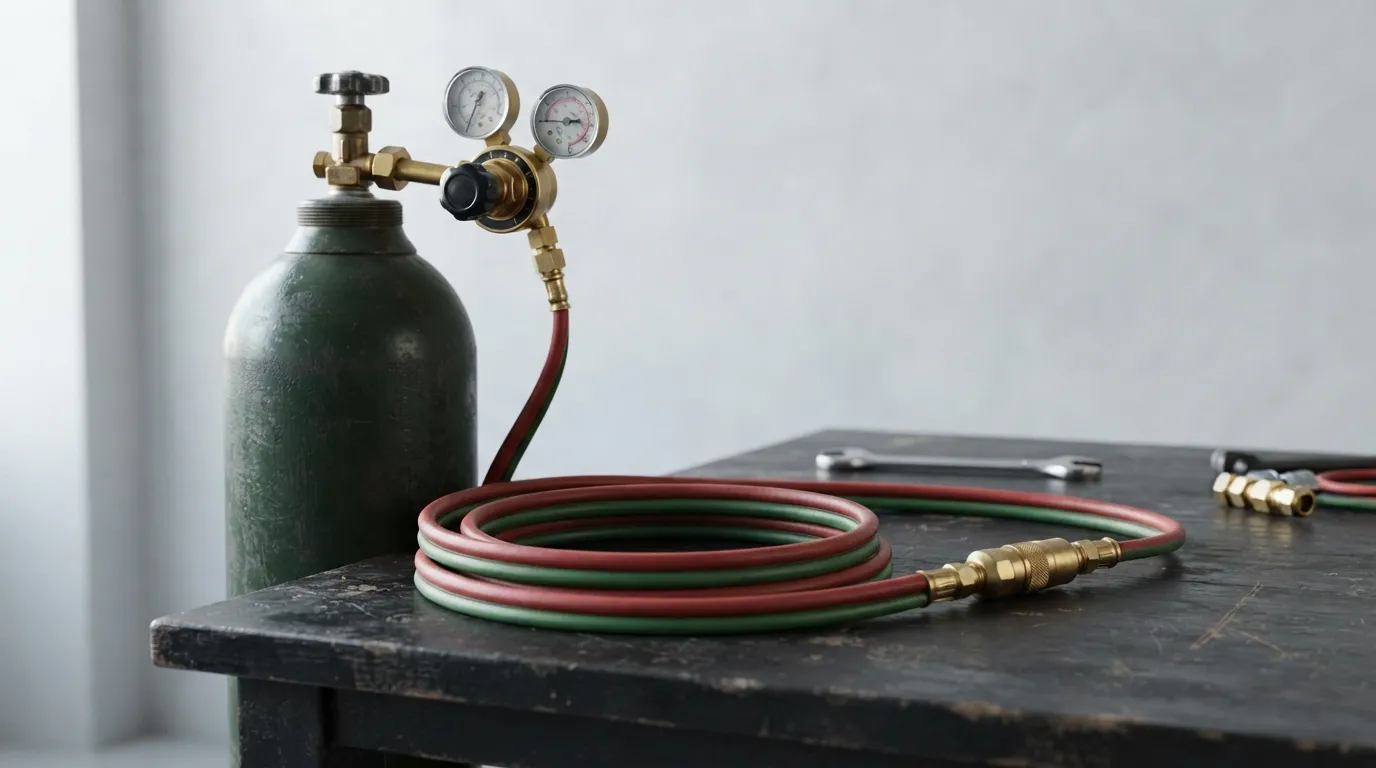
The single most important piece of hardware in most gas setups. A regulator reduces the high cylinder pressure down to a working pressure your torch, machine or patient can use — and keeps that pressure steady as the cylinder empties.
How It Works
Inside the regulator, a spring-loaded diaphragm balances against the gas pressure. Turning the adjusting knob compresses the spring, opening a seat that admits gas from the cylinder until the downstream pressure matches the spring force. The body gauge shows cylinder pressure; the delivery gauge shows the pressure you have set.
Single-Stage vs Double-Stage
Feature
Single-Stage
Double-Stage
Pressure reduction
One step
Two steps
Outlet stability as cylinder empties
Creeps up slowly
Held almost constant
Best for
Cutting, general workshop use
Welding, precision gas, medical delivery
Cost
Lower
Higher
Gas-Specific Regulators
Oxygen regulator — for cutting and welding; delivery range commonly 0–10 bar; right-hand connection, oxygen-clean internals.
Nitrogen & argon regulators — for shielding gas and pressurising; argon often uses a calibrated flow tube for TIG/MIG.
Medical oxygen regulator — fixed low delivery pressure (around 3.5 bar) with a flowmeter; built for continuous patient use.
CO₂ regulator — handles liquefied gas and the pressure rise from a warm bottle; often fitted with a heater in cooler regions.
Maintenance & Leak Prevention
Bubble-test every joint each time you change a cylinder. If the delivery gauge drifts when the flame is off, the seat is worn. Never oil or grease a regulator — oil on oxygen contacts can ignite under pressure. Fit the protective cap when not in use, and have high-use regulators serviced when readings become unreliable.
Tell us the gas, the cylinder outlet, and the delivery pressure or flow your work needs. A regulator for the wrong gas is dangerous, and a regulator with too large a delivery range is hard to set precisely. We match all three before you buy.
4 / 11
Product 05
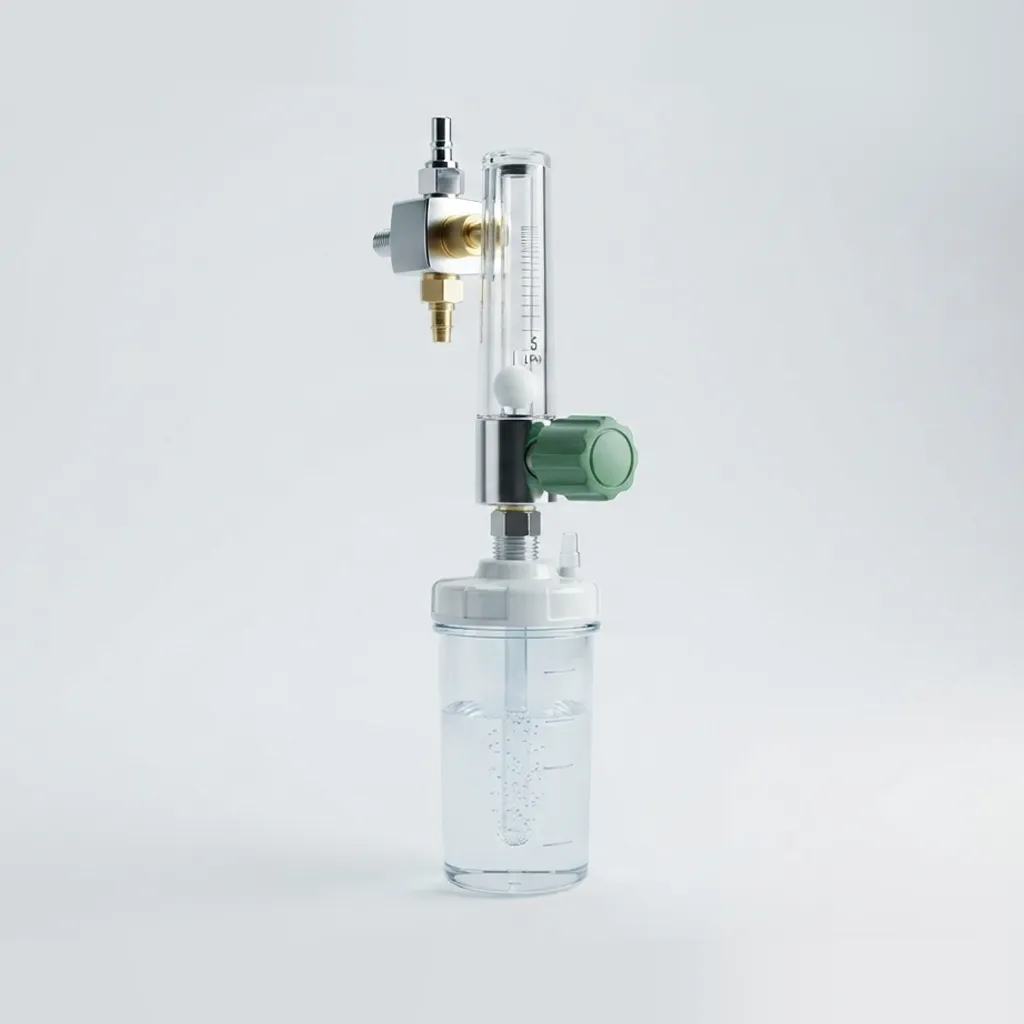
Medical Oxygen Flowmeters
Where a regulator sets pressure, a flowmeter sets flow — the number a doctor, nurse or family caregiver actually reads and adjusts, measured in litres per minute (LPM).
How It Works
Oxygen passes through a vertical clear tube containing a float ball. The higher the flow, the higher the ball rises against a printed LPM scale. Turning the control knob adjusts the opening. The outlet feeds a humidifier bottle (for flows above a few LPM), which bubbles the oxygen through water to add moisture before it reaches the patient.
Hospitals and nursing homes use flowmeters on cylinders during oxygen shortage, on trolley setups, and for emergency rooms and ambulances. Units are typically connected to the medical gas pipeline with a DISS or pin-index connection — we stock the adaptors needed to fit Indian pipeline outlets.
Home Oxygen Use
For home therapy the flowmeter usually sits on the cylinder with a humidifier bottle, delivering 1–6 LPM through a nasal cannula. The bottle must be kept upright, filled only to the marked line with clean/sterile water, and emptied and rinsed daily to stop bacterial growth.
Set flow only with the cannula or mask connected, keep the bottle upright, and never run the flow "wide open" into a closed mask. If the float ball sticks, the tube needs cleaning or replacement. We demonstrate the full assembly before you take a setup home.
Bring the prescription or tell us who is using it, and we will match the flow range and humidifier to the patient. For hospital pipeline work we supply the right DISS or pin-index adaptor so the unit connects to your Indian gas outlets.
5 / 11
Product 06
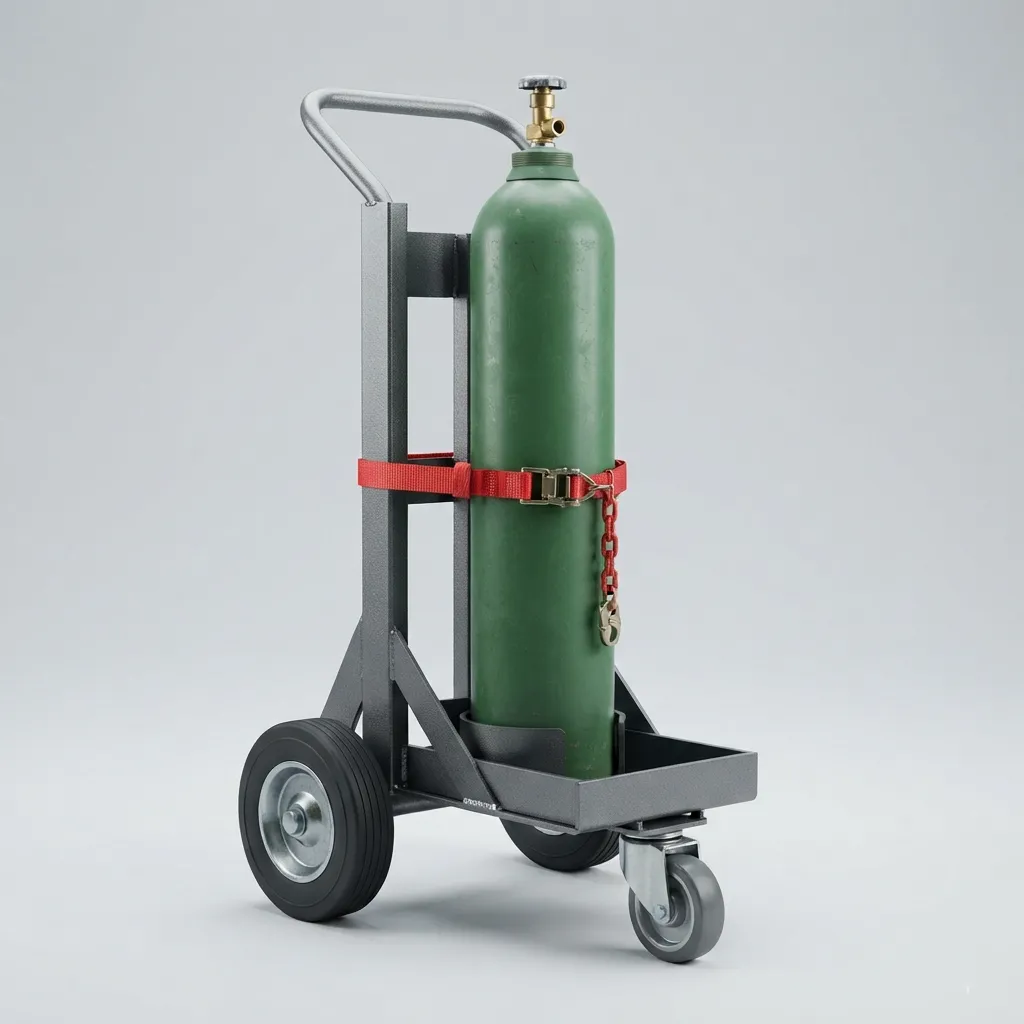
Cylinder Trolleys
One of the cheapest pieces of safety equipment you will buy. A trolley protects three things: the cylinder valve, your workers' backs, and anyone standing near a falling bottle.
Why It Is Required
A full 47L cylinder can weigh close to 60–70 kg. Lifting one by hand causes injuries and drops. When a cylinder falls and the valve snaps off, it becomes a rocket — the single most dangerous accident in gas handling. A trolley with a chain strap removes that risk.
Variants We Stock
Single CylinderDouble CylinderHeavy-DutyWeld-On StrapRubber Wheels
Single-cylinder trolley — for workshops and small setups; one bottle, two rear wheels and a front caster.
Double-cylinder trolley — holds two bottles, common for oxy-acetylene pairs so the torch stays connected while moving.
Heavy-duty trolley — stronger frame and larger wheels for daily workshop movement and rough floors.
Trolleys are used in welding and fabrication shops for daily bottle movement, in oxy-acetylene pairs so the torch stays connected while moving, in hospitals moving oxygen cylinders between wards, and for storing cylinders in bays and corridors. Heavy-duty models suit rough workshop floors and continuous use.
How to Use Safely
Always secure the chain strap around the cylinder before moving. Tilt and roll, never drag. Store cylinders on a stable stand or strapped to a trolley even when not moving. Check the strap and welds regularly — a torn strap is as dangerous as none.
Match the trolley to your heaviest regular cylinder and to the width of your doorways and lift. We keep single, double and heavy-duty options in stock and will size one for your gas pair.
6 / 11
Product 07
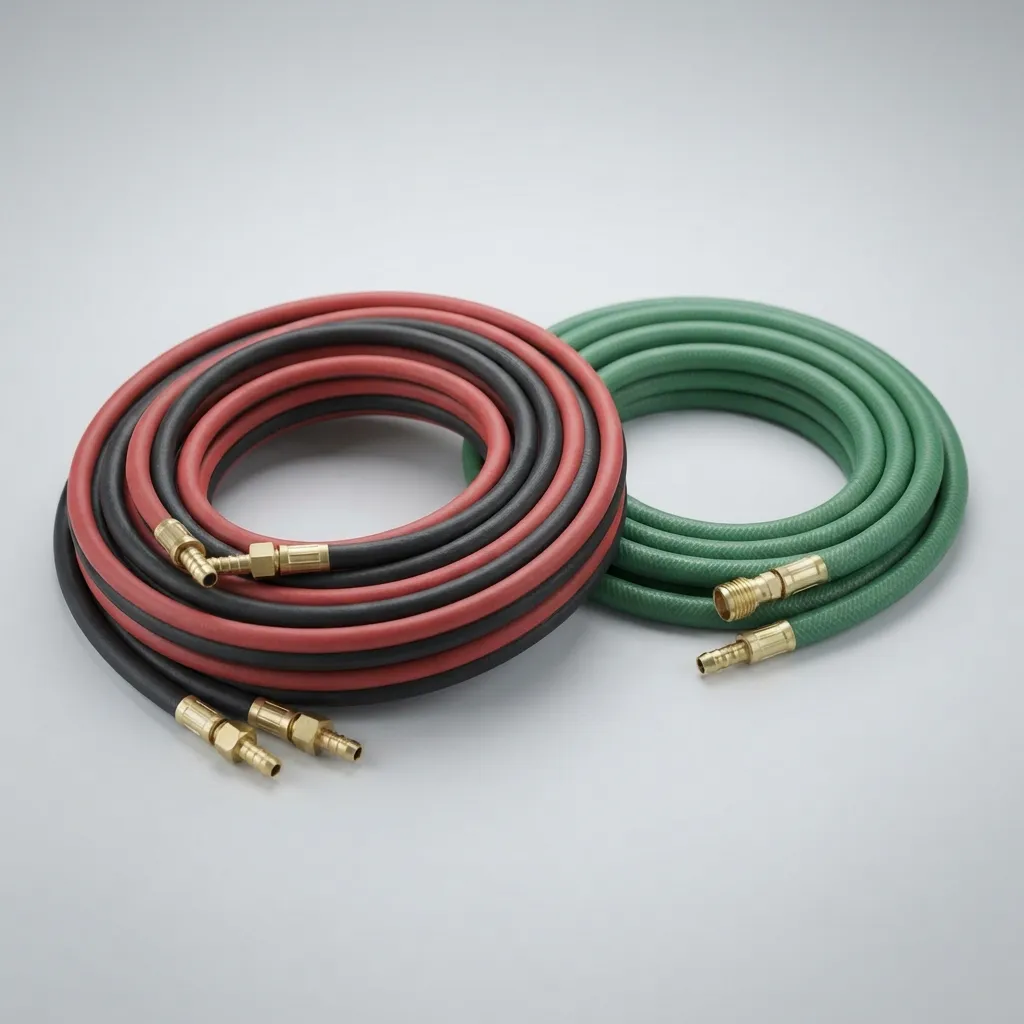
Gas Hose Pipes
Hose failure is the most common cause of workshop gas leaks — and most hose failures come from age, sunlight, or the wrong hose for the gas.
What to Look for in a Gas Hose
A gas hose carries gas from the regulator to the torch or appliance. It has to stay flexible, resist the gas it carries, and hold pressure without swelling or cracking.
Material & Pressure Rating
Welding hoses are rubber or rubber-synthetic compounds with a fabric reinforcement, colour-coded per IS 3933: the oxygen line and the fuel gas line are distinguished so they can never be swapped by accident. Typical working pressure is around 10 bar with a test pressure roughly double that. The rating is printed on the hose — always read it before buying.
Oxygen HoseLPG HoseTwin Welding HoseIndustrial Gas HoseBrass Connectors
Why One Hose Per Gas
Oxygen hoses and fuel hoses are different compounds. Oxygen attacks rubber that is not oxygen-rated, and fuel gas absorbed into a hose can ignite later in an oxygen-rich line. Never interchange them, and never use PVC water pipe, garden hose or rubber tubing as a substitute — it will fail.
Maintenance & Replacement
Replace when the outer cover cracks, blisters, or becomes hard.
Replace immediately if you find a cut, bulge or a flat spot from being pinched.
Coil loosely; never hang a hose on a sharp hook or roll the trolley over it.
Fitting brass ends must be crimped or clamped properly — a hand-tight connector is a leak.
Carry your old hose end or measure the fitting size. We supply hoses cut to your required length with the correct brass connectors fitted and tested, so you replace the whole weak link, not just part of it.
7 / 11
Product 08
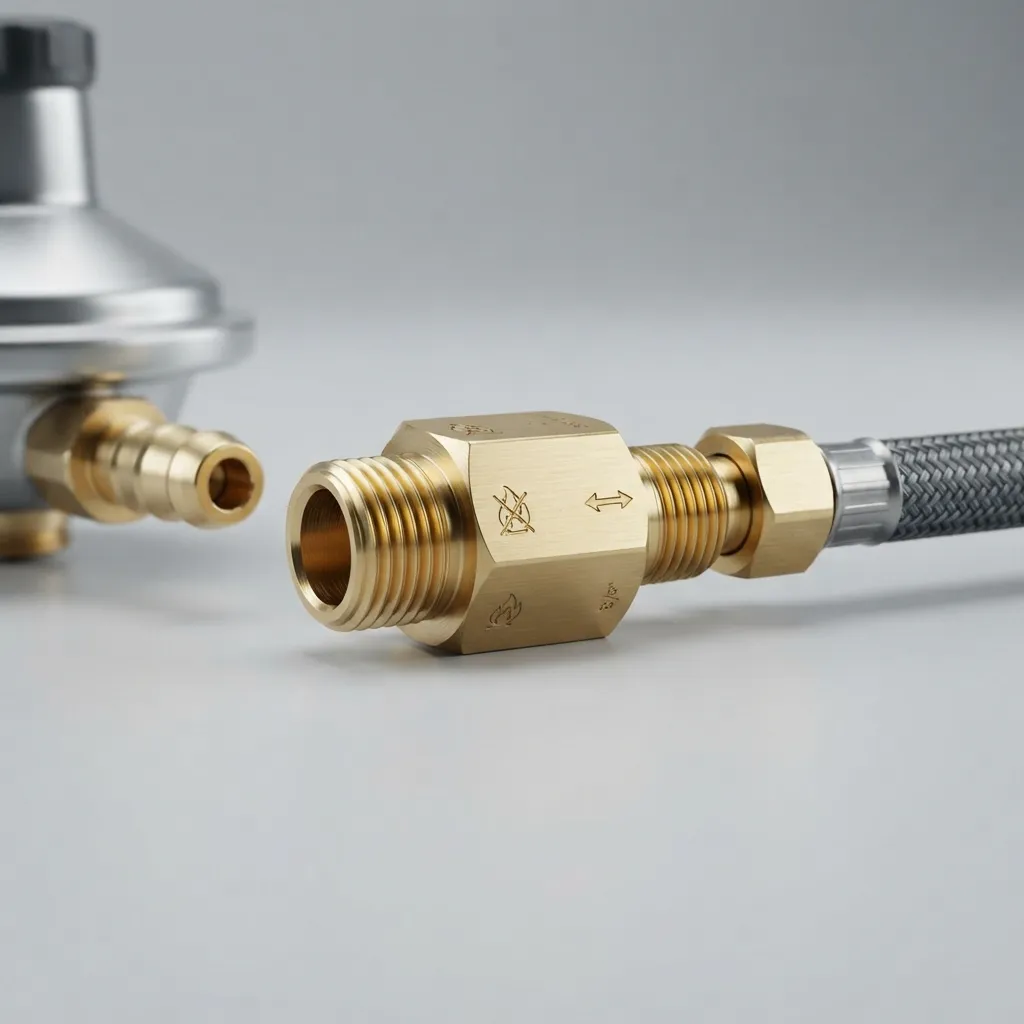
Flashback Arrestors
A flashback is when the flame from a welding or cutting torch travels back up the hose. A flashback arrestor is the device that stops it before it reaches the regulator and the cylinder.
Purpose: Stopping the Flame Before It Reaches the Cylinder
A flashback is when the flame from a welding or cutting torch travels back up the hose — usually because the torch nozzle was blocked, the tip was wrong, or gas was ignited while the flame was unstable. In an instant it becomes a fast-moving flame travelling at high speed back toward the regulator and the cylinder. A flashback arrestor is the device that stops it.
How It Works
A flashback arrestor contains two protections: a non-return valve that blocks reverse gas flow, and a flame trap — a porous sintered element that extinguishes the flame front while allowing gas to pass. Some units also include a pressure cut-off that shuts the flow if a flashback occurs.
Where They Fit
Oxygen line — between the oxygen regulator and the oxygen hose.
Fuel gas line — between the fuel regulator and the fuel hose (this is the line where the flame actually travels).
Both lines need one. Fitting it only on the fuel line is the most common mistake.
Safety & Audit
Most industrial safety audits and gas supplier contracts in India now require flashback arrestors on oxy-fuel sets. They cost far less than one damaged regulator, and they protect the most expensive asset — the cylinder itself. We stock units for both lines and fit them as a set so nothing is missed.
Maintenance
Arrestors are low-maintenance but not fit-and-forget. If a unit has actually stopped a flashback, replace it — the sintered element may be spent. Periodically check for leaks and keep them clear of oil and dust.
Buy them as a matched pair — one for the oxygen line and one for the fuel line — and fit each between its regulator and hose. Tell us your gas pair and connection sizes and we will supply the exact units.
8 / 11
Product 09
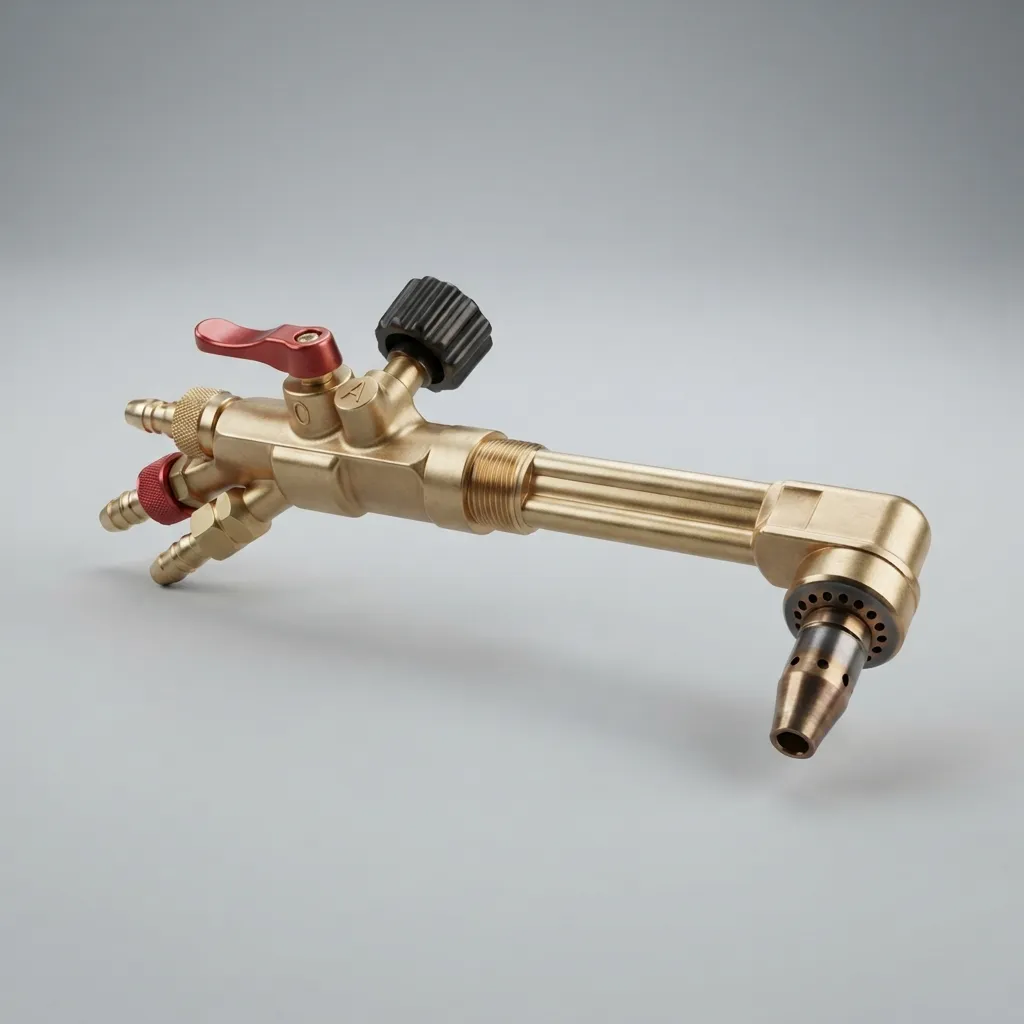
Welding Equipment — Torches, Nozzles & Tips
The tools at the business end. Your regulator, hose and arrestors bring the gas to the torch; the torch turns it into the flame or cutting jet you actually work with.
Gas Cutting Torch
An oxy-fuel cutting torch mixes oxygen and fuel gas to preheat the steel, then releases a high-pressure oxygen jet that oxidises and blows the metal away. It needs three things set correctly: preheat oxygen, fuel, and the cutting oxygen — each has its own control on the torch. Used with acetylene (DA gas) or LPG.
Welding Torch
Used for joining metal with or without filler rod. The flame is adjusted by balancing fuel and oxygen to get the correct flame type for the metal — neutral, oxidising or carburising. The torch body stays cool enough to hold because of the gas flow through it.
Nozzles, Tips & Mixers
Cutting tips — sized by the thickness of steel they cut; a too-large tip wastes gas, a too-small tip gives ragged cuts.
Welding nozzles — sized by nozzle number and by the metal thickness; each job has a correct size.
Heating nozzles — wide-flame nozzles for preheating and shrink-fitting heavy work.
Mixers — the internal element that mixes fuel and oxygen; must match the torch body and gas.
These are matched to the job and to each other; mismatched parts are the usual cause of poor cuts and backfiring.
Care of Nozzles & Tips
Keep tip orifices clean with the correct sized cleaner; never use steel wire that enlarges the hole. Spatter on the tip face blocks the ports and causes backfiring — exactly the condition that leads to flashbacks. Cool the tip in water between cuts, not in the air.
Tell us the thickest and thinnest material you cut, and which fuel gas you use. We will match the torch body, tip sizes and mixer as a complete set, so you are not mixing mismatched parts.
9 / 11
Product 10
Gas Cylinder Safety Equipment
The inexpensive items that prevent the expensive accidents — a missing cap, a loose chain, a leak nobody checked. These items cost little and are checked by every auditor.
A protective cap or collar covers the valve during transport and storage. If a cylinder falls, the cap — not the valve — takes the impact. A valve snapped off by a fall is the classic "cylinder becomes a missile" accident. The cap must be fitted whenever the cylinder is moved, and a valve guard protects the outlet on cylinders kept in place.
This equipment is used wherever cylinders live or move: workshops and fabrication floors, gas storage bays, hospitals, farms and home setups. Caps protect the valve in transit, chains and wall restraints hold cylinders in storage, and leak detection solution is used at every joint every time a cylinder is changed.
Safety Chains & Straps
Cylinders must be secured against falling in storage and on trolleys. We stock chains with hooks for trolleys and wall-mounted restraints for storage bays. A cylinder standing loose in a workshop is an accident waiting for a bump.
Leak Detection Solution
A simple bubble-testing liquid (soapy water in its basic form) is the fastest way to find a leak. Apply it to every joint with the gas open; bubbles mean a leak. We also stock proper leak-detection sprays that are more reliable than household soap and safe on oxygen fittings — never use oil-based sprays on gas threads.
Protective Gloves & Cylinder Stands
Leather or heat-resistant gloves protect hands from hot metal, sharp edges and gas handling. Cylinder stands keep upright bottles stable where trolleys cannot go, such as against a wall in a storage room or beside a machine.
Match the cap and stand to your cylinder size and valve type — a cap that does not fit is decoration. Ask us for the right fit for 10L, 40L and 47L cylinders, and for a storage layout that keeps the chain and stand system consistent.
10 / 11
Product 11
Spare Parts & Small Fittings
A slow leak at a joint wastes gas every single day. The cause is usually a worn O-ring, a hardened washer, or a missing seal — a part that costs a few rupees but is often ignored because nobody keeps it in stock. We do.
O-rings seal the joint between the cylinder valve and the regulator. They are gas- and pressure-specific — an O-ring for water will not do. When your connection starts to hiss, replace the O-ring before you tighten harder and crush the thread.
Adaptors, Nipples & Connectors
These convert between thread types so a regulator fits a cylinder valve, or a hose fits a regulator. Left-hand and right-hand threads must never be mixed — we will tell you instantly whether an adaptor is safe for your gas.
Hose Clamps & Pressure Gauges
Clamps hold hose ends firmly onto brass nipples. Spare pressure gauges replace cracked or inaccurate ones on regulators and manifolds — a gauge that reads wrong is worse than no gauge, because you trust it.
Teflon Tape & Manifold Accessories
Teflon (PTFE) tape seals tapered threads on adaptors and fittings. It must be applied correctly — wrapping direction, number of turns — and used only on tapered threads, never on compression or DISS-type connections. Manifold accessories let you join multiple cylinders into one supply line, common in hospitals and larger workshops.
Never mix left-hand and right-hand threads — the connection must be verified, not forced. Use Teflon tape only on tapered threads, and never on compression or DISS-type connections. And treat a gauge that reads wrong as worse than no gauge: you will trust the number it shows.
Bring the old part or the cylinder/regulator brand. Many fittings look alike and differ by a millimetre. We match O-rings and threads by size so the replacement fits first time — and we often have the exact part on the shelf.
The hardware above is used in every trade that touches a gas cylinder. We regularly supply these customers in Khagaria, Begusarai, Munger, Saharsa, Naugachia and the surrounding districts:
Oxy-acetylene cutting sets, trolleys, valves and gas supplies for panel work and frame repairs.
Hospitals, Nursing Homes & Clinics
Medical regulators, flowmeters, humidifiers, masks, cannulas and manifold fittings for patient oxygen.
Home Oxygen Therapy
Complete home setups — cylinder, regulator, flowmeter, humidifier, cannula and tubing, with demonstration.
Agriculture & Poultry
CO₂ and oxygen hardware for controlled environments, welding of farm structures and fish/aquaculture transport oxygen.
Food & Beverage, Cold Storage
CO₂ valves, regulators and hoses for carbonation, beverage dispense and cold-chain operations.
Safety & Buying Guide
Staying Safe and Buying Right
Quality matters more than the gas itself. A full cylinder of oxygen or acetylene holds a pressure of about 150 kg/cm² — roughly ten times a car tyre — so every valve, regulator, hose and joint has to hold that force back. We stock hardware that meets working standards such as IS 3196 (cylinder valves), IS 3933 (gas welding hoses) and IS 7285 (medical gas pipeline systems), and we fit only connections that are right for the gas.
Six rules that prevent the expensive accidents
1
Fit the cap when moving
The valve is the weakest point. A protective cap absorbs the impact of a fall so the valve does not.
2
Secure every cylinder
On a trolley, use the chain. In storage, use a stand or wall restraint. A loose bottle is a hazard even when the gas is off.
3
Never grease or oil oxygen fittings
Oil and grease ignite violently in compressed oxygen. Keep hands and tools clean around oxygen valves and regulators.
4
Bubble-test every joint
Use leak detection solution or soapy water each time you change a cylinder. Bubbles mean a leak — find it before you trust it.
5
Never use a naked flame to find a leak
Gas leaks are found with solution, not fire. Never test a suspected leak with a lighter or match.
6
Close the valve when work stops
A cylinder left open overnight is an empty cylinder — and a leak waiting to happen.
Tell us these four things — we'll match the rest
1. Which gas?
Regulators, valves, hoses and threads are gas-specific. Oxygen and fuel gases must never be interchangeable.
2. Your cylinder outlet?
The valve and regulator threads must match. A millimetre of difference means a leak or a no-fit.
3. Pressure or flow?
The regulator delivery range and flowmeter scale must match your work or prescription.
4. How often used?
Daily workshop use justifies a double-stage regulator and heavy-duty hoses; occasional use can go lighter.
Still unsure? That is normal — most buyers are not gas engineers. Send us a photo of your cylinder, valve and regulator, or call, and we will tell you exactly what fits, what does not, and why. We would rather lose a sale than sell you a mismatched part.
Home oxygen: assemble the chain in order
A home or hospital setup is a chain — cylinder → regulator → flowmeter → humidifier → tubing → cannula or mask. Every link must match the one before it. Here is how we assemble and check a setup when you buy from us:
Fit the medical oxygen regulator to the cylinder valve — it threads on smoothly, without force.
Mount the flowmeter on the regulator outlet and confirm the float ball moves freely.
Attach the humidifier bottle upright, filled to the marked line with clean or sterile water.
Connect the oxygen tubing from the flowmeter to the nasal cannula or mask.
Open the cylinder valve slowly, set the flow as prescribed, and bubble-test every joint.
Show the family how to read the float ball, refill the bottle, and what to do if the alarm sounds.
Flow settings are prescribed by the treating doctor — typical home use is 1–5 LPM via cannula; a nebulizer needs around 6–8 LPM. Never adjust a patient's flow on your own. We follow IS 7285 for installations and never supply adaptors that let industrial hardware be used on patient oxygen.
Need a matched set for your shop, hospital or home? Ask for a complete quote.
Buying gas hardware is easy. Buying it from someone who understands the gas it carries is harder to find. Here is what you can actually expect from us:
We Sell the Gas, Not Just the Parts
We refill oxygen, acetylene, argon, CO₂, nitrogen and medical gas ourselves. We know exactly which hardware survives daily use on the cylinders we handle.
Correct Matching, Explained
Every regulator, valve and hose is matched to your gas, your cylinder and your use — and we explain why, so you can buy with confidence next time too.
Everything Tested Together
When you take a regulator, hose and torch together, we assemble and bubble-test the full set before it leaves the yard.
Refills, Rentals & Exchange in One Place
Hardware is rarely bought alone. Bundle it with cylinder refilling, rental or exchange and keep your whole gas system with one trusted supplier.
Indicative Price Guide for Hardware
Prices are indicative and vary with brand, size and current market rates. Confirm live rates and availability before you visit or order. Bulk and institutional pricing available.
Gas Cylinder Hardware & Accessories — FAQ for Khagaria & Bihar
The questions we are asked most often by workshops, hospitals and families buying gas hardware in Khagaria, Begusarai, Munger and Saharsa.
What gas cylinder hardware does Prem Gas Solutions sell in Khagaria?
We supply the full range: cylinder valves and valve keys, single and double stage pressure regulators, medical oxygen flowmeters, cylinder trolleys, gas hoses, flashback arrestors, welding torches and tips, cylinder caps and safety chains, leak detection solution, medical oxygen accessories such as masks and cannulas, and small spares like O-rings, washers, adaptors, connectors and Teflon tape.
Can you help me select the right regulator for my gas?
Yes. Regulators are gas-specific. Tell us your gas type, your cylinder valve outlet, and the pressure or flow you need. We will match the correct regulator, connection and range so you do not risk over-pressurising downstream equipment.
Are your cylinder valves compatible with the cylinders used in Khagaria?
Yes. We stock valves with the standard outlet threads used on industrial and medical cylinders in Bihar, including 5/8" BSP oxygen-type threads, bullnose CO2 connections and left-hand fuel gas threads. Bring the valve or a photo and we will verify compatibility before you buy.
Do you supply medical oxygen regulators and flowmeters for home use?
Yes. We keep medical oxygen regulators, 0-15 LPM flowmeters, humidifier bottles, masks, nasal cannulas and oxygen tubing for home oxygen therapy and hospital use, and we guide family members on safe assembly and cleaning.
What is the difference between a single-stage and a double-stage regulator?
A single-stage regulator reduces cylinder pressure in one step, so outlet pressure creeps up as the cylinder empties. A double-stage regulator reduces pressure in two steps and holds the outlet pressure almost constant. Double-stage is preferred for precision gas welding and medical delivery.
Do you stock flashback arrestors, and are they compulsory?
Yes, for both the oxygen and fuel gas lines. They are a mandatory safety fitting in most industrial safety audits. They prevent reverse gas flow and stop a flame travelling back into the hose and regulator.
Are your hoses suitable for oxygen and LPG?
Yes. We sell separate oxygen and fuel gas hoses plus twin welding hoses, all colour-coded and rated for working pressure per IS 3933. Never use one hose for both gases — an oxygen hose must never carry fuel gas and vice versa.
Can I order hardware in bulk for a factory or hospital?
Yes. We supply bulk and repeat orders of regulators, valves, hoses, masks and spares to factories, fabrication units, hospitals and nursing homes across Khagaria, Begusarai, Munger and nearby districts. Call us for quantity pricing and delivery scheduling.
Do you supply spare parts like O-rings, washers and Teflon tape?
Yes. We keep O-rings and seals for cylinder valves and regulators, fibre washers, brass adaptors and nipples, hose clamps, and oxygen-safe Teflon tape. Small spares are the cheapest way to stop a slow leak that wastes gas and money.
Where can I buy gas cylinder accessories in Khagaria and nearby towns?
Visit Prem Gas Solutions in Khagaria or call +91 9470017017. We serve customers from Begusarai, Munger, Saharsa, Naugachia, Katihar and other parts of Bihar, and we can advise on the correct hardware before you travel or order.
Get the Right Hardware for Your Gas Cylinder
Call, WhatsApp or send an enquiry for product availability, expert guidance on compatible accessories, bulk orders for industries and hospitals, and gas refills, rentals or cylinder exchange alongside your hardware purchase.

 Most Popular