Medical Oxygen Cylinder Price in India
Introduction
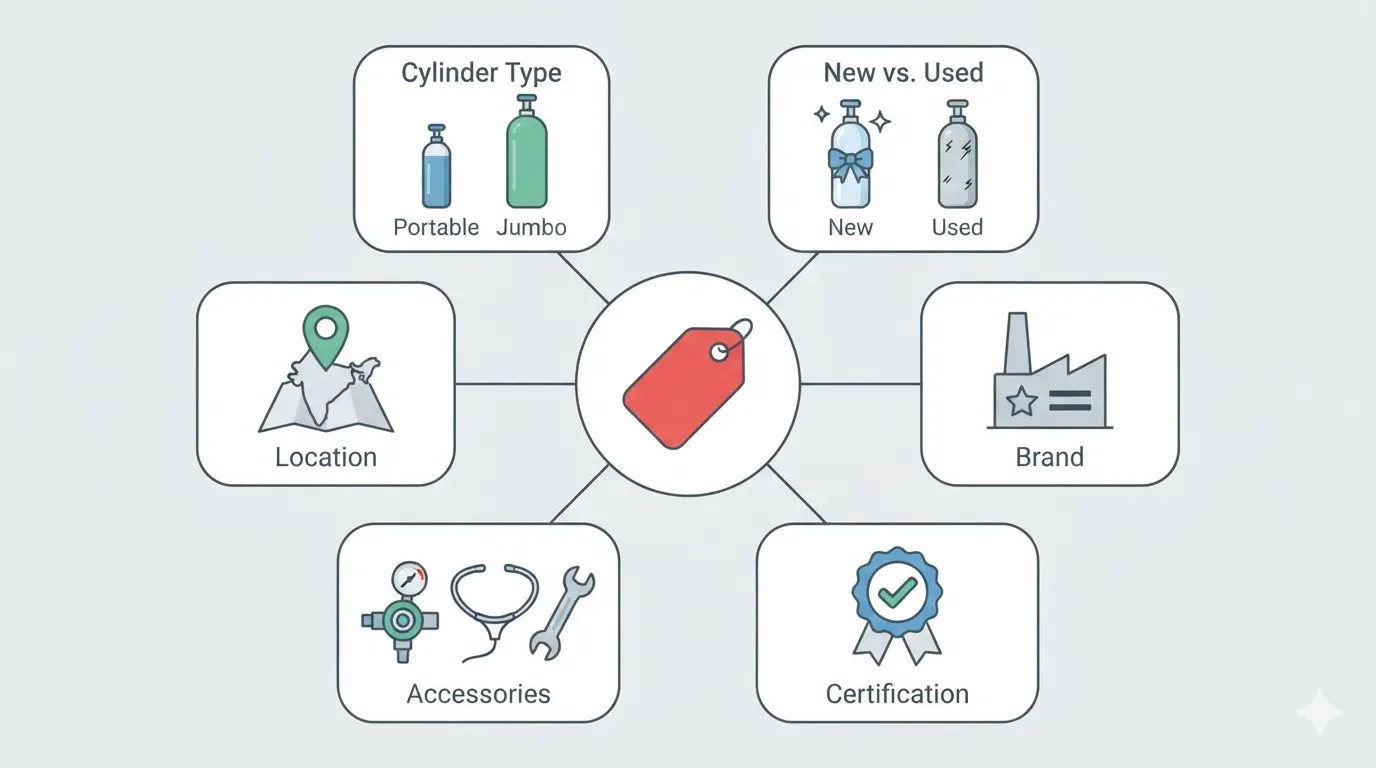
Ask five different suppliers what a medical oxygen cylinder costs in India and you will get five different answers. One dealer quotes ₹4,000, another says ₹9,000, and a hospital buyer in the same state pays something else entirely. That is because the price is not a single number: it depends on the cylinder type, whether it is new or used, the brand, the certification, and even the distance to the nearest refilling point.
This guide covers the difference between B Type and D Type cylinders, what moves the price up or down, what refilling really costs, and whether buying or renting serves you better. It also walks through the accessories you cannot skip, the safety rules that matter, and the mistakes we see buyers make year after year at Prem Gas Solutions in Khagaria, Bihar.
We supply medical oxygen, refill cylinders, rent them out, and sell the equipment that goes with them, so this guidance comes from daily work, not theory.
What Does a Medical Oxygen Cylinder Cost in India?
In India, a medical oxygen cylinder typically costs ₹4,000–₹13,000 depending on type, brand, and certification. A B Type (10-litre) cylinder costs around ₹4,000–₹7,000; a D Type jumbo (46.7-litre) costs ₹8,000–₹13,000. Refills run roughly ₹250–₹450 per B Type cylinder, and prices vary by location and included accessories.
Those ranges are indicative, not a promise. The rest of this guide explains where they come from and how to find the number that applies to you.
What Is a Medical Oxygen Cylinder?
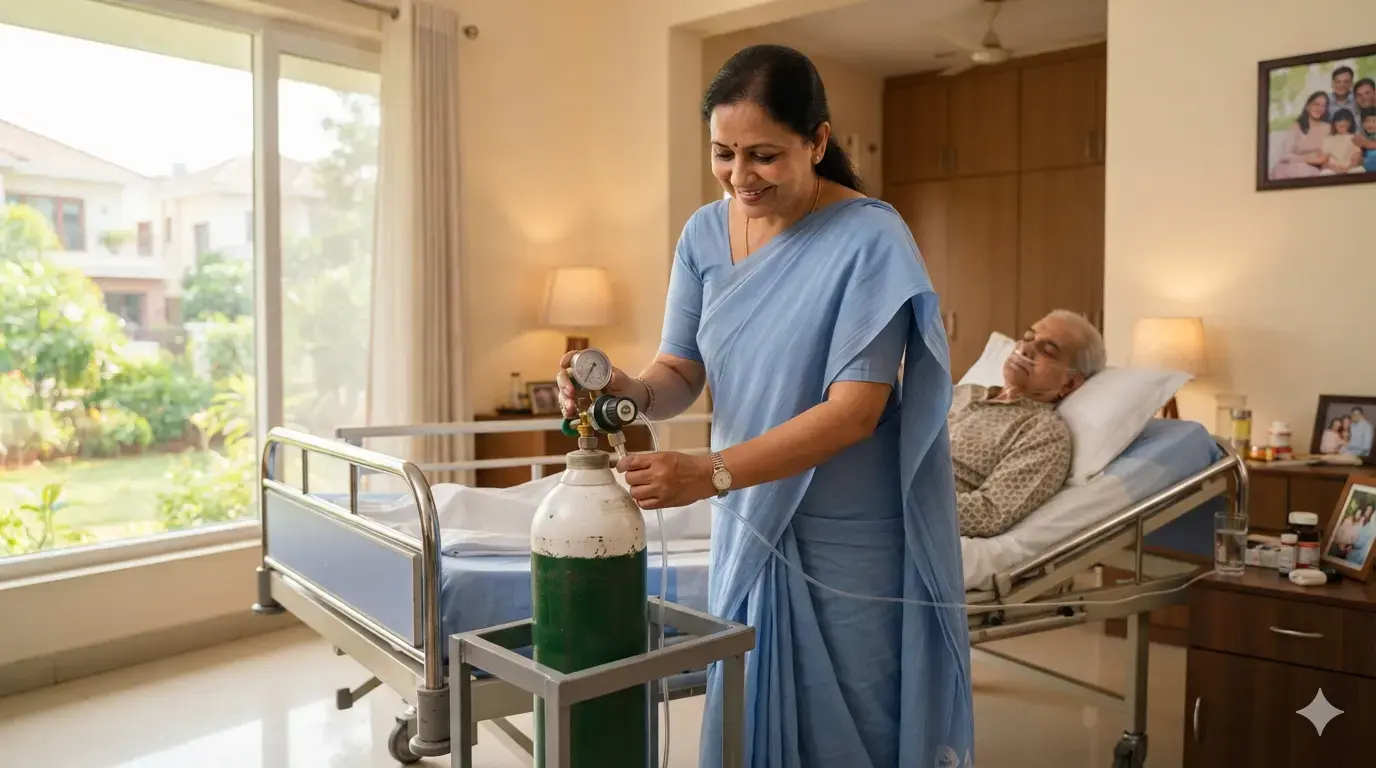
A medical oxygen cylinder is a high-pressure steel or aluminium container that stores compressed oxygen of medicinal grade for breathing support. The gas inside is medical oxygen, not the industrial oxygen used for welding and cutting, and the two must never be mixed up.
Medical oxygen is produced, tested, and filled to pharmaceutical standards. In India it is regulated as a drug by the central drug regulator (CDSCO), so it is manufactured and supplied under strict quality controls that keep it free of moisture, oil, and contamination. Industrial oxygen, by contrast, is made for combustion and metalwork, and can contain impurities that are harmless in a welding torch but dangerous to inhale. Source patient-use cylinders from a supplier who handles medical oxygen specifically.
The cylinder itself is simple. A seamless steel or aluminium body holds gas at very high pressure, typically around 150 kgf/cm² (about 150 bar) when full, and a valve at the top seals it and releases gas in a controlled way. The "10 litre" or "46.7 litre" number printed on the side is the water capacity of the tank, not the amount of gas inside it. Compressing that gas is what lets a 10-litre bottle hold around 1,500 litres of breathable oxygen.
Medical cylinders are clearly marked, usually black with a white top, so nobody grabs the wrong cylinder in an emergency.
Types of Medical Oxygen Cylinders
Medical oxygen cylinders in India come in a few standard sizes. The names you will hear most often are B Type, D Type, and jumbo.
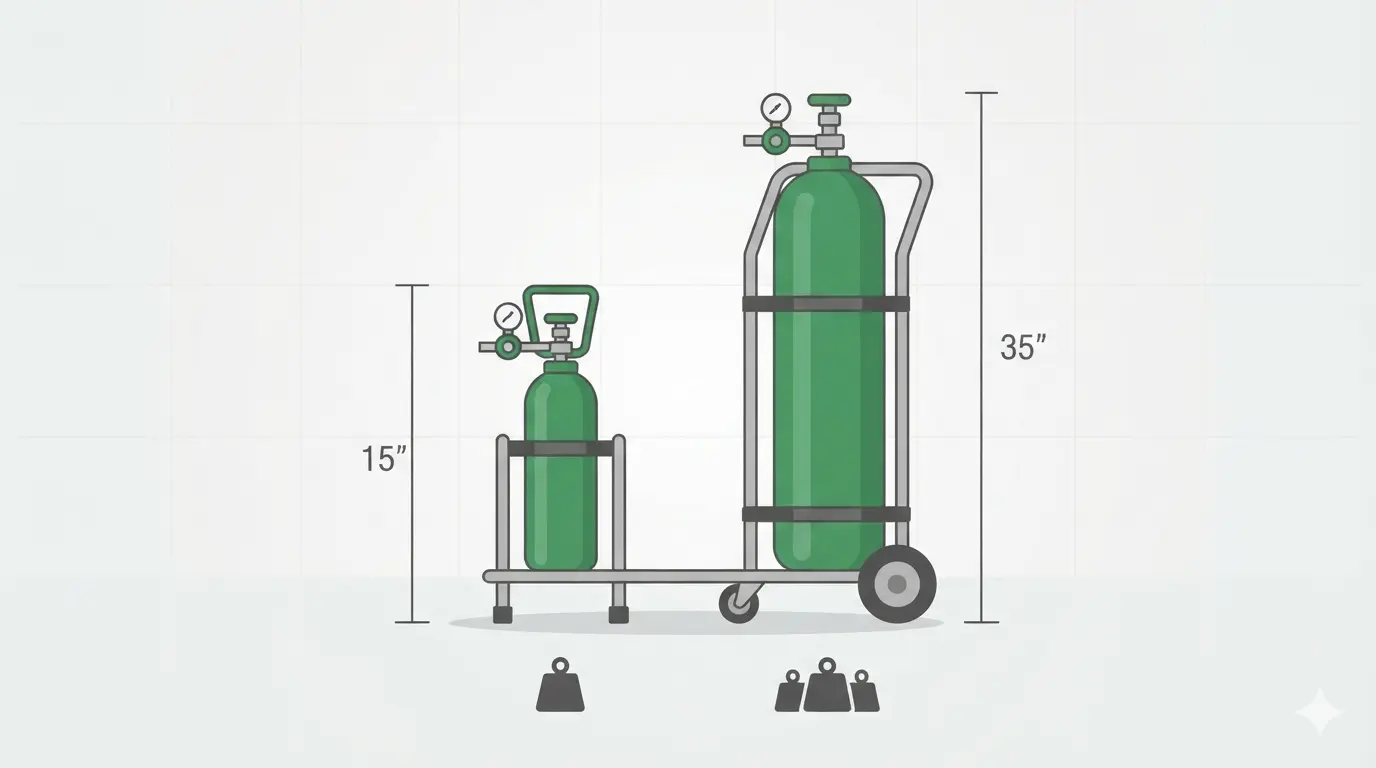
B Type (10-litre water capacity). The most common cylinder for home care, clinics, and ambulances. It holds roughly 1,500 litres of oxygen when filled to standard pressure, weighs around 15–17 kg empty, stands about three feet tall, and one adult can manage it with a trolley. At a low flow rate a single fill lasts most of the day.
D Type (46.7-litre water capacity). The jumbo cylinder you see beside hospital beds. It stores about 7,000 litres of oxygen, close to five times the B Type, at the cost of weight: around 45–50 kg empty, so moving it needs a trolley and usually two people. It suits hospitals, nursing homes, and homes with high, continuous demand.
Small portable cylinders (1–4 litre). Compact bottles holding from a few hundred litres to about 600 litres of oxygen, built for travel, wheelchair use, and short transfers. Some are refillable, others are pre-filled disposables. They are handy but expensive per litre, so treat them as a supplement to a main cylinder.
Aluminium vs steel. Steel is heavier and cheaper; aluminium costs more but weighs roughly half as much, which matters when family members carry the cylinder. Aluminium also resists corrosion better in humid climates, a point worth remembering in Bihar.
B Type vs D Type: Which Do You Need?
This is the first question most buyers ask, and the answer decides both your cost and your daily routine. Here is how the two cylinders compare:
- Water capacity: B Type 10 litres, D Type 46.7 litres.
- Gas volume when full: B Type ~1,500 litres (1.5 m³), D Type ~7,000 litres (7 m³).
- Empty weight: B Type ~15–17 kg, D Type ~45–50 kg.
- Height: B Type ~0.9 m (3 ft), D Type ~1.3–1.5 m.
- Typical user: home care, clinics, ambulances vs hospital wards and high-demand home care.
- Refill frequency at low flow: every few days vs every one to two weeks.
- Indicative new price: ₹4,000–₹7,000 vs ₹8,000–₹13,000.
- Handling: one person with trolley vs trolley and two people.
Duration depends on the flow rate set on the equipment, measured in litres per minute (L/min). Assuming a cylinder filled to standard pressure and a constant flow:
- At 2 L/min: B Type ~12 hours, D Type ~58 hours.
- At 5 L/min: B Type ~5 hours, D Type ~23 hours.
- At 10 L/min: B Type ~2.5 hours, D Type ~11 hours.
To estimate duration at home, divide the cylinder's litre capacity by the flow rate in L/min, then divide by 60 for hours.
If a patient needs oxygen for a few hours a day or as an emergency backup, a B Type is easier to handle, cheaper to buy, and cheaper to refill. If oxygen is needed almost continuously, a D Type means fewer refill trips, but you need the space, the trolley, and the physical help to move it. Customers frequently ask us which size to start with; we usually suggest one B Type with a second as backup rather than jumping straight to a jumbo.
Factors That Affect the Medical Oxygen Cylinder Price
Prices vary so widely because a single "oxygen cylinder price" does not exist. The number is built from several independent factors.
Cylinder condition and make
New vs used. A brand-new certified cylinder can cost double a used one. Used cylinders carry risk, which is why reputable suppliers inspect and re-certify them before resale. If a used cylinder looks suspiciously cheap, ask to see its testing status.
Brand and manufacturer. Established makers like Rama and Everest Kanto command a premium because their cylinders are known quantities. For a product that holds gas at 150 bar pressure, the brand matters more than the saving suggests.
Certification and testing. BIS/ISI-marked cylinders cost more because the mark proves they were manufactured and tested to Indian standards set by the Bureau of Indian Standards. Indian gas cylinder rules, administered by PESO, also require periodic testing at scheduled intervals: a hydrostatic test checks the cylinder's ability to hold pressure safely, and an expired test date makes a cylinder a liability, not a bargain.
What the quote includes
Filled vs empty. A "filled cylinder" price includes the cost of the gas inside it, which can add a few hundred rupees. Always ask whether a quote is for an empty cylinder or a filled one, and compare like with like.
Accessories bundled in. Some dealers quote a "complete kit" price that includes a regulator, mask, tubing, and trolley; others quote the bare cylinder. Essentials can add another ₹1,500–₹3,000, so a low price that excludes them may not be a deal at all.
Steel vs aluminium. Aluminium cylinders typically cost 40–60% more than steel of the same size, and the lighter weight is why buyers pay it, especially for home use.
GST and invoicing. GST applies on top of quoted prices, and GST-registered businesses, hospitals, and nursing homes can claim input credit, which changes the effective cost.
Where you buy
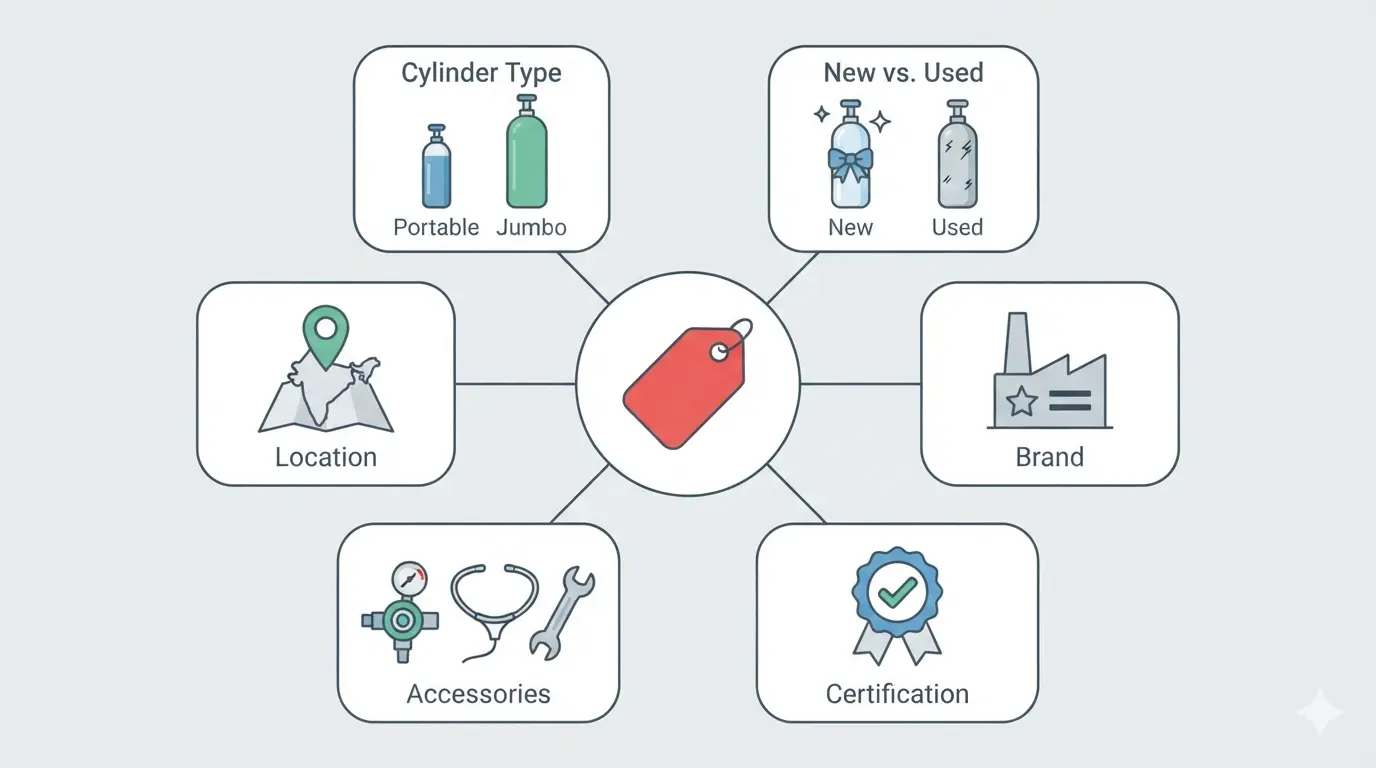
Location and transport. A cylinder costs more in a town far from a refilling plant than in a city where two plants compete. This is why the medical oxygen cylinder price in Bihar's district towns tends to sit toward the middle of these ranges, and why comparing a local supplier's quote against metro listings is misleading.
If a quote looks too good to be true, it usually is. Cheap cylinders come from old stock, missing certification, or expired test dates.
Oxygen Refill Cost Explained
Buying a cylinder is a one-time expense. Refilling is the cost you will pay again and again, so it deserves its own explanation.
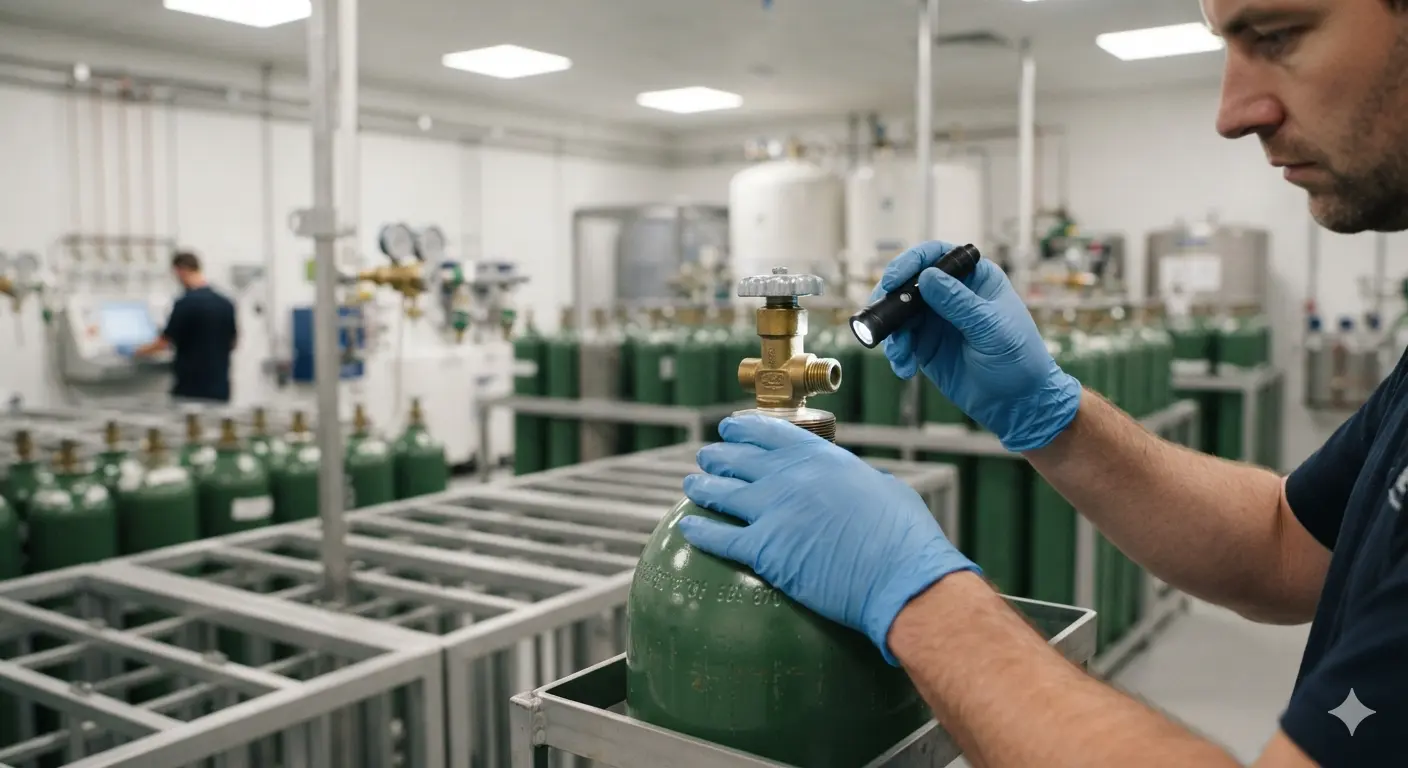
Refilling works like this: you bring your empty cylinder to a refilling point, the staff inspect the cylinder and its valve, and if everything is in order, they fill it with medical oxygen at high pressure. The refill price is charged per cylinder, and it covers the gas, the filling process, inspection, and the supplier's margin.
As an indicative figure, a standard B Type refill at a local refilling point commonly falls in the range of ₹250–₹450 per fill. A D Type jumbo holds more gas and costs two to three times the B Type rate. These figures move with gas availability, transport costs, and the season.
Three things make refill costs climb quickly:
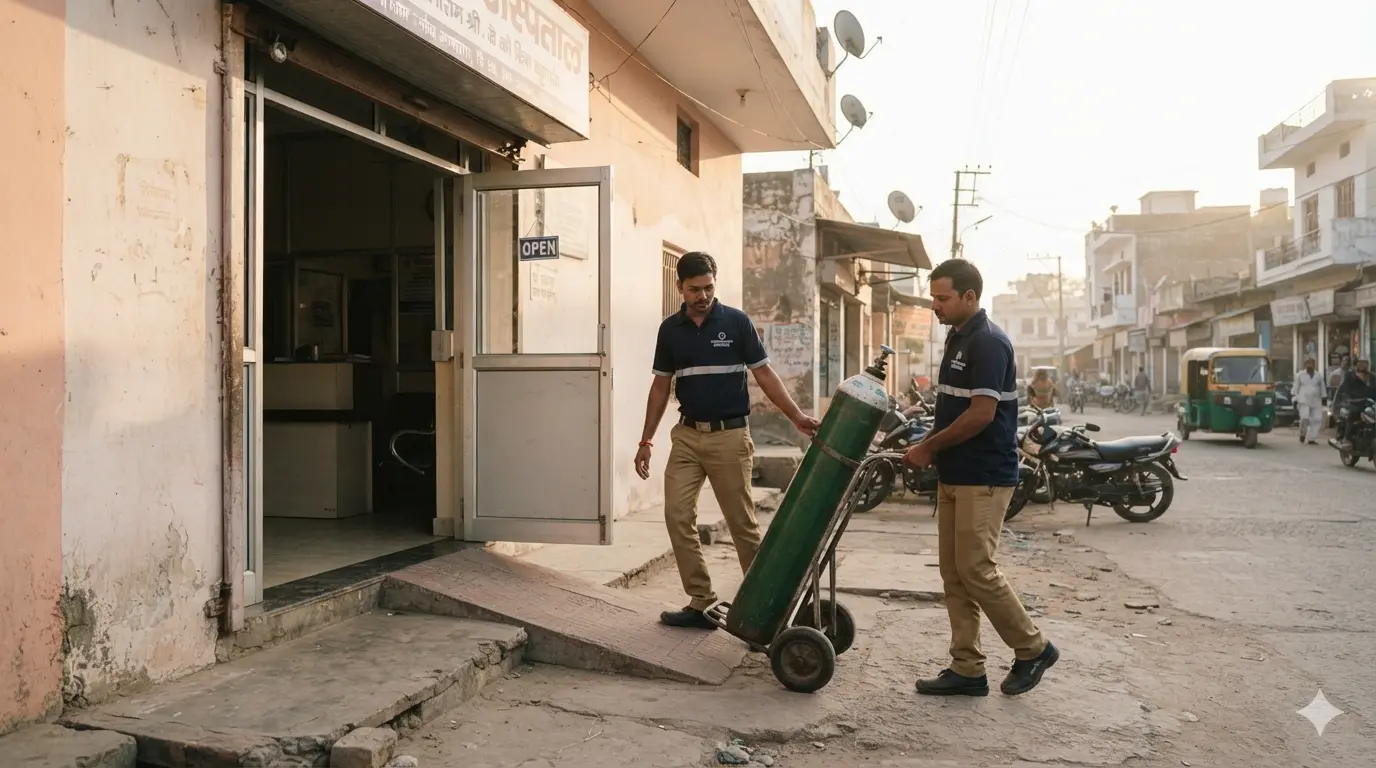
- Delivery charges. Many suppliers add a fee per trip, and if your cylinder travels 30 km, that cost lands on you.
- Small cylinder sizes. Tiny portable cylinders cost almost as much to fill as a B Type, which makes them expensive per litre of gas.
- Urgent fills. A refill needed immediately or outside working hours attracts a premium.
Two practical habits keep refill costs down. Use an exchange service when your supplier offers one, so an empty cylinder is swapped for a filled one on the spot. And plan refills before the cylinder runs empty, because an empty cylinder costs the same to fill while leaving no emergency reserve.
One thing matters more than price. Medical oxygen should come from a supplier who handles it as a medical product, not a welding gas. Confirm the refill is genuinely medical grade, that the supplier inspects cylinders before filling, and that the paperwork is proper. A cheap refill of the wrong gas is the most dangerous bargain in this industry.
Buy vs Rent: Which Makes More Sense?
Renting a medical oxygen cylinder is often smarter than buying, especially when the need is temporary. A few weeks of support does not justify owning a cylinder that will sit unused for years.
Renting makes sense when:
- The need is short-term or the duration is uncertain.
- You want a lower upfront outlay: a refundable deposit plus rent instead of the full purchase price.
- You prefer the supplier to handle maintenance, inspection, and testing.
- You can return the cylinder the moment the need ends and stop paying.
Buying makes sense when:
- Oxygen is needed for many months or years, where ownership works out cheaper.
- You want a permanent emergency backup at home, ready the moment it is needed.
- You are a clinic, hospital, or business that refills regularly and wants to lower per-refill costs over time.
Rental works on a simple model: a refundable security deposit plus a daily, weekly, or monthly rent, with the regulator, mask, and tubing usually included in the kit. Late returns may attract extra charges, so confirm the terms before taking the cylinder home.
In our experience, the best path for most families is to rent first for a short period and learn the actual daily usage before deciding. That tells you whether owning one, two, or a jumbo is the right call.
Accessories You Will Need
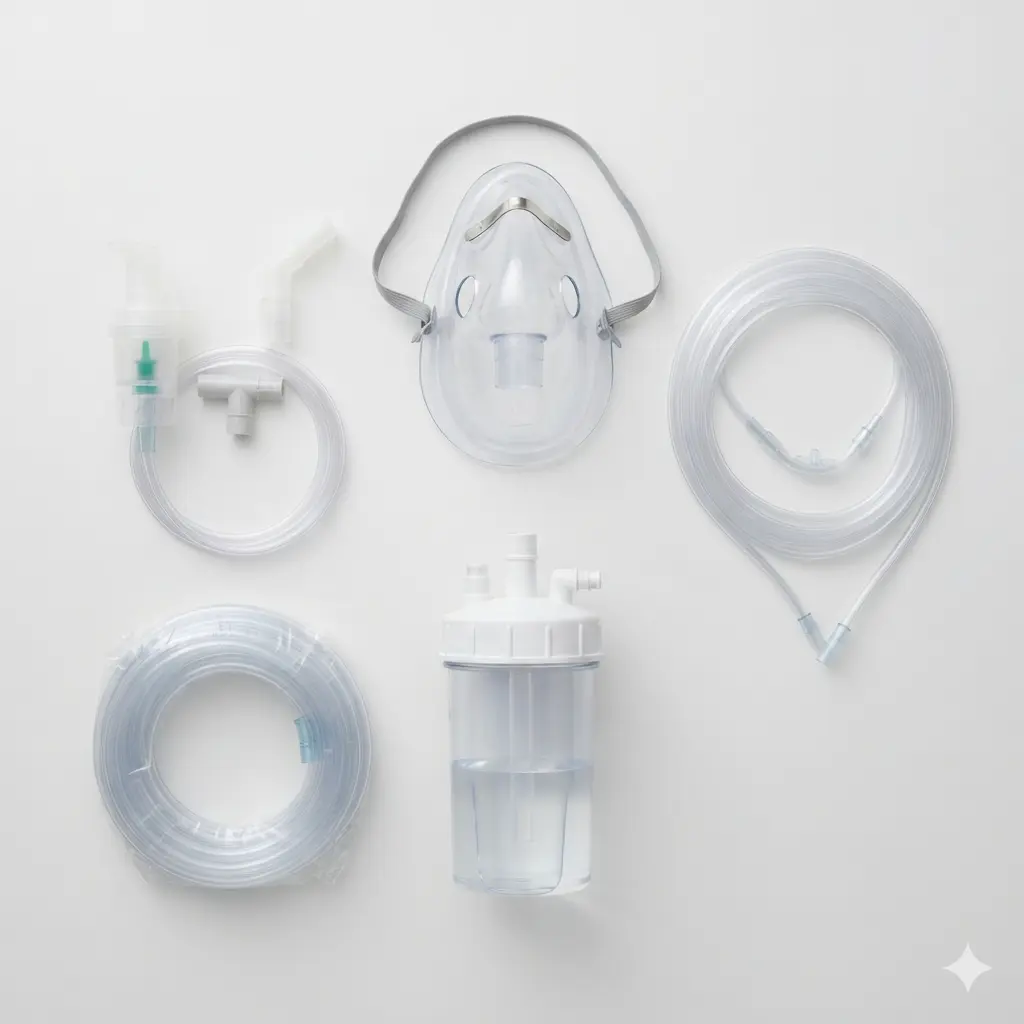
A cylinder alone cannot deliver oxygen safely. The gas comes out at high pressure, and the accessories bring it down to a level a person can breathe.
Regulator. The regulator screws onto the cylinder valve and reduces the high pressure inside the tank to a safe, usable level. Without one, opening the valve releases a blast of gas at 150 bar, which is dangerous. A cylinder should never be opened without a regulator fitted.
Flow meter. The flow meter controls how many litres per minute the patient receives, and it is where the doctor's prescription meets the equipment. It also decides how long a cylinder lasts, because a higher flow drains the tank faster.
Humidifier bottle. Oxygen straight from a cylinder is dry. When gas flows for long periods, dry oxygen can irritate the airways, so a humidifier bottle adds moisture before the gas reaches the patient.
Oxygen mask. A mask covers the nose and mouth and delivers oxygen at higher flows, usually 5–10 L/min or more, in adult and paediatric sizes. It is common in hospital settings and for higher-flow needs at home.
Nasal cannula. A thin tube with two small prongs that sit just inside the nostrils. It is comfortable, does not interfere with talking or eating, and suits low-flow oxygen, typically 1–5 L/min. For most home-care patients, the cannula is the everyday device and the mask is the backup.
A few more items make home use safer and easier:
- Cylinder trolley. Protects your back and keeps the cylinder upright, which is a safety requirement, not a convenience.
- Spanner or cylinder key. Needed to open the valve on cylinders without hand wheels.
- Oxygen tubing. Tubing wears out and kinks; keeping a spare avoids a midnight scramble.
- Leak detection solution. A soap-based solution for checking connections, an inexpensive check that can prevent a dangerous situation.
- Pressure gauge. Most regulators show the remaining tank pressure, and reading it tells you when a refill is due.
Buying a complete kit from one supplier is usually cheaper and safer than assembling pieces from different shops. When you take delivery, ask the supplier to demonstrate the full assembly once, from cylinder valve to cannula.
Oxygen Cylinder Safety Tips
Medical oxygen is safe when handled correctly and genuinely dangerous when it is not. The rules below come from daily refilling, delivery, and rental work, and they follow standard clinical practice for medical gas cylinders.
Keep oxygen away from fire and sparks. Oxygen itself does not burn, but it makes everything else burn faster and hotter. Keep cylinders at least a few metres from flames, gas stoves, incense, mosquito coils, and any equipment that can spark. Never smoke near a cylinder, and never allow smoking in a room where oxygen is in use.
Store cylinders upright and secured. A cylinder must stand upright, secured to a trolley, a wall, or a stable frame. A falling cylinder can shear its valve and turn into a dangerous projectile. Keep cylinders out of direct sunlight and away from heat sources.
Never use oil or grease on fittings. Petroleum-based lubricants react violently with high-pressure oxygen. Never apply oil, grease, or any unapproved lubricant to valves, regulator threads, or fittings. This is not caution, it is chemistry.
Open the valve slowly. Open the main valve gently at first, a quarter turn or less, then open fully once gas flows steadily. A sudden full twist sends a surge through the regulator, while a valve left half-open can leak through its stem seal.
Check the gauge regularly. Pressure tells you how much oxygen is left. Learn what a full cylinder reads on the gauge and what your supplier considers the refill point.
Keep cylinders away from children, and never leave a cylinder valve open to the room.
Do not tamper with the cylinder. Never attempt to repair a valve, remove a safety cap, or refill a cylinder yourself. Refilling requires proper equipment, inspection, and training; a hand-filled cylinder can over-pressurise and burst.
Know when a cylinder is not fit for use. Dents, deep scratches, corrosion, a damaged valve, or an expired test date all mean professional inspection is needed. Do not use the cylinder; contact your supplier.
Get medical guidance, not internet advice. Flow rates, duration, and whether oxygen is needed at all are decisions for a qualified healthcare professional. This guide explains equipment and costs, not treatment.
How to Choose the Right Cylinder
Choosing a medical oxygen cylinder comes down to six questions. Answer them in order and the right choice becomes obvious.
- What is the prescribed flow rate? The doctor's prescription gives the flow in litres per minute and the hours per day. This is the foundation for everything else, so have it written down before you call any supplier.
- How long should one fill last? Divide the cylinder's litre capacity by the flow rate. If the patient needs 5 L/min for 10 hours a day, that is 3,000 litres, or two full B Type fills a day, so that patient needs a D Type or a bank of cylinders. If the need is 2 L/min for 4 hours, one B Type lasts over a day.
- How easy is refilling in your area? Check which cylinder sizes your nearest supplier refills and how often they deliver. The best cylinder for you is the one you can actually get refilled nearby.
- Who will handle the cylinder at home? If an elderly caregiver is the only person who will move it, the extra cost of aluminium or the smaller B Type is money well spent.
- Do you have space? A D Type jumbo needs floor space and a secure position. Measure your space before committing.
- Buy, rent, or exchange? Short-term need means rent. Long-term need means buy. Frequent refills mean check whether your supplier offers an exchange service.
When you have answers to all six, call a supplier with the full picture. A good supplier will confirm availability, quote cylinder, refill, rental, and accessory costs separately, and tell you honestly whether a B Type or a D Type fits. Watch out for the supplier who pushes the bigger, more expensive option without asking about your usage first.
Common Mistakes Buyers Make
After years of refilling and renting cylinders, we see the same errors repeat. Avoid these and you are already ahead of most buyers.
- Buying the wrong size. The most common mistake is buying a D Type jumbo because "more is better", then discovering nobody at home can move it. Size must match the user, the space, and the refill routine.
- Forgetting to check refill availability. People buy a specific cylinder brand or size, then find no nearby supplier refills it. Confirm your cylinder type is supported locally before buying.
- Comparing empty and filled prices. One dealer quotes an empty cylinder, another a filled one, and the buyer compares them directly. Always ask the same question: filled or empty, with or without accessories?
- Ignoring the test date. A cylinder with an expired periodic test is unsafe to fill, and many suppliers will refuse it.
- Neglecting the accessories budget. The cylinder is half the setup cost. Regulator, flow meter, humidifier, mask, cannula, tubing, and trolley add up.
- Running the cylinder dry. Emptying a cylinder completely leaves no emergency reserve and forces urgent refills.
- Choosing the cheapest refill without asking about gas grade. A low price is meaningless if the gas is not properly handled medical oxygen.
- Skipping the demonstration. Ask the supplier to assemble and test the full setup once before they leave.
- Buying from a supplier too far away. A ₹500 saving on the cylinder evaporates the first time you pay delivery on a refill from 40 km away. Local supply wins.
Frequently Asked Questions
1. What is the price of a medical oxygen cylinder in India?
A new B Type (10-litre) cylinder typically ranges from about ₹4,000 to ₹7,000, and a D Type jumbo (46.7-litre) from roughly ₹8,000 to ₹13,000, depending on brand, material, and certification. Used cylinders cost less, and the final quote depends on location, dealer, and included accessories.
2. How long does a B Type oxygen cylinder last?
A B Type cylinder holds roughly 1,500 litres of oxygen. At 2 L/min it lasts about 12 hours, at 5 L/min about 5 hours. Duration depends on the prescribed flow rate, so keep a reserve cylinder at home.
3. How long does a D Type oxygen cylinder last?
A D Type jumbo holds about 7,000 litres. At 2 L/min that is roughly 58 hours, at 5 L/min about 23 hours. Higher flow drains it much faster.
4. How much does it cost to refill an oxygen cylinder?
Indicatively, a B Type refill at a local refilling point ranges from about ₹250 to ₹450. A D Type jumbo costs more because it holds more gas, and delivery, urgency, and distance all add to the bill.
5. Can I get my own cylinder refilled?
Yes, in most cases, if the cylinder is in good condition and its periodic test is valid. The supplier inspects the cylinder and valve before filling; a cylinder with an expired test or visible damage may be refused.
6. Is medical oxygen different from industrial oxygen?
Yes, and the difference is critical. Medical oxygen is produced and filled to pharmaceutical standards and is regulated as a drug in India. Industrial oxygen is for welding and cutting and can contain impurities that are dangerous to inhale. Never use industrial oxygen for breathing.
7. Should I rent or buy an oxygen cylinder?
Rent if the need is short-term or uncertain, since it avoids a large upfront cost and the supplier handles maintenance. Buy if the need is long-term or you want a permanent emergency backup at home. Many families rent first and decide later.
8. What is the security deposit for renting a cylinder?
Deposit amounts vary by supplier and cylinder type and are refunded when the cylinder is returned in good condition. Rental is charged daily, weekly, or monthly on top of the deposit. Confirm late-return charges before taking the cylinder.
9. What accessories do I need with an oxygen cylinder?
At minimum: a regulator, a flow meter, oxygen tubing, and either a nasal cannula or mask. For continuous use, add a humidifier bottle. A trolley, spare tubing, and a pressure gauge make home use safer and easier.
10. Is a cylinder or an oxygen concentrator better for home use?
It depends. A cylinder stores oxygen and needs no electricity, which helps during power cuts, but must be refilled. A concentrator generates oxygen from room air and needs continuous power, but never runs out of gas. Many homes keep a cylinder as backup for a concentrator; discuss the options with your doctor and supplier.
11. Do I need a prescription to buy medical oxygen?
Medical oxygen is a drug in India, and responsible suppliers ask for a doctor's prescription before supplying it for patient use. The prescription also records the flow rate and duration, which is exactly what you need to choose the right cylinder.
12. How do I check an oxygen cylinder for leaks?
Apply a soap-based leak detection solution to the valve and connection points while the cylinder is open. Bubbles forming mean there is a leak, so close the cylinder and have it checked by a professional. Never use a flame to find a leak.
13. When should I refill my cylinder?
Refill before the gauge reaches empty. Learn the refill-point reading from your supplier and plan ahead, because an empty cylinder leaves no emergency reserve and forces an urgent, often more expensive, refill.
14. How do I return a rented cylinder?
Return it in the condition you received it, usually with the valve closed and residual pressure intact. The supplier inspects the cylinder and your security deposit is refunded. Late returns may attract charges, so confirm the terms upfront.
15. Is a medical oxygen cylinder safe at home?
Yes, when handled correctly: keep it away from flames and sparks, never use oil or grease on fittings, open the valve slowly, store it upright and secured, and follow the doctor's prescription for flow.
Final Buying Checklist
Run through this list before you pay for anything.
- Doctor's prescription with flow rate (L/min) and hours per day
- Cylinder type chosen: B Type or D Type, based on usage, space, and who handles it
- Nearest supplier confirmed to refill that cylinder type
- Quotes compared on the same basis: filled vs empty, accessories in or out
- Cylinder make, certification mark, and test date verified
- Buy vs rent decided by how long the need will last
- Accessories budgeted: regulator, flow meter, humidifier, mask or cannula, tubing, trolley
- Refill price, delivery charges, and exchange service confirmed
- Supplier demonstrated the full setup before leaving
- Safe, upright storage spot fixed, away from fire and heat
- Pressure gauge reading understood and refill reminder point set
Conclusion
The price of a medical oxygen cylinder in India is not one number, and that is the whole point of this guide. It is the product of size, brand, material, certification, location, and accessories, and it only makes sense once you know what you actually need. Start with the prescription, match the cylinder to the usage, check refill availability before you buy, and compare quotes on the same basis.
If you are in Bihar and want help working through these decisions, Prem Gas Solutions in Khagaria supplies medical oxygen, refills cylinders, rents them out, sells cylinders and accessories, and delivers to homes, clinics, and hospitals. Call us at 9470017017 or message us on WhatsApp, or use the contact section of our website, and we will confirm availability and give you a clear quotation.