
Common Welding Equipment Problems: Troubleshooting Guide
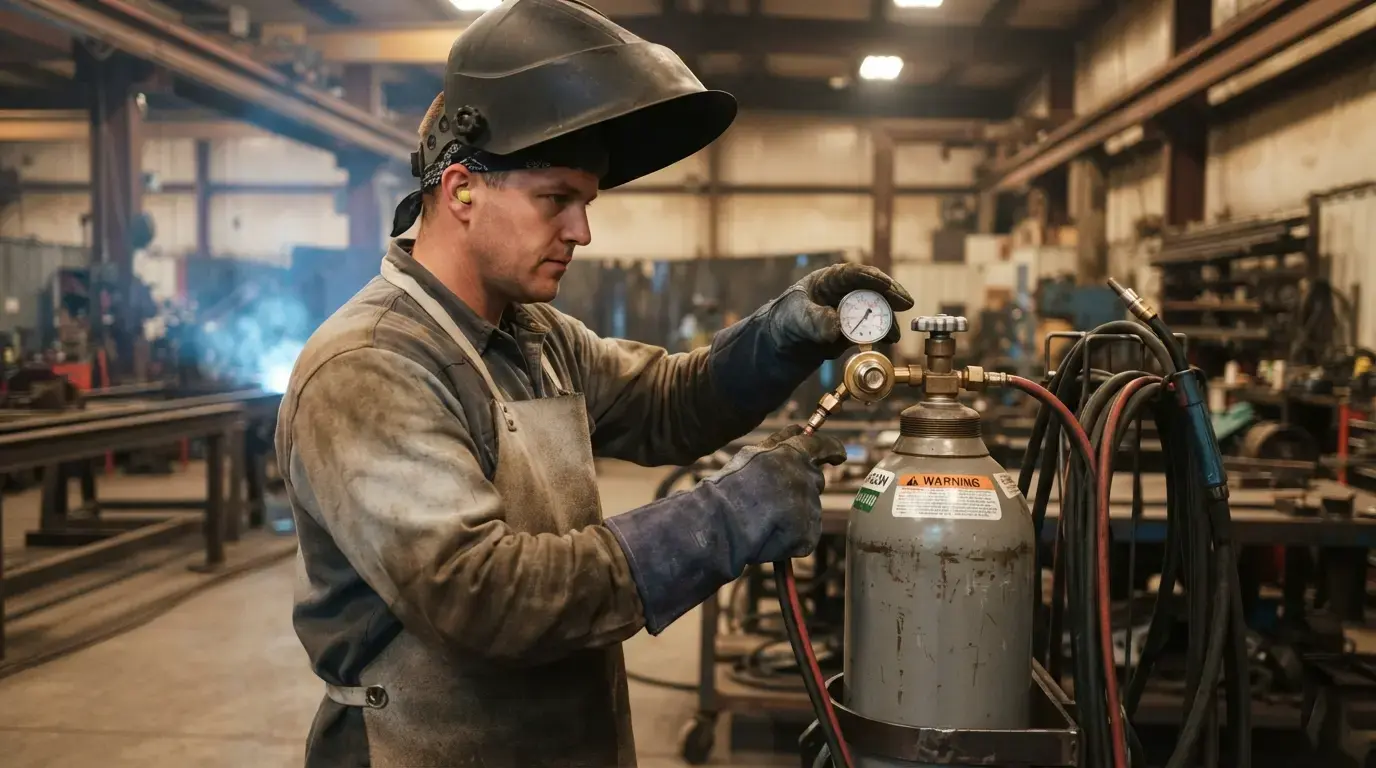
Most welding equipment problems are not machine failures. They are gas problems wearing a disguise: a regulator that ices over, a weld full of pin holes, a torch that pops and dies. At Prem Gas Solutions in Khagaria, we see the common welding equipment problems every week when fabricators bring in cylinders, regulators, and torches, and the pattern is always the same. The equipment looks broken. The real culprit is a gas supply issue, a wrong setting, or a small leak nobody noticed.
This guide covers the problems we see most, symptom by symptom: gas flow faults in MIG and TIG, CO2 regulator freezing, regulator and gauge failures, cylinder and valve issues, oxy-fuel torch backfire and flashback, and hose leaks. For each one you get the symptom, the likely cause, and the fix to try before you spend money on replacement parts. None of this replaces the equipment manual or a qualified technician, but it will keep most problems from stopping your work.
Common Welding Equipment Problems and How to Fix Them
The same five faults cause most shop-floor trouble, whatever the welding process:
- Gas flow problems in MIG and TIG that spoil welds with porosity and discoloration.
- CO2 regulators freezing mid-pass and cutting flow.
- Regulator and gauge failures, many of them caused by misuse rather than age.
- Cylinder and valve issues that masquerade as empty gas.
- Oxy-fuel torch backfire, flashback, and leaking hoses, the ones with real safety weight.
Read the section that matches your symptom, try the fixes in order, and most problems clear without touching a single dial on the machine.
Gas Flow Problems: The Cause of Most Bad Welds
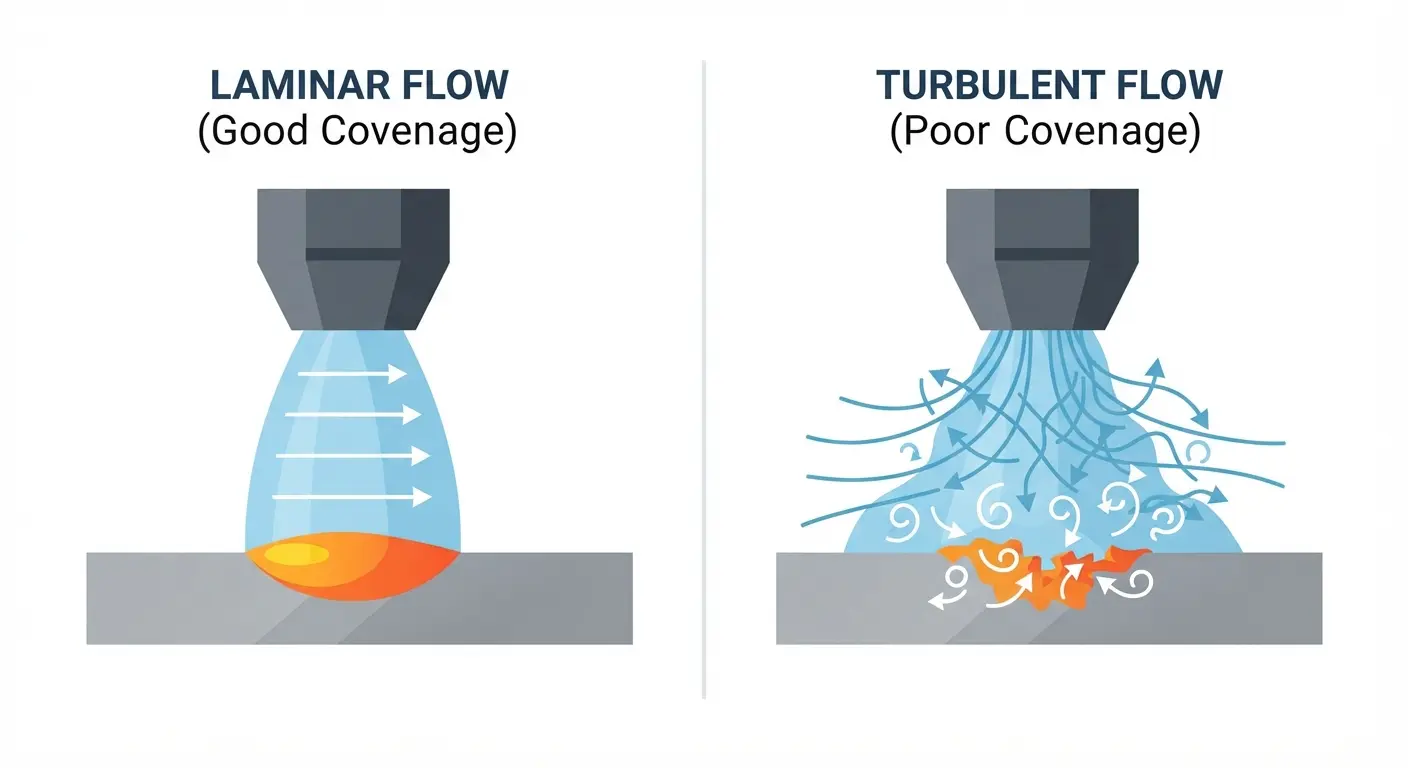
If a weld comes out full of pin holes, black, or spattered, the first suspect is shielding gas, not the welding machine. Porosity, the name for those bubbles and craters, happens when air reaches the molten weld pool. Nitrogen from the air, and hydrogen from moisture, rust, oil, or paint on the metal, get trapped as the weld cools and form gas pockets.
The shielding gas has one job: to push air away from the weld pool. When that fails, it fails in four ways.
- Flow set too low. Not enough gas means a thin shield and air gets in. This is the most common fault and the easiest to miss, because the gauge can read fine while the actual flow at the torch is weak.
- Flow set too high. More gas is not better. High flow turns the gas column turbulent, and turbulence drags air into the weld zone. Lincoln Electric's MIG troubleshooting guide describes the ideal shield as a blanket lying over the weld pool; turbulence tears that blanket.
- Wind and drafts. A fan, an open workshop door, or a breeze strips the gas away before it reaches the weld. Outdoors, most guidance says to stop gas metal arc welding when wind is much above 5 mph, or screen the work area.
- Leaks and blockages. A kinked hose, a loose fitting, spatter packed inside the nozzle, or a damaged gas diffuser all cut the gas that actually reaches the weld. A loose fitting or damaged nozzle can also create turbulence that draws air into the gas stream.
The fix starts at the torch, not the regulator: set flow with a flow meter, feel and listen for steady gas at the nozzle, inspect hoses and fittings with soapy water, clean spatter out of the nozzle, and block drafts. Typical MIG shielding flows run from about 15 to 40 CFH, roughly 7 to 19 litres per minute, so match the setting to the joint and the machine manual, not to habit.
CO2 Regulator Freezing
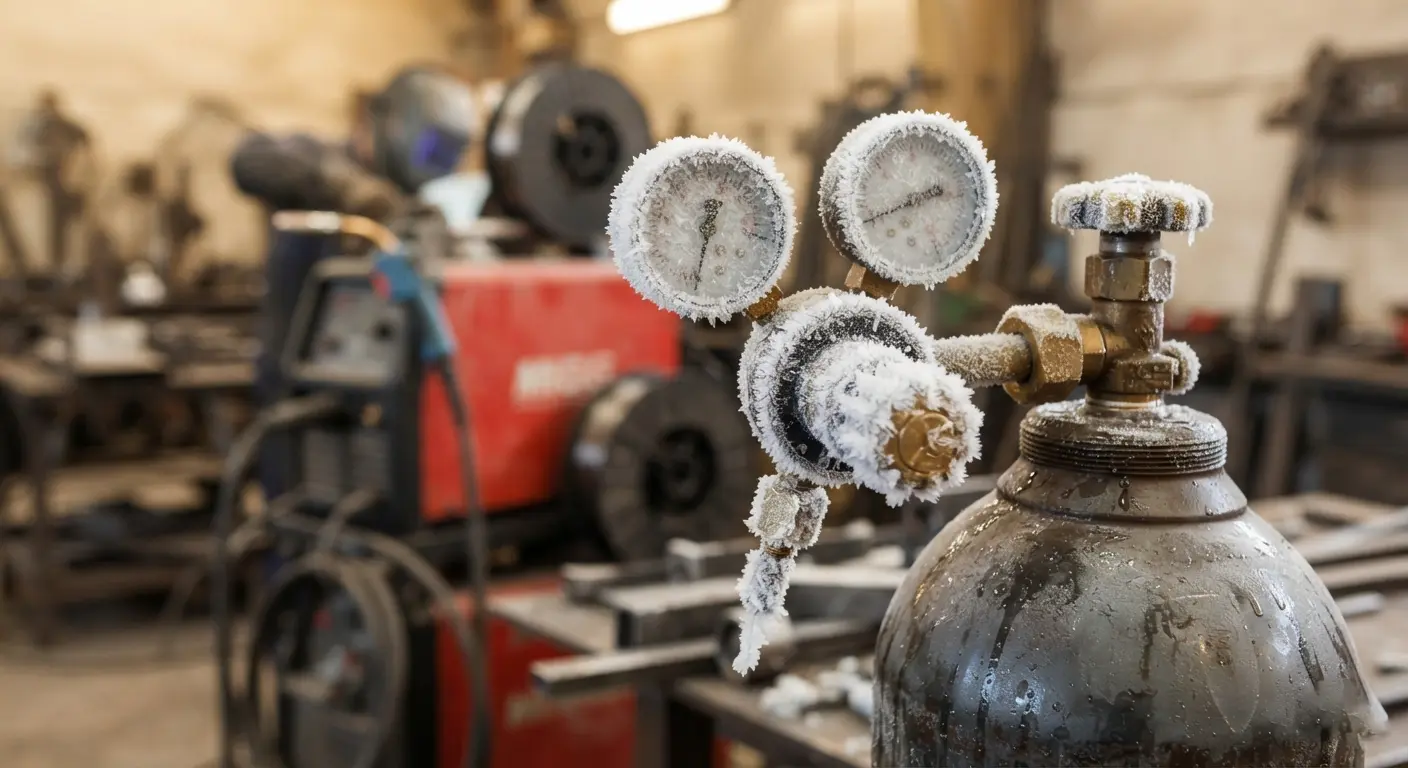
A regulator that frosts over mid-weld is a classic MIG complaint, and it looks like an equipment failure when it is physics. When CO2 expands from high cylinder pressure down to working pressure, it cools sharply, and at delivery pressures below about 60 psi the gas can drop cold enough to form dry ice snow inside the regulator. That snow blocks the flow. Equipment maker Harris Products Group explains that freeze-up can clog the regulator with dry ice crystals and that a heated regulator is the standard fix for heavy duty cycle work. The result on the shop floor: flow falls off during a long pass, porosity shows up late in the weld, and frost forms on the regulator body.
What to do about it:
- Set flow to the minimum that shields the joint properly, not the maximum.
- Give the regulator time to thaw between long passes.
- Keep the cylinder out of direct sun and away from heat, which raise cylinder pressure and worsen the effect.
- For continuous high-flow work, use a regulator designed for CO2, ideally a heated or two-stage unit.
- Verify flow at the torch: a frosted regulator can read correct pressure while ice restricts the seat.
Frost on the outside of the regulator is condensation and usually harmless. Snow inside the regulator, flow dropping off, and flickering gauges mean real freeze-up. If a CO2 cylinder itself is over-drawn at high flow, liquid can be pulled into the regulator, and a heater alone will not fix that; it needs a bigger or manifolded supply. When in doubt, ask your CO2 gas supplier about the right cylinder and regulator setup for your duty cycle.
Argon Flow Problems in TIG
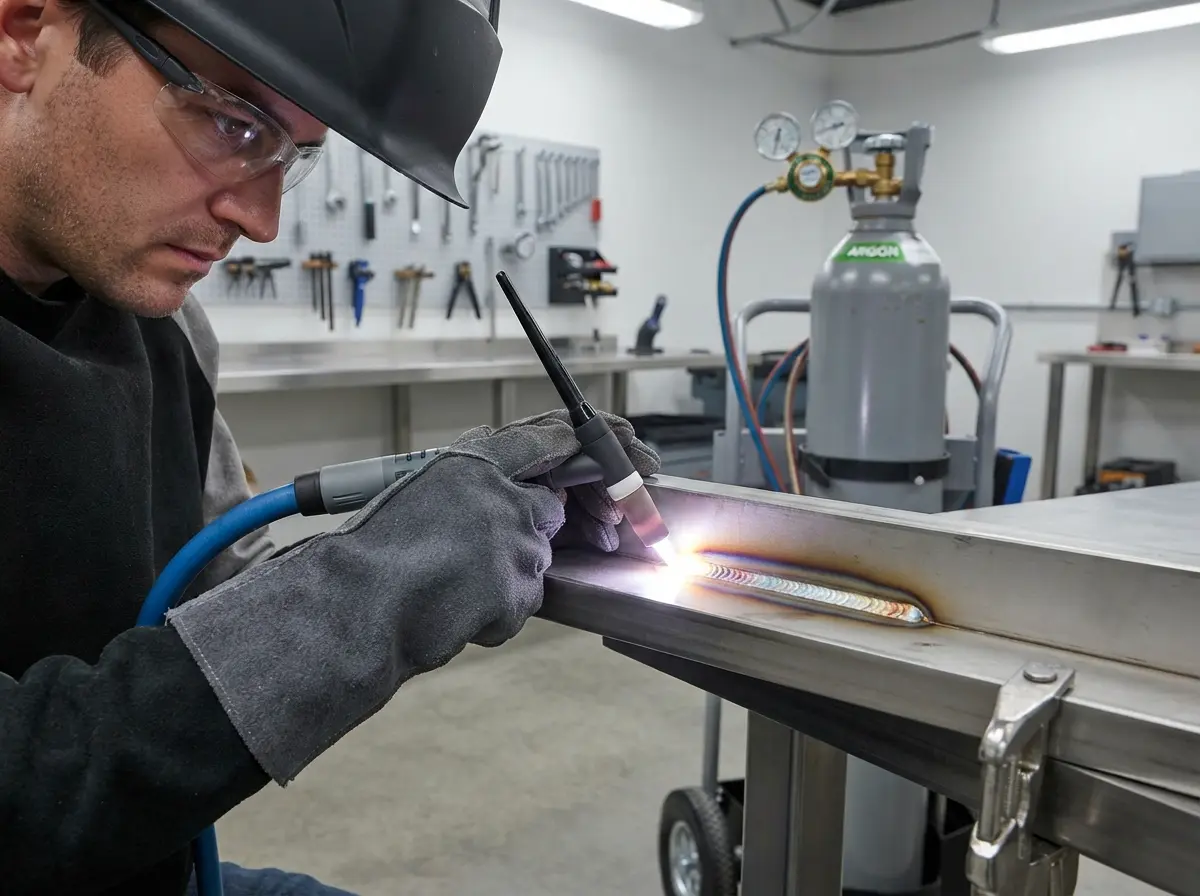
TIG welding runs on 100% argon, and most of its problems are gas coverage problems. Discolored welds, gray or black welds on stainless steel, soot, and tungsten that turns blue or black all trace back to argon not doing its job.
The biggest mistake is using the wrong gas. Argon-CO2 mixes, which are fine for MIG, contaminate TIG welds immediately. Confirm the cylinder is pure argon before blaming the torch.
The usual suspects after that:
- Flow too low or too high. Miller Welds recommends around 15 to 20 CFH, about 7 to 9 litres per minute, for most TIG work, and warns that excessive flow creates turbulence that pulls in air. Use the lowest flow that shields well.
- A blocked or damaged gas path. A cracked ceramic cup, a clogged gas lens, a loose collet, or a kinked hose all cut argon at the torch. Verify the flow at the cup, not at the regulator.
- Drafts. The argon envelope is delicate. One fan or open door can strip it and produce porosity.
- Missing post-flow. Argon must keep flowing after the arc stops, or the hot tungsten oxidizes. A common guide is about one second of post-flow per 10 amps, holding the torch over the weld while it cools.
- No back purge on stainless pipe. Oxidation on the back side of a stainless weld, called sugaring, means the inside of the pipe met air. The fix is a backing gas purge, not more heat.
The quick diagnostic order for TIG: confirm pure argon, check flow at the cup, block drafts, inspect the cup and gas lens, and only then look at tungsten and machine settings. Most TIG failures are gas coverage, and fixing that first saves hours of chasing amperage knobs. A reliable argon gas supplier will also confirm cylinder purity if you suspect contamination.
Regulator and Pressure Gauge Problems
Regulators fail in predictable ways, and many failures are misuse.
- No gas at the torch. Check the cylinder valve is actually open, then check the regulator outlet. If the cylinder is full and the gauge shows no flow, the regulator seat may be damaged, often from opening the cylinder valve too fast. High-pressure gas slams into the seat and cuts it. Always crack the cylinder valve slowly.
- Gauges drift or read wrong. A gauge that creeps, bounces, or settles back to zero is a warning. It can mean a leaking seat, a blocked passage, or simply an old gauge. Read the gauge, then confirm the result at the torch.
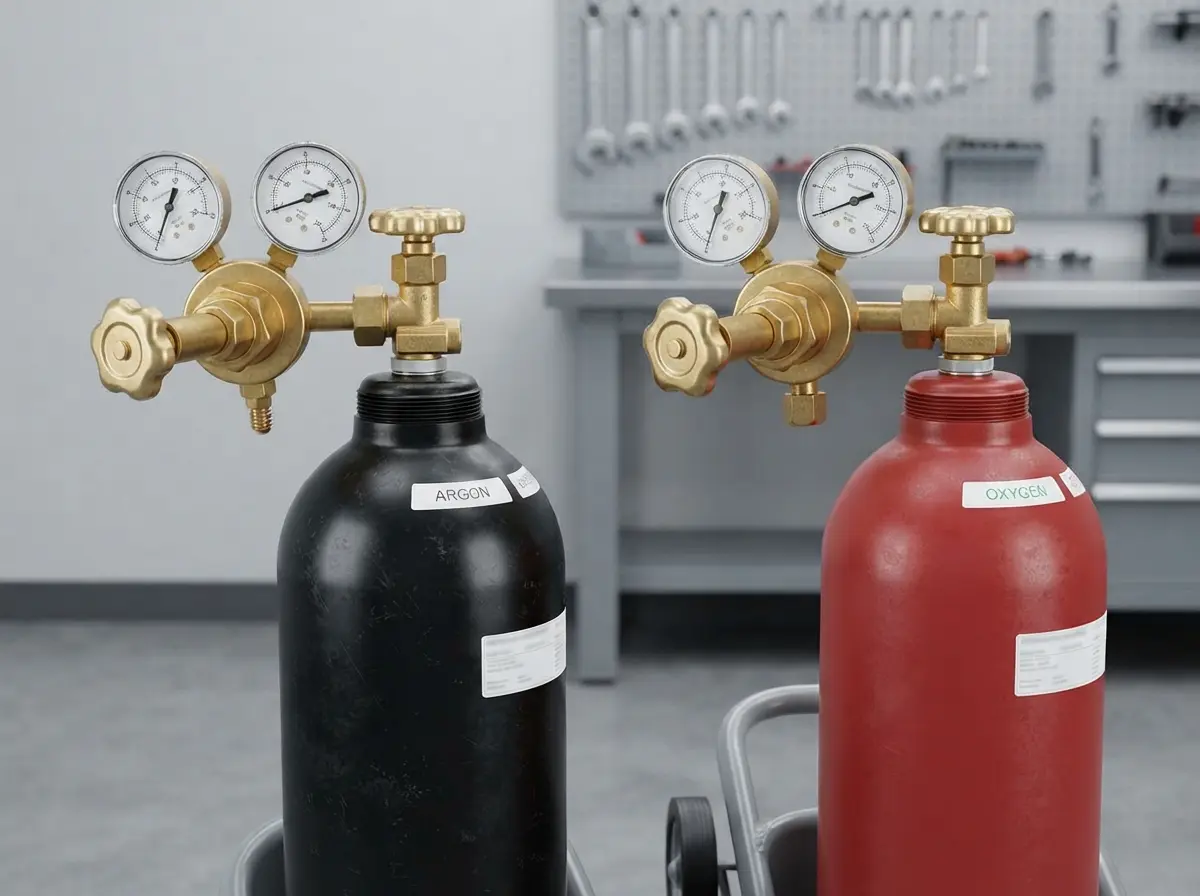
- Wrong regulator for the gas. This is the one to take seriously. Oxygen, acetylene, CO2, and argon regulators are not interchangeable. Acetylene regulators are built for low pressures and use left-hand threads; putting an oxygen regulator on acetylene can deliver dangerous pressure. Every regulator is marked for its gas. Use the correct one, and never swap regulators between a fuel gas and oxygen.
- Oil or grease on fittings. On oxygen in particular, oil and grease can ignite explosively under pressure. Hands must be clean, fittings dry, and no ordinary lubricant should ever touch oxygen equipment.
Regulators and gauges are not meant to be repaired by hand. If a regulator is damaged, leaking, or reading erratically, replace it. Pairing the right gas regulators and cylinder accessories with the right gas is half of troubleshooting; the other half is checking that equipment actually delivers what the gauge claims.
Cylinder and Valve Problems
When a job stops because the gas "ran out," the cause is sometimes a nearly empty cylinder, and sometimes a cylinder problem hiding as an empty one.
- Low pressure or empty. An oxygen or argon cylinder should show its full pressure on the high-pressure gauge. As it empties, that gauge falls. Check it before blaming the regulator, and remember a full cylinder only holds what the gauge says if it was filled properly in the first place.
- Valve leaks. A leak at the valve stem, around the outlet, or through the valve shows up as hissing, as bubbles in a soap-and-water test, or as gauges that creep after the valve is closed. A leaking valve is a service item: return the cylinder to the supplier rather than tightening it with tools, which can damage the stem.
- Expired or damaged cylinders. Every cylinder in India carries stamped details including the periodic test date. A cylinder past its test date, dented, corroded, or with a damaged valve must not be filled or used. A responsible supplier refuses these and returns them for inspection.
Acetylene has its own rules. The gas is dissolved in acetone inside a porous mass, which is why acetylene cylinders must be stored and used upright and never laid flat. If a cylinder has been transported horizontally, stand it upright and wait before use, roughly as long as it lay down and up to 12 hours, so the acetone settles back. Acetylene is limited to a low working pressure, and its cylinder valve should be opened only about one and a half turns, just enough for flow, so it can be closed quickly in an emergency. If an acetylene cylinder spits solvent or hisses, mark it and return it to the supplier.
Oxy-Fuel Torch Problems: Backfire and Flashback
Oxy-fuel cutting and welding bring two words every operator should know, because they describe very different dangers.
Backfire is a loud pop at the tip when the flame momentarily burns back into the torch and dies. It usually comes from touching the tip to the work, a blocked or oversized tip, or pressure set too low for the tip. Clear the tip, reset pressures, cool the torch, and relight. A backfire by itself is not an emergency, but it is a warning.
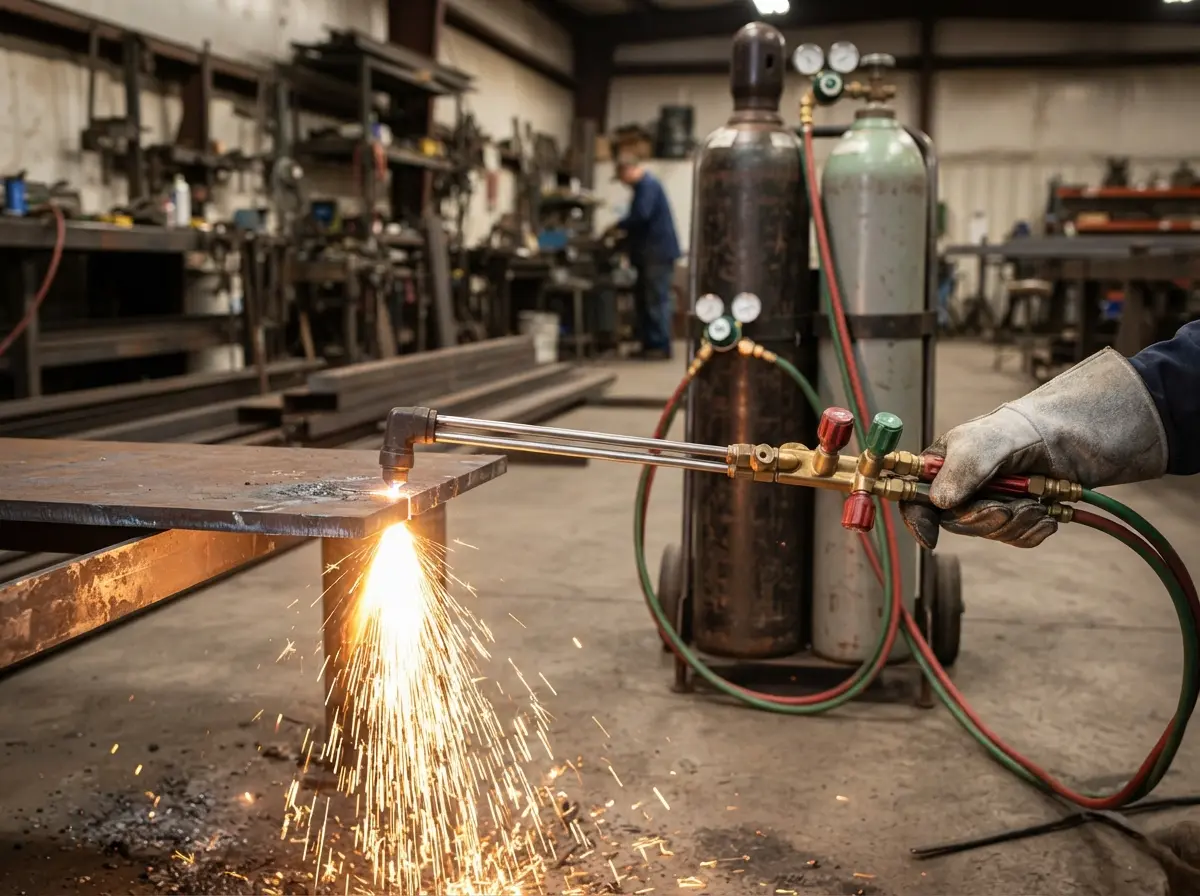
Flashback is the flame burning back through the torch into the hose, and it is dangerous. It sounds like a shrill hiss, and it can burn toward the cylinders. If it happens, close the torch valves immediately, starting with oxygen, then shut the cylinder valves and let the equipment cool before touching anything. A flashback always means something was wrong, and it must be corrected before relighting.
The causes of both are mostly the same: wrong pressures, a distorted or loose tip, an overheated or clogged tip, and gases mixing in the hoses through backfeeding. The protections are non-negotiable: flashback arrestors fitted at the regulators and non-return check valves on both the fuel and oxygen lines. Industry guidance from the Asia Industrial Gases Association and the European Industrial Gases Association treats flashback arrestors as required equipment for oxy-fuel work, not an optional extra.
The lighting sequence also prevents problems: open the acetylene valve and light it, then add oxygen; and when shutting down, close the oxygen first, then the acetylene. If you buy acetylene (DA gas), keep its hoses, regulators, and fittings strictly separate from the oxygen side of the rig, and keep oil and grease far from any oxygen fitting. The oxygen used for welding and cutting is industrial oxygen, a process gas, never a substitute for medical oxygen
Hose and Fitting Problems
Hoses cause more trouble than their cost suggests, because a bad hose fails slowly and silently.
- Leaks. Every hose leaks a little as it ages. Soapy water over the full length and the fittings shows them clearly: bubbles mean a leak, and the hose or fitting should be replaced, not taped.
- Cracks and perishing. Sunlight, ozone, and oil rot rubber hoses. A cracked hose is a failure waiting for a hot day.
- Wrong hose for the gas. Fuel gas and oxygen hoses are built differently and usually color-coded to keep them apart. Swapping them mixes dangers: fuel gas in an oxygen hose can burn inside the line. Keep the two sides separate and labeled.
- Kinks and crushing. A pinched hose blocks flow and can tempt the operator into raising pressure, which causes the opposite problem. Check for kinks before adjusting anything.
For MIG and TIG shielding gas, hoses must be clean and leak-free too. Miller Welds specifically warns against using oxygen hoses to deliver shielding gas, because they can contaminate the weld. A few feet of good hose and clean fittings is cheap insurance compared to a rejected weld.
Is It the Equipment or the Gas?
When a weld goes wrong, work in this order before touching a single dial on the machine:
- Confirm the cylinder is the right gas, is full, and the valve is open.
- Verify flow at the torch with a flow meter and a steady hiss at the nozzle.
- Check the gas path: hoses, fittings, nozzle, cup, and gas lens for leaks, kinks, and blockages.
- Block drafts and re-test.
- Only then look at machine settings, wire feed, tungsten, and technique.
Most troubleshooting guides, from Lincoln Electric and Miller Welds to the equipment manufacturers, put gas coverage at the top of the checklist, and our experience at the refilling counter matches that: welders blame the machine, and the machine was fine all along. If every gas check passes and the problem persists, then the fault is electrical, mechanical, or consumables, and that is the moment for the manual or a technician.
The Daily Five-Minute Check
Most of the problems above are caught by a short pre-shift routine:
- Inspect cylinders: labels, valves, test dates, and caps.
- Open cylinder valves slowly and check the high-pressure gauge against the gas in use.
- Soap-test hoses and fittings.
- Clean the torch tip, nozzle, and gas lens; check for damage.
- Confirm flashback arrestors and check valves are fitted and in date.
Five minutes of checking prevents an hour of rework and, in the case of oxy-fuel, prevents fires that no rework can fix. And when a cylinder, regulator, or accessory genuinely needs replacing, buy the right one for the gas: a regulator made for the cylinder it sits on, hoses rated for the service, and accessories from a supplier who stocks them properly.
Common Myths
"More gas flow means better welds." The opposite is true. Excessive flow creates turbulence that pulls air into the weld. Use the lowest flow that shields the joint.
"All welding gases are the same." Argon, CO2, acetylene, and oxygen have completely different jobs, fittings, and safety rules. Argon-CO2 mix ruins TIG; oxygen regulators must never touch acetylene; and the gas used for welding is industrial oxygen, not medical oxygen, which is a regulated drug for breathing.
"A regulator can be fixed with a wrench." Regulators are precision parts. A damaged seat or a leaking diaphragm is a replacement, not a repair, and the wrong gas in the wrong regulator is a safety hazard.
"Acetylene cylinders can lie flat like any other." No. The acetone inside must stay settled; a laid-flat cylinder can spit solvent and create danger. Store and use them upright.
"If the gauge shows pressure, the gas is flowing." A gauge shows pressure, not flow. Verify gas at the torch, especially with CO2 freeze-up, where ice can block flow while the gauge reads fine.
Frequently Asked Questions
1. Why does my MIG weld have holes (porosity)?
Porosity means air reached the molten weld pool. Check shielding gas flow, leaks in the hose and torch, spatter packed in the nozzle, drafts, and dirt or moisture on the metal. Fix gas coverage first and re-test. If pores persist with good flow, check wire feed, contact tip condition, and technique.
2. Why does my CO2 regulator freeze?
CO2 cools sharply as it expands through the regulator and can form dry ice snow inside that blocks flow. It happens on long passes at high flow, and hot shop conditions make it worse because cylinder pressure rises. Lower the flow, let the regulator thaw between passes, and use a CO2-rated or heated regulator for heavy duty cycle work.
3. Why is my TIG weld black or gray?
Black or gray TIG welds mean argon coverage is failing, usually from a wrong gas mix, low or turbulent flow, a cracked cup, a clogged gas lens, or drafts. Confirm the cylinder is 100% argon, verify flow at the cup, block air movement, and check post-flow so the tungsten cools under shielding.
4. What is the difference between backfire and flashback?
A backfire is a loud pop at the tip when the flame burns back into the torch and dies, usually from a blocked tip, low pressure, or touching the work. A flashback burns back through the torch into the hoses and is dangerous. Shut the torch valves at once, starting with oxygen, and correct the cause before relighting.
5. Why is my welding gas cylinder pressure low?
The cylinder may be nearly empty, the valve may be leaking, or it may not have been filled properly. Check the high-pressure gauge with the valve open, soap-test the valve and fittings, and compare the reading with the normal fill pressure for that gas. If in doubt, return the cylinder to the supplier for checking.
6. Can I use an oxygen regulator on acetylene?
No. Regulators are gas-specific, with different pressure ratings and fittings; acetylene regulators are built for low pressure and use left-hand threads. Using the wrong regulator can deliver dangerous pressure. Always match the regulator to the gas, and if the markings are unclear, replace it rather than guess.
7. Why does my torch pop and go out?
Popping usually means a blocked or oversized tip, pressure set too low for the tip, or the tip touching the work. Clean the tip, reset pressures to the torch rating, and let it cool before relighting. If popping repeats, inspect the whole gas path, because repeated backfire can lead to flashback.
8. What does sugaring on stainless steel mean?
Sugaring is oxidation on the back side of a stainless weld, caused by air contact while the metal is hot. It happens when argon coverage fails or pipe is welded without a back purge, and it weakens corrosion resistance. Prevent it with proper shielding and purge; it cannot be fixed by adding more weld metal.
9. How long should argon flow after I stop a TIG weld?
Post-flow protects the hot tungsten and the cooling weld crater from air. A common guide is about one second of post-flow for every 10 amps of welding current. Hold the torch over the weld until the flow stops. If the tungsten colors after the arc ends, increase post-flow or check for leaks.
10. Where can I get welding gas and cylinder accessories in Khagaria?
Prem Gas Solutions in Khagaria supplies industrial oxygen, argon, CO2, and acetylene, plus cylinder refilling, rental, exchange, regulators, hoses, and safety accessories, with delivery across Khagaria and surrounding areas. Contact them at 9470017017 to check availability and get a quotation for your setup.
Take the Diagnosis to the Supply Side
The common welding equipment problems are mostly gas problems: flow set wrong, CO2 regulators freezing, argon coverage failing, regulators mismatched to their gas, cylinders leaking or laid flat, and hoses leaking. That is good news, because gas problems are cheap to diagnose and cheap to fix if you check in the right order: gas first, flow second, equipment third, machine last. The five-minute pre-shift check catches most of them, and flashback arrestors, gas-correct regulators, and clean hoses prevent the rest.
If a cylinder, regulator, or torch problem survives your checks, or you need welding gas, refills, rental, or the right accessories, contact Prem Gas Solutions in Khagaria at 9470017017 or message us on WhatsApp. We will help you work out whether the problem is the gas, the equipment, or the setup, and get you back to clean welds.