
Nitrogen Gas for Food Packaging in Khagaria, Bihar: Uses, Purity, Cylinder Capacity, Pricing and Equipment
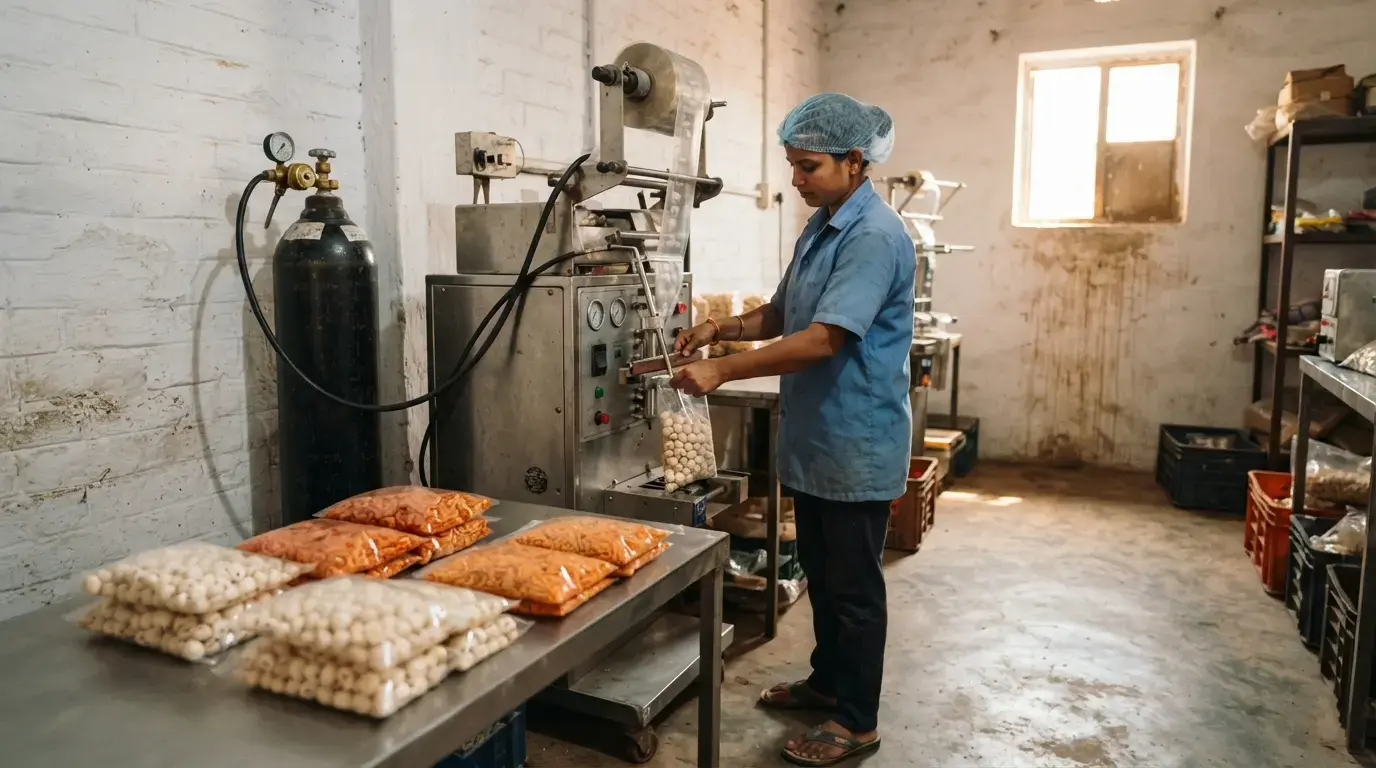
Makhana packed in October with ordinary air in the pouch does not survive a rail journey to Guwahati in the condition it left Khagaria. Water vapour working through the film from outside, and oxygen sealed in with the kernels, both go after the crunch. By the time a customer opens the pack, the roasted aroma has gone flat and the makhana has turned to chew.
Nitrogen flushing is the least glamorous fix for that, and for most small and mid-sized packers here it is also the cheapest. A cylinder, a regulator, a hose and a nozzle at the sealing jaw will usually buy more shelf life on a makhana or namkeen pack than a new laminate (the multi-layer film your pouch is made from), at a fraction of the cost.
This guide is for the businesses that make those decisions: makhana packers, namkeen units running bhujia and dalmoth, snack and dry-fruit packers, and contract filling units around the district. If you have been searching for a nitrogen gas supplier in Khagaria and finding only generic articles about modified atmosphere packaging (MAP, packing food in a gas mix instead of air), this is the practical version. Rates are near the bottom: ₹1,800 for a D-Type, ₹1,000 for a B-Type, plus GST.
One local point first. Khagaria is not a makhana-growing district. The crop is concentrated in Darbhanga, Madhubani, Saharsa, Supaul, Katihar and Purnia, per the Bihar horticulture department's profile. Khagaria sits inside that belt as a trading and dispatch point, which is why so much of it gets packed here and moved out. The packaging problem is local even when the farm is not.
📑 In this guide
Why Food Packers Use Nitrogen Gas at All
Air is roughly 21% oxygen. Oxygen is what turns the oil on a bhujia strand rancid, fades a chilli-coated snack, and feeds the mould spores that land on a kernel between roaster and pouch. Nitrogen is inert, does not react with the food, and is already 78% of the air you are breathing.
Flushing pushes that oxygen out of the headspace (the empty air above the product) before the seal closes. On a decent line, residual oxygen (what is left in the sealed pack) drops to 2% or less, against 21% when you pack in open air. Under 1% is achievable with a good film and a tidy seal. The science of nitrogen flushing is covered in our earlier post.
⚠ WHAT NITROGEN DOES NOT DO
Nitrogen does not sterilise food. It removes the oxygen aerobic spoilage organisms need, and does nothing about spores already on the product.
Nitrogen does not create shelf life on its own. What you get depends on product moisture, film barrier, seal integrity, residual oxygen and storage. Any supplier who promises "six months" before seeing your product, film and machine is guessing.
💡 HOW TO GET A NUMBER YOU CAN TRUST
If you want a shelf-life figure, run your own test: keep retention samples at room temperature and at an accelerated temperature, and open one every fortnight against a control packed in air. Two months of that beats any brochure.
What Actually Spoils Makhana and Namkeen
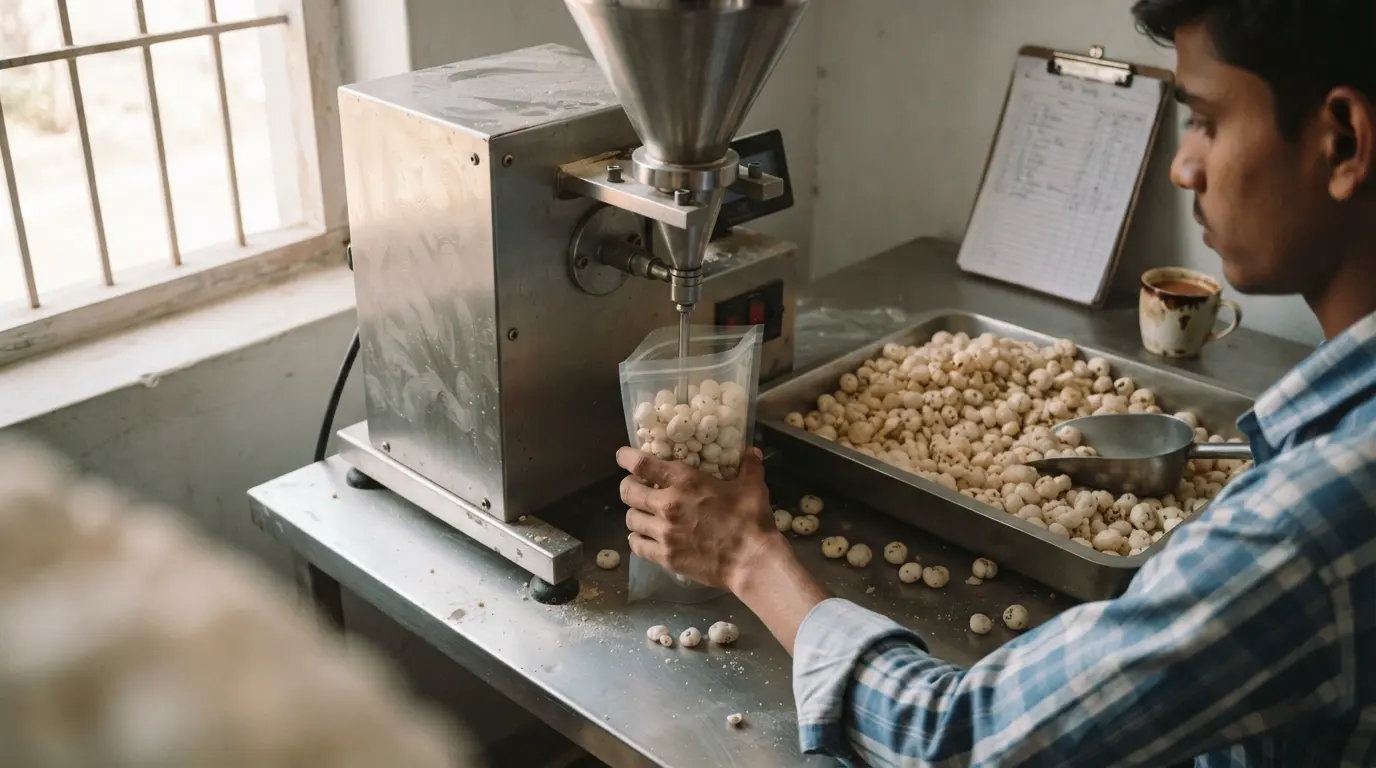
Makhana fails on moisture first. Popped fox nuts leave the roaster dry, and the APEDA makhana study puts the popped product at roughly 4% moisture, noting that airtight packaging is needed to stop it picking up water from the air. So the film's moisture barrier and the seal matter as much as the gas. Nitrogen still helps: it removes the oxygen behind stale, cardboard-like notes in the surface fat, and a gas-filled pack cushions brittle kernels against the knocks of a truck ride.
Namkeen fails on oxygen. The oil coating on a sev or boondi is spread over a large surface, and oxidation starts there. That is the mechanism behind the complaint you hear most in this trade: the pack smelled of old oil when opened, though the date was recent. Masala-heavy mixes also lose their sharp top notes within weeks. Here the target is oxygen exclusion rather than moisture alone.
Nitrogen Gas Applications by Food Type
| Product | Why nitrogen helps | What actually decides the result |
|---|---|---|
| Makhana / fox nuts | Displaces headspace oxygen, cushions brittle kernels in the sealed pack | Moisture barrier of the film, seal integrity, product moisture at packing |
| Dalmoth | Slows oxidation of the oil coating and fried lentil base; protects aroma | Residual oxygen achieved, how much oxygen the film lets through, storage heat |
| Bhujia | Limits rancidity in high-surface-area fried strands; holds colour | Oil quality at source, flush consistency, seal quality at the crimp (the heat-sealed seam) |
| Hara matar | Protects the pea surface from oxidation and colour fade | Pea moisture after roasting, cooling before packing, film barrier |
| Punjabi tadka | Preserves volatile spice top-notes longer | Aroma migration into film, headspace volume, storage heat |
| Namkeen mixtures | Consistent low-oxygen atmosphere across mixed particle sizes | Even gas distribution, fill weight consistency |
| Potato chips and savoury snacks | Best-documented case; also gives pack cushioning | Slice moisture, oil quality, residual oxygen, film |
| Roasted nuts, seeds, dry fruits | Highest fat load on this list, most oxidation-sensitive | Residual oxygen, oxygen barrier of film, cool storage |
| Other dry foods (papad, roasted grams, instant mixes) | Inert headspace where moisture is controlled | Whether the product is truly dry; moisture is the limit |
Three things the table cannot show you.
Cool before you pack. A pouch filled straight off a hot roaster carries warm, moist air into the headspace. Letting product settle to room temperature before the filling head, and keeping packed cartons off a hot tin roof, often does more than doubling the gas flow.
The seal decides everything. A crimp with a fold of masala trapped in it passes a visual check and fails in the market. In a namkeen unit, pouch sealing decides whether the flush survives the truck ride to Patna.
Chips have a published benchmark. A 2024 paper by Schmackler and colleagues in Chemie Ingenieur Technik on commercial crisp packaging recommended headspace oxygen below about 1%, and found residual oxygen drifting upward over following weeks as oxygen permeated the film. That drift is why the film spec matters as much as the flush.
Cylinder Capacity: How Many Packets One Cylinder Really Packs
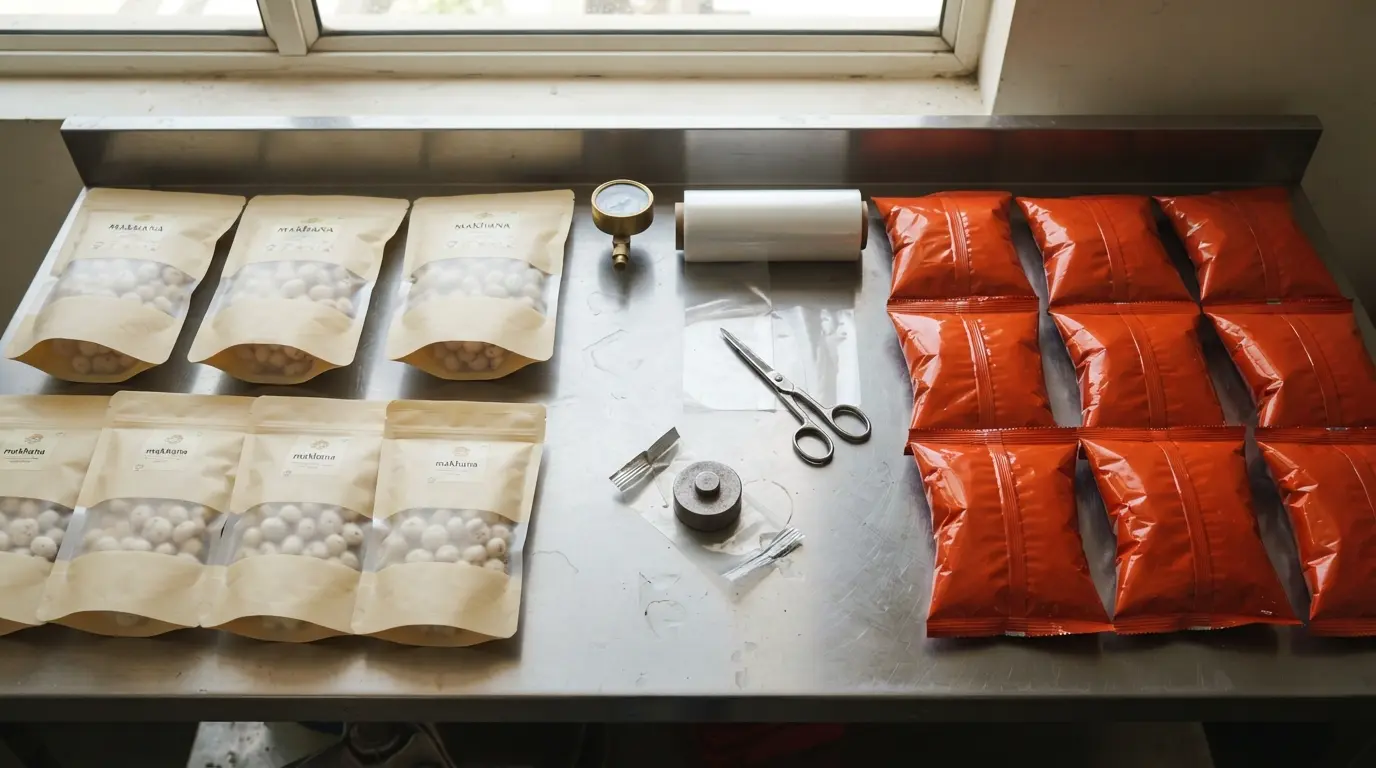
This is the question we get asked most, usually in the wrong shape: "how many 100 g packets will one cylinder fill?" Packet weight does not determine gas use. Headspace volume does. Consumption depends on pouch dimensions, how much empty space is left after filling, how many times over you flush the headspace volume, nozzle design, flow setting and leakage. A tall 100 g pouch with slack fill can use more gas than a compactly filled 200 g pack.
The nominal capacity you are buying
| Cylinder type | Approximate nitrogen capacity |
|---|---|
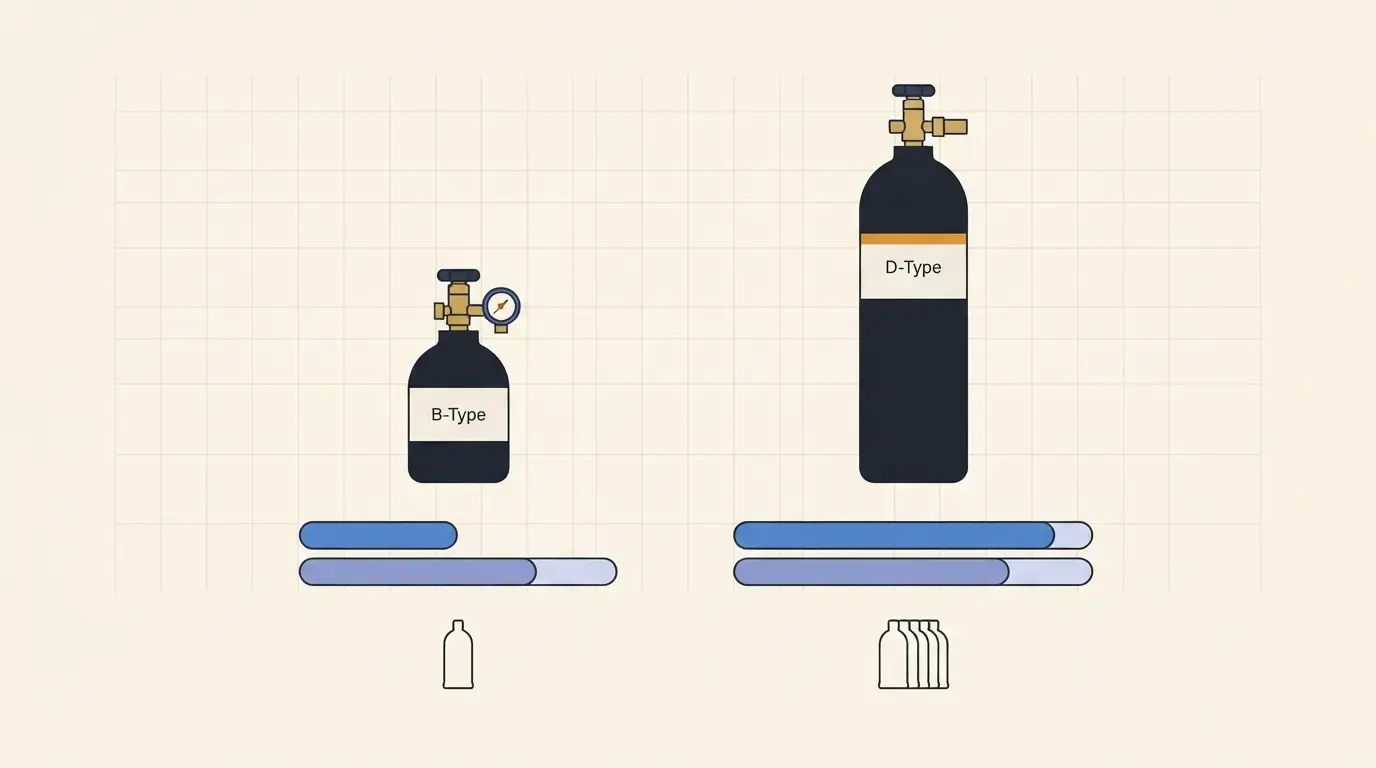
| D-Type cylinder | 7 cubic metres (7,000 litres) |
| B-Type cylinder | 1.5 cubic metres (1,500 litres) |
Nominal capacity is what the cylinder is rated to hold. What you can use is lower, because residual pressure stays inside, some gas is lost between regulator and nozzle, and setting up the line wastes a little more.
Illustrative consumption per packet
These figures bracket what a small-to-mid flush line typically draws. They are examples, not industry standards and not predictions for your machine.
| Packet size | Illustrative pouch size | Illustrative nitrogen per packet |
|---|---|---|
| 20 g | 100 × 150 mm | 0.1–0.25 litre |
| 50 g | 130 × 180 mm | 0.15–0.35 litre |
| 100 g | 160 × 220 mm | 0.25–0.5 litre |
| 200 g | 200 × 260 mm | 0.4–0.8 litre |
| 250 g | 220 × 280 mm | 0.5–1.0 litre |
| 500 g | 260 × 350 mm | 0.8–1.5 litre |
| 1 kg | 300 × 400 mm | 1.2–2.0 litre |
The gas figure rises with pouch size, not product weight. A 250 g pack of light makhana in a large pouch can use more nitrogen than a 250 g pack of dense namkeen in a tight one.
Theoretical and practical packet counts
The formula: nominal nitrogen in litres ÷ consumption per packet in litres. One cubic metre is 1,000 litres, so a D-Type carries 7,000 litres nominal and a B-Type 1,500. The "at 70%" columns assume 70% of nominal gas reaches the pouch, with 30% lost to residual pressure, line losses, setting adjustments and wastage. That is an assumption for illustration. Measure yours.
| Consumption per packet | D-Type nominal (7,000 L) | D-Type at 70% (4,900 L) | B-Type nominal (1,500 L) | B-Type at 70% (1,050 L) |
|---|---|---|---|---|
| 0.1 L | 70,000 | 49,000 | 15,000 | 10,500 |
| 0.25 L | 28,000 | 19,600 | 6,000 | 4,200 |
| 0.5 L | 14,000 | 9,800 | 3,000 | 2,100 |
| 1.0 L | 7,000 | 4,900 | 1,500 | 1,050 |
What that means on a real shift
A semi-automatic machine running 20 packs a minute at 0.5 litre per pack draws 10 litres a minute. A D-Type's 4,900 usable litres give about 490 minutes, or eight hours: one full shift with almost nothing left over. The same setting on a B-Type gives about 105 minutes. So a B-Type suits trial runs, small batches and backup, but it is not a production cylinder for a busy line.
At 40 packs a minute, an eight-hour shift eats 9,600 litres. Two D-Types give 9,800, enough with about ten minutes in hand. Take three, or feed both through a manifold (a header drawing from two cylinders at once) so you are not swapping mid-run.
Gas cost per packet
A D-Type works out at about ₹0.37 per usable litre once you allow for the 30% that never reaches a pouch; a B-Type at about ₹0.95. The small cylinder costs roughly two and a half times more per usable litre, which is expected and worth remembering when someone offers you a "cheaper" one.
| Consumption per packet | Cost per packet, D-Type | Cost per packet, B-Type |
|---|---|---|
| 0.1 L | ₹0.04 | ₹0.10 |
| 0.25 L | ₹0.09 | ₹0.24 |
| 0.5 L | ₹0.18 | ₹0.48 |
| 1.0 L | ₹0.37 | ₹0.95 |
A 100 g pack selling for ₹20 carries roughly 18 paise of nitrogen at 0.5 litre per pack, ex-GST. The gas is not what makes packaging expensive. Film, labour and the pouch are.
How to Check Nitrogen Purity Before You Trust It
Purity is quoted as a percentage, and the percentages are easy to misread. A 99.9% cylinder can hold up to about 1,000 ppm of other gases, mostly argon from the air it was separated from, plus traces of oxygen and moisture. At 99.99% that falls to roughly 100 ppm. For dry snacks, 99.9% is what most small packers buy and it is enough. The higher grade buys a lower moisture and oxygen ceiling, which matters when a buyer audits your paperwork or writes a limit into the spec. What it will not do is rescue a weak flush. If your packs land at 3% residual oxygen, the 0.1% inside the cylinder is not your problem. Your nozzle timing, flow setting and seal are.
Is There Such a Thing as "Food Grade" Nitrogen?
In India, nitrogen is a permitted food additive under INS 941, listed in the FSSAI compendium of food additive regulations as permitted at Good Manufacturing Practice, footnoted for use as a packaging gas only. FSSAI publishes no separate purity monograph for nitrogen. Additives must be of appropriate food-grade quality, and where no standard exists, Codex purity criteria may be adopted.
ℹ️ THE KEY POINT
There is no separate BIS "food grade" nitrogen grade to ask for. The Indian standard, IS 1747, defines technical and pure grades by oxygen and moisture limits. EU criteria for E 941 require an assay of at least 99% with oxygen at or below 1%, the Codex GSFA entry matches FSSAI's GMP position, and US rules treat nitrogen as GRAS under 21 CFR 184.1540. When someone says "food grade", ask what they mean in writing. It is a specification you agree with your supplier and evidence with documents, not a sticker on the cylinder.
How to Verify What You Received
A regulator gauge, smell test, flame test and visual inspection tell you nothing about purity. Nitrogen is colourless and odourless. If it smells of anything, that smell is contamination. What does work:
- A Certificate of Analysis for the lot, stating assay, oxygen limit and moisture or dew point (the temperature at which moisture condenses out), traceable to the cylinder you received.
- Cylinders dedicated to food supply. One that has carried welding gas, or run on oil-lubricated equipment, is not automatically suitable.
- Cylinder identification and labelling, so a problem can be traced back.
- A calibrated analyser on the outlet, the quickest on-site check.
- A headspace oxygen reading on sealed pouches, which tells you what actually matters.
Our guide on how to check gas purity before accepting a cylinder covers the full routine. If a buyer's audit or an export order requires a specific purity, put it in writing before you order. Grades vary by lot, so confirm what we can supply before you write a purity figure into someone's specification.
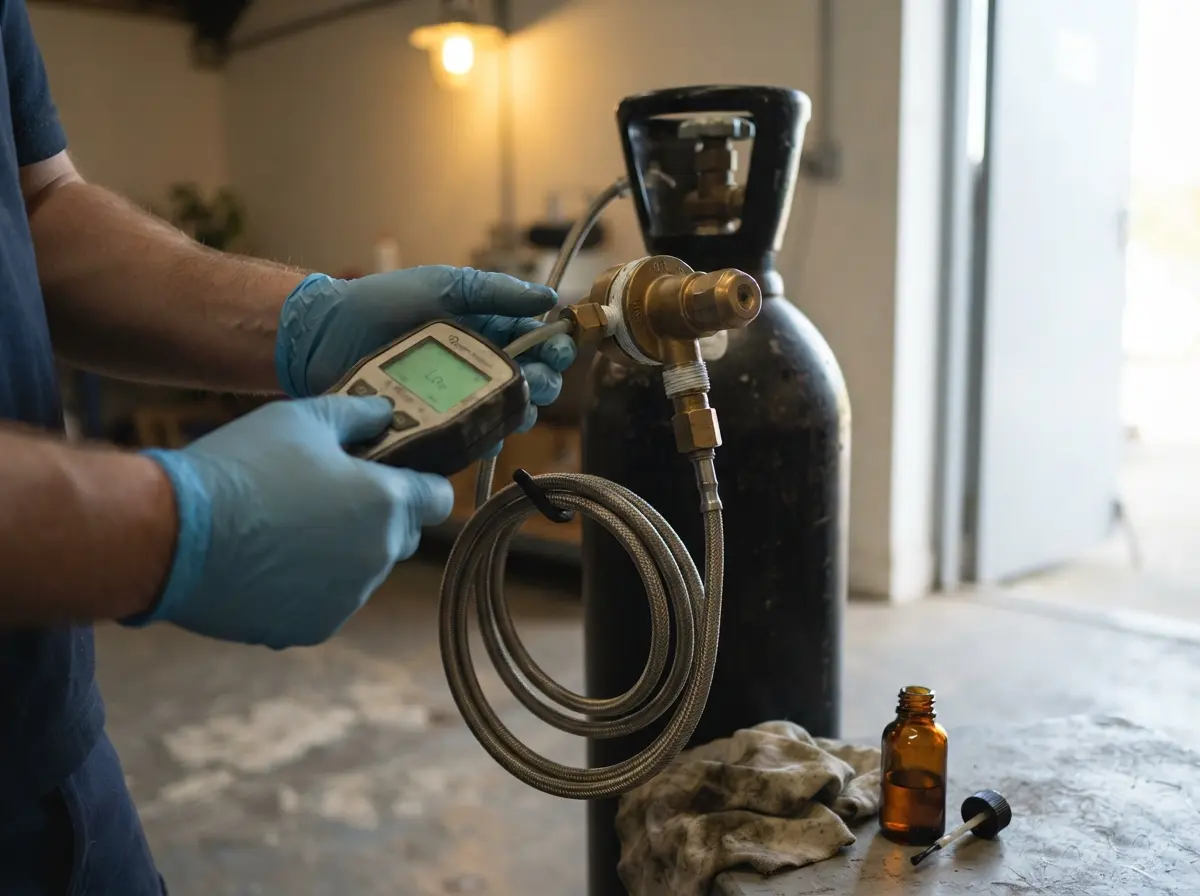
Equipment Between the Cylinder and the Pouch
| Item | What it does |
|---|---|
| Nitrogen cylinder | The gas source. Secure it upright, use it in a ventilated area. |
| Nitrogen pressure regulator | Drops cylinder pressure (commonly around 150 bar at full fill) to the few bar, typically 1–3, that your nozzle wants. Must match valve type, pressure rating and flow demand. |
| Valve connection and key | The valve outlet thread must match the regulator inlet. A correct key or valve tool is needed where the valve is not hand-operated. |
| Gas-compatible hose pipe | Carries gas from regulator to machine. Rated for the pressure, oil-free, not borrowed from an oxygen or welding set. |
| Fittings, clamps and connectors | Keep the joint leak-free. A loose clamp is the most common source of quiet gas loss on a small line. |
| Flow meter or flow control | Lets you set and repeat a flow rate. Without one, every operator sets the line differently. |
| Flushing nozzle or machine attachment | Directs gas into the headspace at the right moment in the seal cycle. |
| Pressure gauges | Inlet and delivery pressure, so you see a falling cylinder before packs go flat. |
| Trolley and restraint chain | Keeps the cylinder upright and movable. Not optional in a working packing room. |
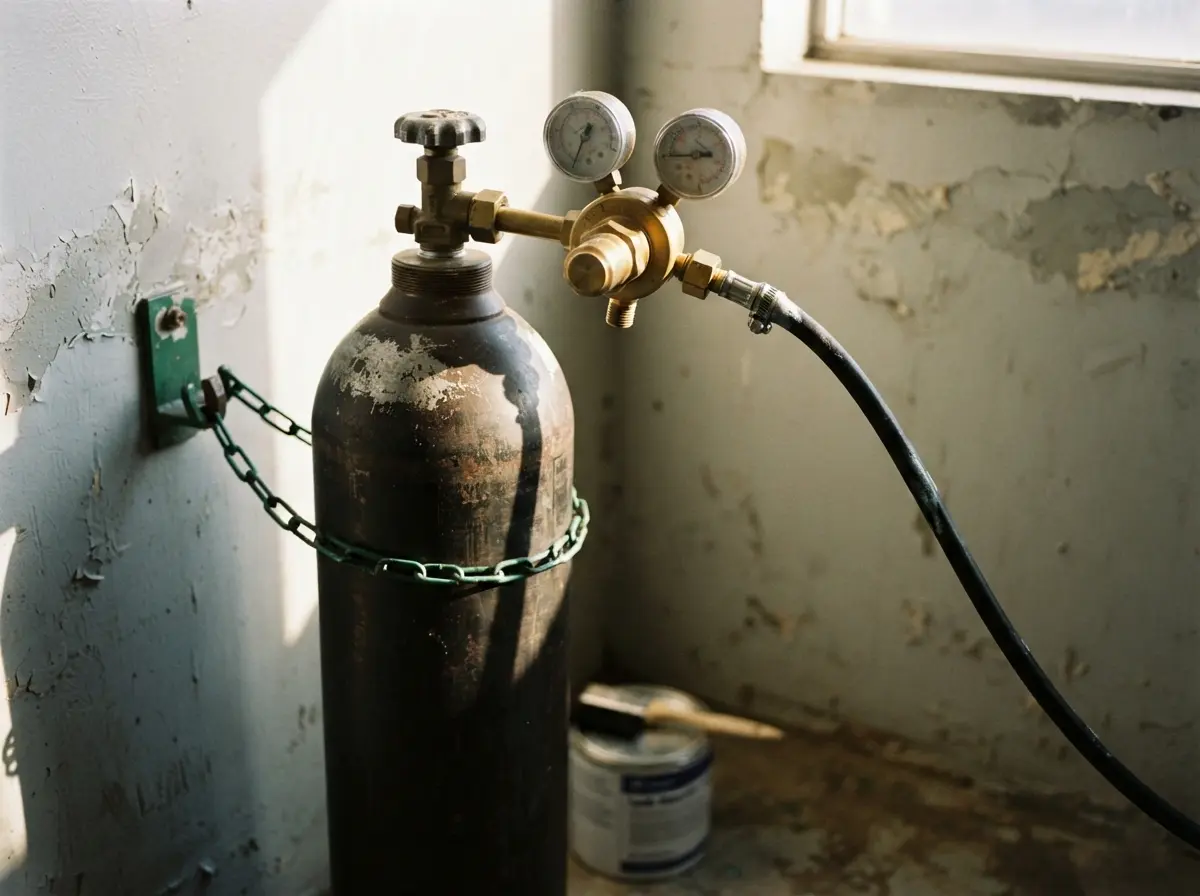
Buyer's Checklist for a Regulator and Hose
☑ Check these before you pay
You can source the whole set, including the nitrogen gas regulator and hose pipe in Khagaria, from our cylinder hardware and accessories range. For sizing, the guide on choosing the right pressure regulator covers thread types, staging and delivery pressure.
Two Safety Points a Small Packing Room Cannot Skip
⚠ WARNING
Nitrogen displaces oxygen and gives no warning. No smell, no colour, no taste. In a small closed packing room with a leaking hose, oxygen can drop without anyone noticing. OSHA defines an oxygen-deficient atmosphere as below 19.5% by volume, and UK HSE guidance notes that an oxygen-free atmosphere causes loss of consciousness within seconds. An oxygen monitor with an alarm at 19.5% is the right instrument; a carbon dioxide monitor will not detect a nitrogen leak. Ventilate the room, restrain cylinders upright, and train whoever changes them.
If someone collapses in a room where nitrogen is used, do not go in after them. Ventilate from outside, call for help, and let a trained responder with breathing apparatus go in. Rescuers without air are the second victim in most nitrogen incidents.
Nitrogen Cylinder Price in Khagaria: D-Type and B-Type Rates
| Cylinder | Capacity | Price before GST |
|---|---|---|
| D-Type | 7 m³ (7,000 litres) | ₹1,800 |
| B-Type | 1.5 m³ (1,500 litres) | ₹1,000 |
GST is additional on both. These are PREM GAS SOLUTIONS' own published rates, not a national market average and not a quotation for a specific order.
Before ordering, confirm four things with us: availability of the size you need, especially in peak season; the gas specification and documentation that comes with the lot; the delivery arrangement for your location; and any rental, deposit or other charges if you are taking a cylinder on rent rather than using your own.
Nitrogen Gas Supplier in Khagaria: What Buying Local Actually Gets You
A full cylinder does not last long on a production floor. When a D-Type empties at 4 pm on a Saturday with two hundred kilos of makhana still to pack, the value of a supplier twenty minutes away is obvious.
PREM GAS SOLUTIONS supplies industrial gases from Khagaria, Bihar, and works with food packers who need nitrogen, regulators, hoses and the small accessories that hold a line together. What you get:
- Same-district supply. No waiting on a consignment from Patna when a cylinder runs dry.
- One stop for the rig. Gas, regulator, hose, clamps, flow meter and leak-detection solution from one place, so nobody can blame the other supplier for a compatibility problem.
- A conversation about recurring demand. If you pack seasonally, we can plan supply around your production calendar instead of one cylinder at a time.
- Local delivery. Free within 5 km of Khagaria on qualifying orders. The business has set a minimum of 2 orders for this offer, so confirm the exact terms with us before relying on it.
PREM GAS SOLUTIONS
Location: Khagaria, Bihar
Website: pkgas.com
Phone / WhatsApp: 9470017017
Service: 24×7 enquiry line, subject to confirmation of stock and delivery
Range: nitrogen cylinders in available sizes, regulators, gas hose pipes and related accessories
We do not claim certifications, guaranteed purity or instant delivery that we have not confirmed for your requirement.
Frequently Asked Questions
The Short Version
🔑 Key Takeaway
Nitrogen will not rescue a wet product or a leaky seal. What it does is remove the oxygen that turns a good makhana or a fresh bhujia stale before its time, at a few paise per pack, if you size the cylinder to the shift and connect it properly.
Start with three measurements: gas drawn per pouch, residual oxygen in a sealed pack, and packs per shift. Say you run a unit like Khagaria Food Products, packing a mix of sachets and family packs. The draw on a 20 g sachet and a 500 g pack are wildly different, and only measurement tells you which cylinder to keep on the floor.
Set up your nitrogen line in Khagaria
Tell us your product, pack size and machine. We will work out the cylinder size, regulator and hose you need, and confirm what we can supply today.
WhatsApp 9470017017 → Call nowOr contact us through the website for nitrogen availability and pricing in Khagaria.