How to Check Gas Purity, Quality, and Quantity Before You Buy
Why Purity, Quality, and Quantity All Matter
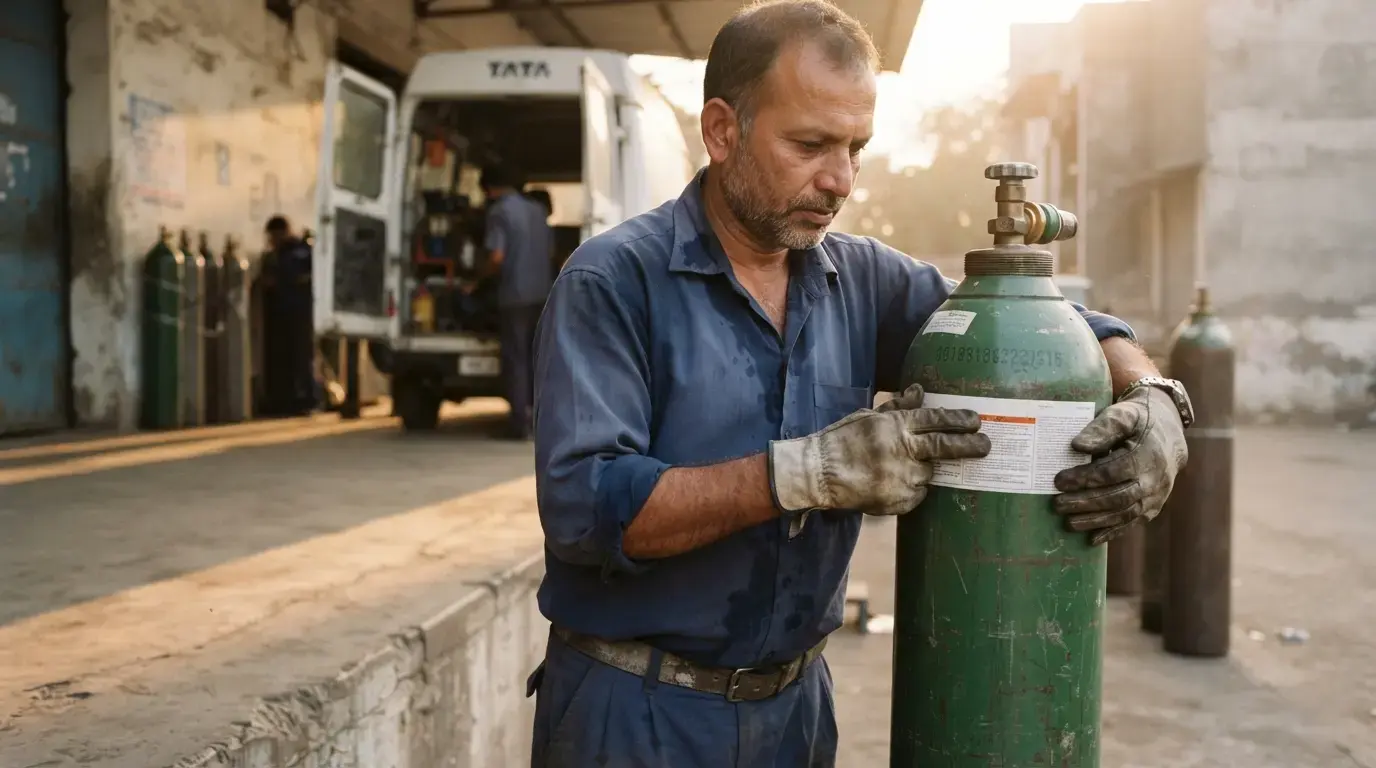
Every year, hospitals, workshops, and factories across India receive gas cylinders that are under-filled, incorrectly labelled, or contaminated. A welding shop that receives low-purity argon gets porous welds. A clinic that accepts an under-filled oxygen cylinder risks patient safety during a power cut. A restaurant that buys the wrong CO₂ grade finds its drinks taste flat. A laboratory running gas chromatography with contaminated carrier gas gets unreliable results.
The problem is not always dishonesty. Often, buyers do not know what to check — and suppliers who cut corners count on that ignorance.
This guide walks you through exactly what to verify when purchasing industrial or medical gas: the correct grade, actual purity, real quantity, cylinder condition, and supplier documentation. Follow these steps and you will never accept a bad cylinder again.
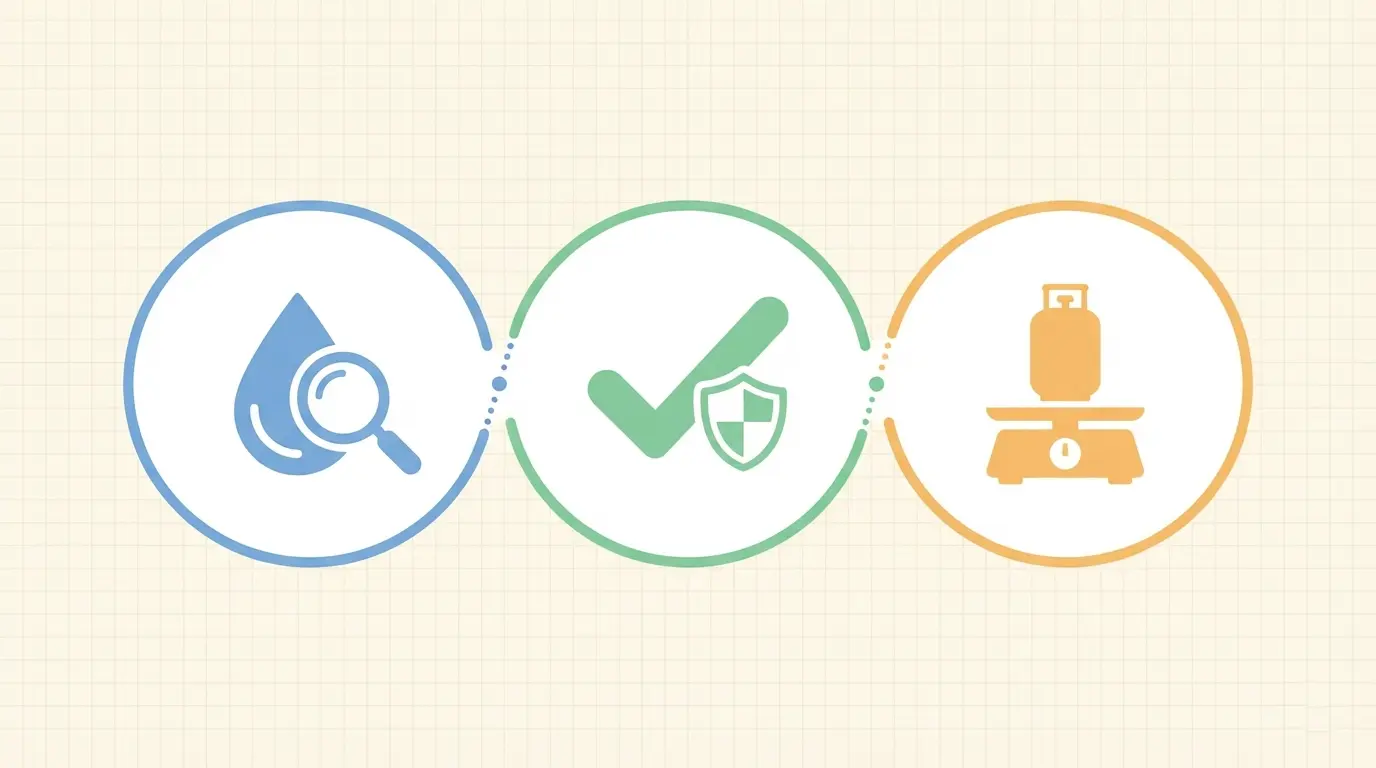
When people talk about "checking gas," they usually mean one thing: is the cylinder full? But fullness is only one part of the equation. Three things must be right for the gas to do its job:
- Purity — the gas must be at the concentration the application demands. TIG welding-grade argon at 99.99% purity produces a different result than general industrial argon at 99.5%. Medical oxygen at 99.5% meets a patient's respiratory need; industrial oxygen at 99.2% may contain moisture that damages equipment.
- Quality — the gas must be free from contaminants that could harm people, damage equipment, or produce faulty results. Moisture, oil vapour, hydrocarbons, and particles are all contaminants that visual inspection alone cannot detect.
- Quantity — the cylinder must contain the volume of gas you are paying for. A cylinder that is 80% full when you were told it is full means you overpaid by 20%.
These three factors are independent. A cylinder can be full but contaminated. It can be pure but under-filled. Checking all three is non-negotiable.
 📑 In this guide
Step 1: Identify the Correct Gas and Grade
Before you can verify anything, you must know what you are supposed to be receiving. This sounds obvious, but misidentified cylinders are more common than most buyers realise.
Common Gases and Their Typical Grades
| Gas | Common Industrial Grade | Medical Grade | Key Difference |
|---|---|---|---|
| Oxygen | 99.2%–99.5% | 99.5%+ (pharmacopoeia grade) | Medical oxygen requires stricter moisture and contaminant limits |
| Nitrogen | 99.0%–99.999% | Rarely used medically | Purity varies hugely by application |
| Carbon Dioxide (CO₂) | 99.5%–99.9% | Food-grade CO₂ has separate limits | Beverage vs industrial use demands different purity |
| Argon | 99.5%–99.999% | Not typically used medically | TIG welding requires 99.99%; general industrial use may be 99.5% |
| Hydrogen | 99.5%–99.999% | Not typically used medically | Safety requirements are extreme regardless of grade |
| Helium | 99.99%+ | Used as MRI magnet coolant (not inhaled) | Impurities affect MRI magnet performance |
The application determines the grade. A hospital buying oxygen for patients needs medical-grade gas. A fabrication shop buying oxygen for cutting needs industrial-grade gas. A laboratory running analytical instruments may need ultra-high-purity carrier gases. Never assume one grade fits all uses.
💡 IMPORTANT — Medical vs Industrial Gas
Medical and industrial gas are never interchangeable, even if purity numbers look similar. Medical gas requires pharmacopoeia-grade testing, batch traceability, and regulatory compliance that industrial gas does not. For a full comparison, see our guide to medical oxygen vs industrial oxygen purity standards.
If you are unsure which grade your application requires, ask your supplier to confirm the grade, purity specification, and intended use in writing before the order is filled.
Step 2: How to Check Gas Purity Using a Certificate of Analysis
Purity is the hardest property to verify by observation alone. You cannot see, smell, or touch most gas impurities. Here is what to do.
Request the Certificate of Analysis (COA)
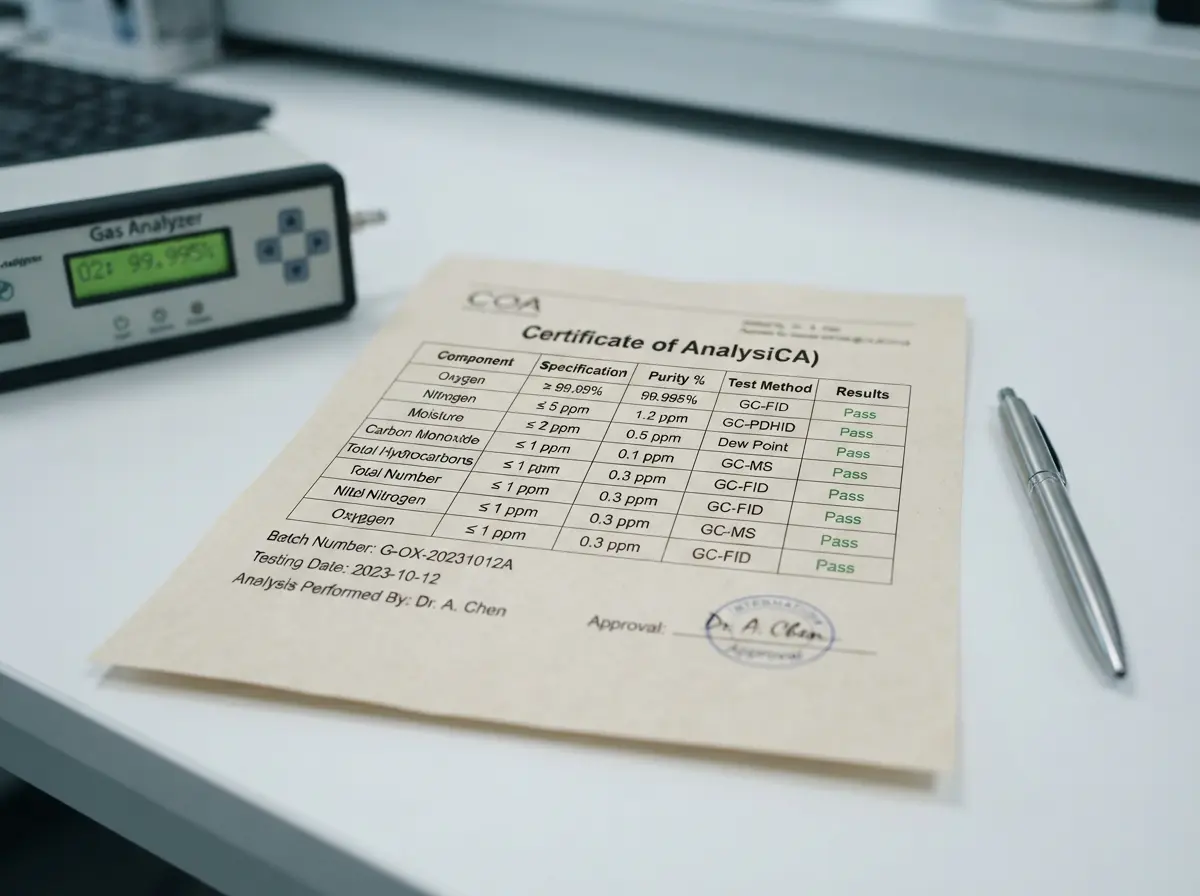
A Certificate of Analysis is a document from the gas manufacturer or testing laboratory that states the actual purity of the gas in the batch you received. A proper COA includes:
- Batch or lot number — so you can trace the gas to its production run
- Testing date — to confirm the gas was tested recently
- Gas specification — the grade and purity standard it was tested against
- Purity percentage — the actual measured value
- Impurity levels — moisture (H₂O), hydrocarbons (THC), oxygen (for non-oxygen gases), carbon dioxide, and other relevant contaminants
- Testing method — the instrument or standard used (e.g., gas chromatography, paramagnetic oxygen analysis)
- Laboratory or manufacturer details — name, address, and authorisation
⚠ WARNING
If a supplier cannot provide a COA, that is a red flag. For medical gases, the COA is not optional — it is part of the documentation that accompanies properly supplied medical products.
Testing Instruments Used by Professionals
Different gases require different testing methods. Here are the most common instruments:
- Oxygen analyser — measures oxygen concentration using paramagnetic or electrochemical sensors. Used for verifying oxygen purity and for detecting oxygen contamination in other gases.
- Moisture / dew-point meter — measures the amount of water vapour in the gas. Critical for medical gases and for gases used in sensitive manufacturing.
- CO₂ analyser — measures carbon dioxide concentration using infrared absorption. Used in beverage and industrial applications.
- Gas chromatograph — separates and quantifies all components in a gas sample. The most comprehensive test, used for high-purity gases and laboratory-grade requirements.
- Hydrocarbon analyser — detects oil or organic contamination in the gas stream.
💡 IMPORTANT
These instruments are used by gas manufacturers, testing laboratories, and quality-conscious suppliers — not by the average buyer at the point of purchase. Your job as a buyer is to request the COA and verify that the numbers match the grade you ordered. If you need independent testing, contact a certified laboratory.
Gas-Specific Purity Tips
- Oxygen (medical): Verify pharmacopoeia-grade purity (99.5%+) and check for moisture and hydrocarbon limits on the COA.
- Argon (TIG welding): Ensure 99.99% purity, not just 99.5%. Low-purity argon causes weld porosity and discolouration.
- CO₂ (beverages): Request a food-grade certificate confirming the gas meets food-safety standards, not just industrial purity.
- Nitrogen (food packaging): Check that the purity meets your packaging specification — food-grade nitrogen may have additional requirements beyond basic industrial purity.
- Laboratory gases: Carrier gases for chromatography and sputtering gases for electronics manufacturing often require ultra-high purity (99.999%+). Verify the exact specification on the COA matches your instrument requirements.
What Buyers Can Do Without Specialised Equipment
While you cannot measure exact purity without instruments, you can still check:
- Does the cylinder label match the ordered grade? Check the gas name, grade, purity, and batch number printed on the cylinder or its label.
- Does the COA match the cylinder? The batch number on the COA should match the batch or serial information on the cylinder.
- Does the supplier's invoice state the grade and purity? If the invoice says "oxygen" but does not specify the grade, ask for clarification.
Step 3: Inspect the Cylinder
Before accepting any cylinder, perform a visual and physical inspection.
Cylinder Markings to Check
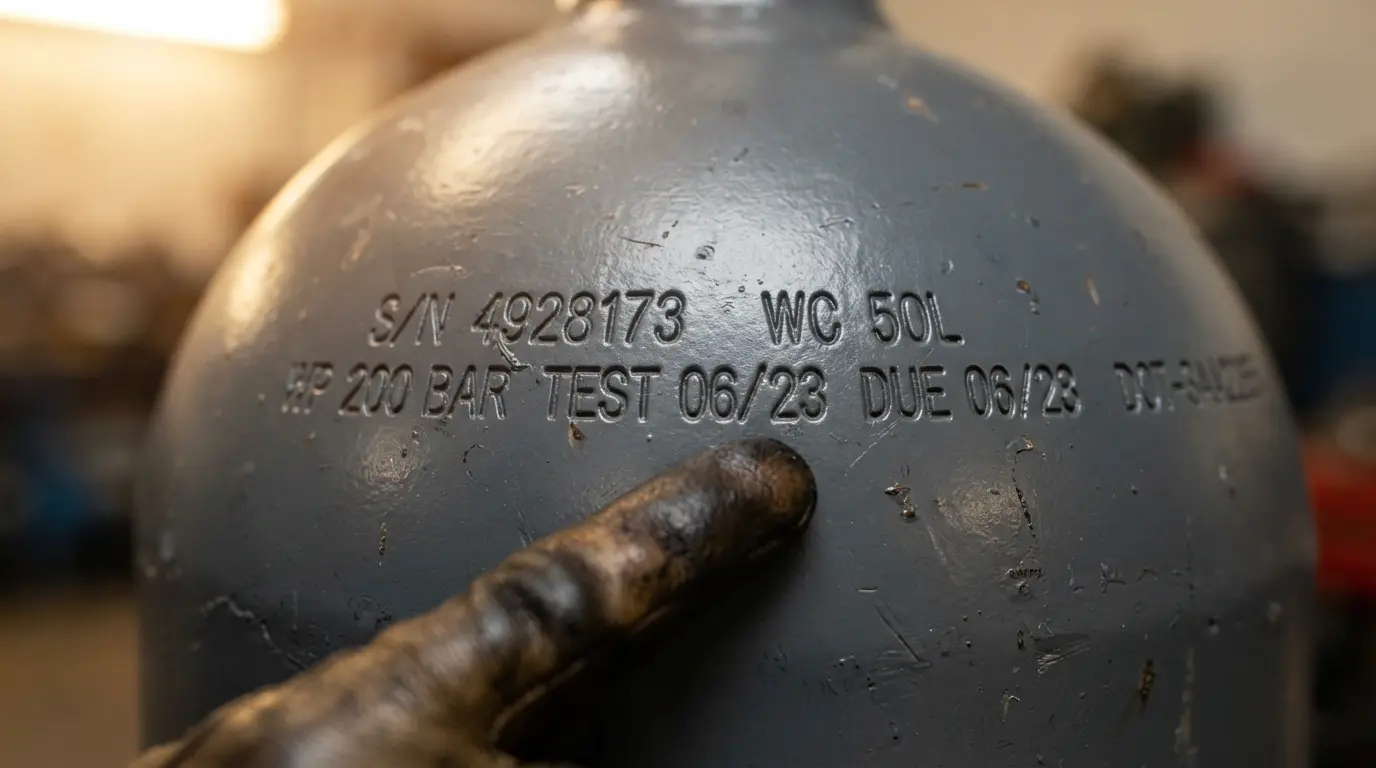
Every compressed gas cylinder carries permanent markings stamped into the metal:
- Manufacturer's name or logo
- Serial number — unique to each cylinder
- Water capacity — in litres
- Working pressure — in bar or kg/cm²
- Test date — when the cylinder was last hydrostatically tested
- Re-test due date — when the next test is required
Cylinders must be within their re-test period. An expired cylinder should not be accepted.
Quick Visual Check — Cylinder Colour Coding
Indian standards specify colour codes for different gases on cylinders. For example, medical oxygen cylinders typically have a white shoulder band on a black body, while industrial oxygen cylinders are painted all black. While colour coding is a useful first check, it should never be your only verification — always confirm with the label, COA, and documentation.
Physical Condition
☑ Physical Condition Checklist
Learn more about choosing the correct pressure regulator and accessories that go with your cylinder.
Step 4: How to Check the Actual Quantity
A common mistake is judging gas quantity by cylinder size or pressure gauge reading alone. Neither tells the full story.
The Basic Formula
For compressed non-liquefied gases (like oxygen, nitrogen, argon):
Gas volume ≈ Cylinder water capacity × Filling pressure
For example, a D-type cylinder with a water capacity of approximately 47 litres filled to 150 bar contains roughly:
47 litres × 150 bar ≈ 7,050 litres (about 7 cubic metres of gas at atmospheric pressure).
Always check the water capacity stamped on your specific cylinder — sizes vary between manufacturers.
Why Pressure Alone Is Not Enough
Pressure readings can be misleading because:
- Temperature affects pressure. A cylinder standing in the sun will show higher pressure than the same cylinder in a cool room. The gas volume has not changed — only the pressure reading.
- Gauge accuracy varies. A cheap pressure gauge may be off by 5–10%.
- For liquefied gases (like CO₂), pressure does not tell you quantity. CO₂ is stored as a liquid under pressure. The pressure stays roughly constant as long as there is liquid inside. A cylinder that is 50% full of liquid CO₂ shows almost the same pressure as one that is 100% full. Weight is the reliable measure for liquefied gases.
Weight-Based Verification
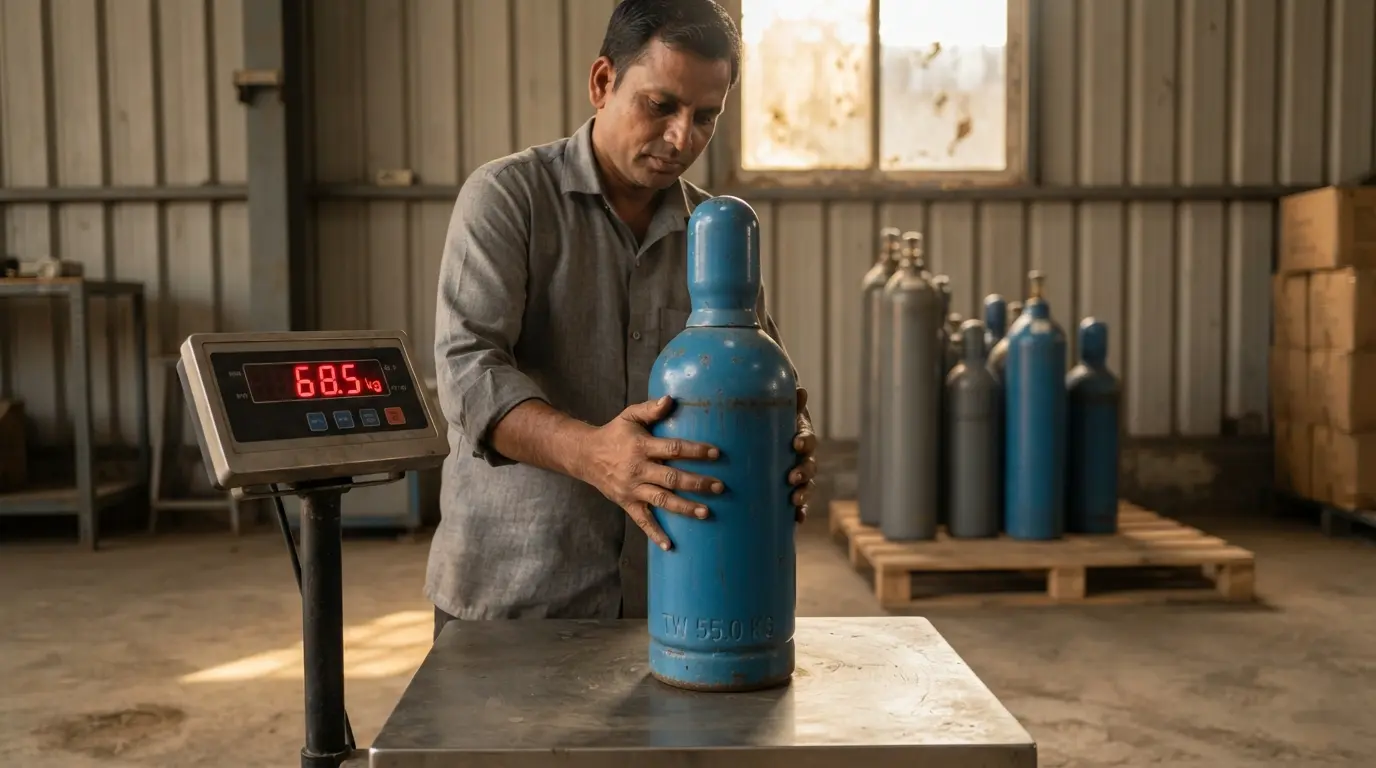
For any cylinder, you can check quantity by weight:
Net gas weight = Gross weight (full cylinder) − Tare weight (empty cylinder)
The tare weight is stamped on the cylinder. If your supplier provides the gross weight or the net weight on the invoice, compare it against the cylinder's markings.
💡 PRACTICAL TIP
If you purchase gas regularly, keep a simple record of what each cylinder type should weigh when full. Deviations of more than 5% from the expected net weight warrant a question.
Check the Filling Pressure
Ask the supplier to confirm the filling pressure, and verify it against the cylinder's rated working pressure. The working pressure is stamped on the cylinder body. If the cylinder says "150 bar" and the gauge reads 120 bar, the cylinder is not full — unless the supplier has a documented reason (like temperature compensation).
Step 5: Check for Leaks
A leaking cylinder is both a safety hazard and a quantity problem. Simple checks you can perform:
- Listen. Hold the cylinder valve area near your ear (do not put your face directly over the valve). A faint hiss may indicate a leak.
- Inspect connections. Check the valve outlet, the regulator connection point, and any fitting for signs of damage.
- Use leak detection solution. If available, apply a soap-water solution to connections. Bubbles indicate a leak.
⚠ DANGER — Never Use a Flame
Never use a flame to check for leaks. This is extremely dangerous, especially with flammable gases like hydrogen. Do not attempt to repair a valve yourself. If you suspect a leak, do not use the cylinder — notify your supplier immediately.
For hydrogen and other flammable gases, the stakes are even higher. Ensure proper ventilation and follow all safety protocols. Our guide on gas cylinder accessories and safety equipment covers the safety gear you should have on hand.
Step 6: Verify the Supplier and Documentation
A reliable supplier is your first line of defence against bad gas. Check the following:
Documents to Request
| Document | What It Tells You |
|---|---|
| Invoice | Supplier identity, gas type, grade, quantity, price, GST details |
| Certificate of Analysis (COA) | Actual purity and contaminant levels |
| Batch/lot number | Traceability to the production run |
| Cylinder test certificate | That the cylinder is within its re-test period |
| Supplier licence or authorisation | That the supplier is legally permitted to sell the gas type |
India-Specific Regulatory References
Regulatory requirements in India depend on the gas type and its intended use:
- PESO (Petroleum and Explosives Safety Organisation) — governs the storage, transport, and handling of compressed gases and flammable materials across India.
- BIS (Bureau of Indian Standards) — publishes Indian Standards for gas purity and cylinder specifications.
- CDSCO (Central Drugs Standard Control Organisation) — relevant for medical gases, which are regulated as pharmaceutical products.
Requirements vary by gas, activity, and application. Do not assume that a single licence covers every type of gas. If your supplier cannot explain which regulations apply to the gas they are selling you, that is cause for caution.
💡 WHAT YOU CAN DO
Ask the supplier which regulations apply to the gas they are selling, and whether they hold the applicable authorisations. For regulated gases, this is not a formality — it is a legal requirement.
Step 7: Red Flags While Buying Gas
Watch for these warning signs during any gas purchase:
⚠ RED FLAGS — Walk Away If You See These
Watch for these warning signs during any gas purchase:
- Unusually low price — if the price is significantly below market rate, ask why. Under-filled or off-grade gas is one common explanation.
- No invoice or a vague invoice — a proper invoice should state the gas type, grade, purity, cylinder serial number, and quantity.
- No specification or purity information — if the supplier says "it's all the same" or "don't worry about the grade," be concerned.
- Missing or unclear cylinder markings — faded, painted-over, or absent stamps are serious red flags.
- Expired or overdue cylinder testing — check the test date stamped on the cylinder.
- Damaged or heavily corroded cylinder — physical damage compromises safety.
- Unsealed or suspicious cylinder — if the valve seal is broken or missing, the cylinder may have been tampered with.
- Supplier unwilling to provide documentation — a legitimate supplier will happily provide a COA and invoice.
- Gas supplied in an inappropriate cylinder — oxygen in a nitrogen cylinder, or vice versa, is extremely dangerous.
- Claims of "100% pure" without a COA — purity must be verified by testing, not by claims.
What to Do If You Find a Problem
If any check fails — wrong grade, expired testing, visible damage, missing documentation, suspected contamination — take these steps:
Do Not Use the Cylinder
Set it aside in a safe, ventilated area away from ignition sources.
Document the Issue
Take photographs of the cylinder markings, label, valve, and any visible damage.
Notify Your Supplier Immediately
Request a replacement cylinder and the correct documentation.
Record the Incident
Note the date, cylinder serial number, supplier name, and what was wrong. This protects you if the issue recurs.
Report Serious Concerns
If you suspect the gas is contaminated, mislabelled, or the supplier is operating without proper authorisation, report it to the relevant authority.
Questions to Ask Your Gas Supplier
Print this list and keep it handy when purchasing gas:
- What is the gas purity, and what grade is it?
- Is it industrial grade, medical grade, food grade, or another specification?
- Can you provide the Certificate of Analysis (COA)?
- What is the filling pressure, and what is the cylinder water capacity?
- When was the cylinder last tested, and when is the re-test due?
- What is the cylinder serial number?
- Is the cylinder supplied with the correct valve for this gas?
- What quantity of gas am I actually receiving (by volume or weight)?
- What documentation will come with the delivery?
- Can you confirm which regulations apply to this gas?
If the supplier answers these questions clearly and provides supporting documents, you can buy with confidence. If they hesitate, deflect, or cannot provide basic information, walk away.
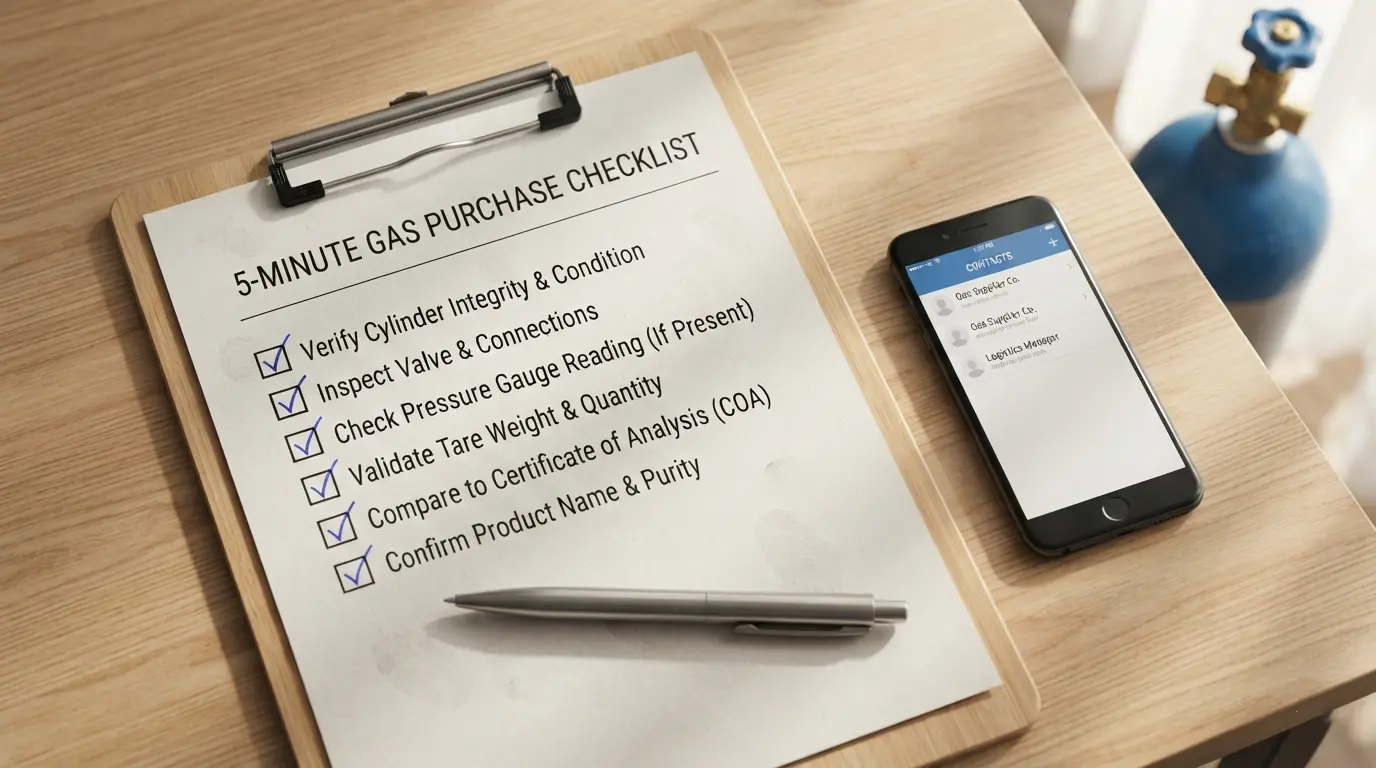
5-Minute Gas Purchase Checklist
Use this checklist every time you accept a gas cylinder delivery:
☑ 5-Minute Gas Purchase Checklist
Save this checklist on your phone or print it for your receiving staff. It takes five minutes, and it protects you from receiving substandard or unsafe gas.
🔑 Key Takeaway
The easiest way to avoid bad gas is to buy from a supplier who does the verification for you — one who provides COAs as standard, maintains proper cylinder testing records, and stocks only correctly graded gas. Whether you need medical oxygen, argon for welding, CO₂ for beverages or industry, or cylinder hardware and accessories, every cylinder should come with the correct grade, purity information, and paperwork.
Need the Right Industrial or Medical Gas?
If you are in Khagaria, Bihar, or nearby areas, Prem Gas Solutions supplies both industrial and medical gases with full documentation. Every cylinder comes with the correct grade, purity information, and paperwork.
Call 9470017017 →Frequently Asked Questions