
How to Choose the Right Pressure Regulator for Your Gas Cylinder
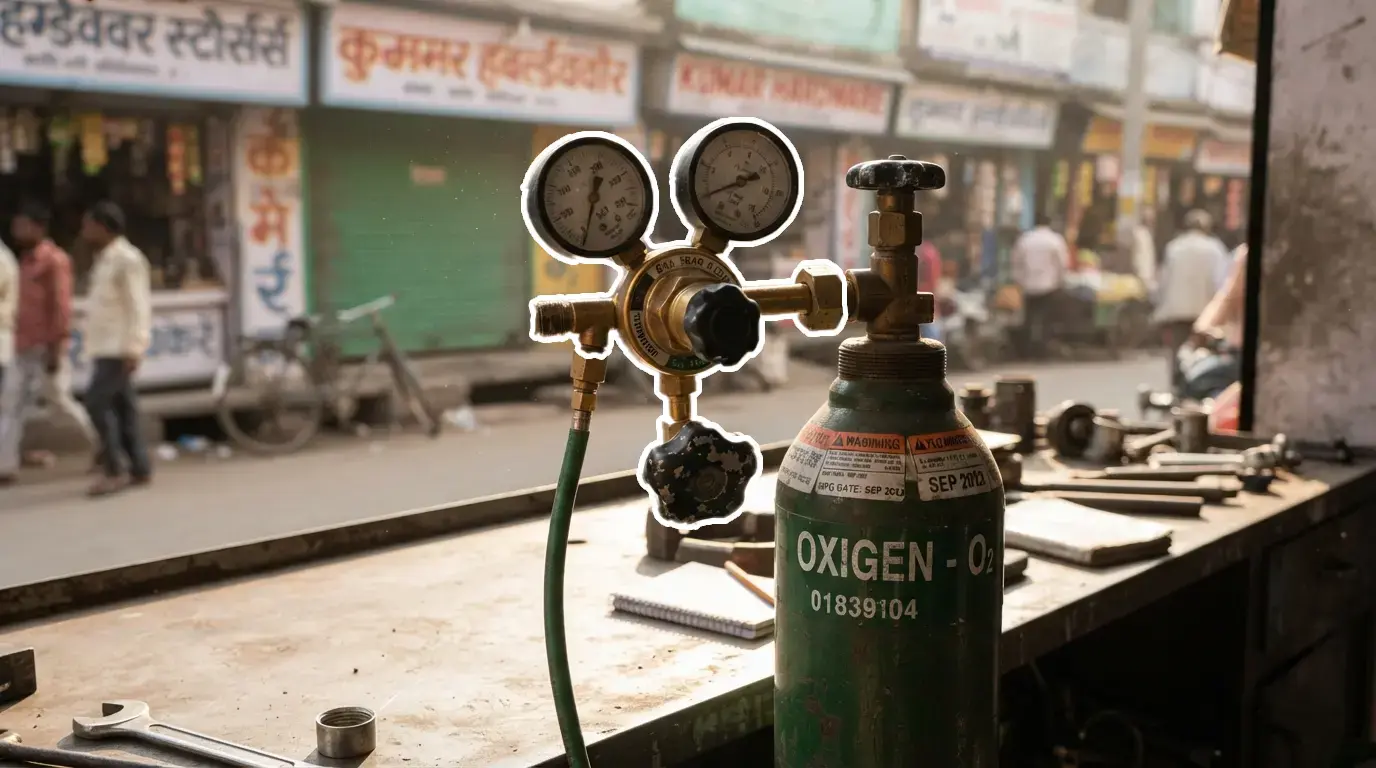
A pressure regulator for your gas cylinder is the difference between steady, safe flow and wasted gas, a sputtering flame, or a dangerous leak. Cylinder pressure is far too high to use directly — a full oxygen or nitrogen cylinder holds around 150 kg/cm² — and the wrong regulator will not just perform poorly, it will not fit safely. When you understand how to match gas, valve, pressure range, and flow type, you buy once and work without surprises.
This guide is for workshop owners, welders, hospital purchase staff, and home-care families in Khagaria and across Bihar who need to pick a regulator that matches their cylinder and their job. You will learn how regulators work, when to choose single-stage versus double-stage, and the five checks that prevent the most common buying mistake — the wrong thread on the right gas.
Why the Wrong Regulator Costs More Than the Right One
A regulator is not an optional accessory. It steps high cylinder pressure down to a stable working pressure and keeps it there as the cylinder empties. If the regulator is built for a different gas, its inlet thread, seat material, and pressure rating will not match your cylinder. Forcing it creates a leak path. Using an oxygen regulator on a CO2 cylinder invites freeze-up and gauge damage. Using an industrial regulator on a medical cylinder bypasses the pin-index safety that prevents exactly that error.
The cost shows up three ways: gas lost through a slow leak, work interrupted by pressure drift on a long cut or a night of oxygen therapy, and safety risk when oil, wrong threads, or a missing non-return valve meets high-pressure oxygen. A matched regulator solves all three. It threads on by hand, holds delivery pressure steady, and lets you set flow by gauge or flowmeter without guessing. The sections below give you a way to buy with confidence, whether you are setting up a new cylinder or replacing a regulator that drifts.
What a Regulator Actually Does: Pressure, Flow and Gauges
A regulator does two jobs at once. First it reduces pressure. Second it holds that reduced pressure steady while cylinder pressure falls.
Three fittings tell you what is happening:
- High-pressure gauge — shows cylinder content. On oxygen, nitrogen, or argon it sweeps from 0 to about 200 kg/cm² (or 0–3000 psi on imported gauges). It tells you how much gas remains, not how much you are using.
- Delivery-pressure gauge — shows the working pressure after reduction, typically 0–10 bar for oxygen cutting, lower for acetylene and LPG. Some regulators replace this gauge with a calibrated flow scale.
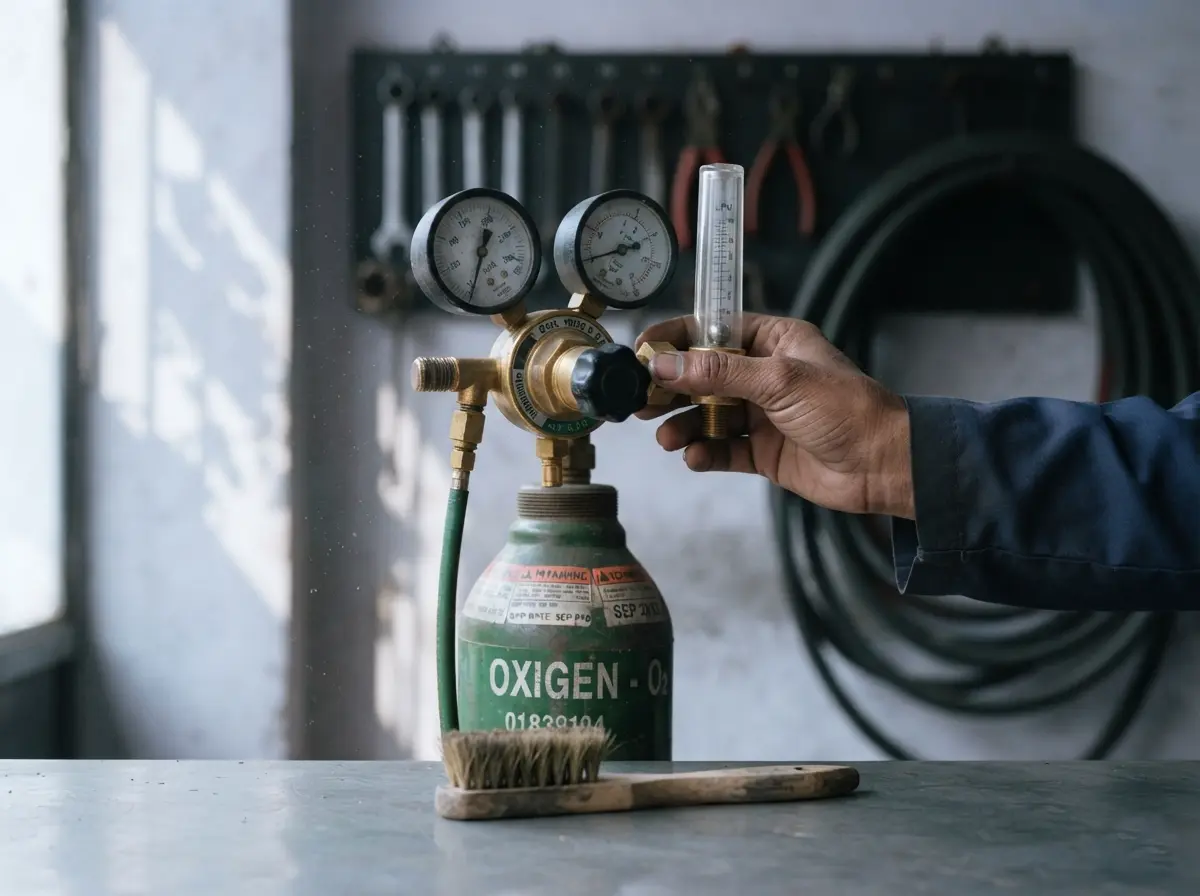
- Flowmeter — shows flow rate, not pressure. Medical flowmeters read in litres per minute (LPM), welding flowmeters in LPM or cubic feet per hour (CFH). A medical cannula often runs at 1–5 LPM. A MIG shielding flow is often 15–40 CFH, TIG around 15–20 CFH. The flowmeter tells you what reaches the torch or the patient; the delivery gauge tells you at what pressure it leaves the regulator.
Confusing the two is a classic error. A gauge reading of 4 bar is not 4 LPM. If your job needs a precise flow, choose a regulator with an integrated flowmeter or a separate flowmeter downstream. Prem Gas Solutions supplies both setups as part of its gas cylinder hardware and accessories in Khagaria, so you can match the regulator to the cylinder before you leave the shop.
Single-Stage vs Double-Stage: Which Do You Need?
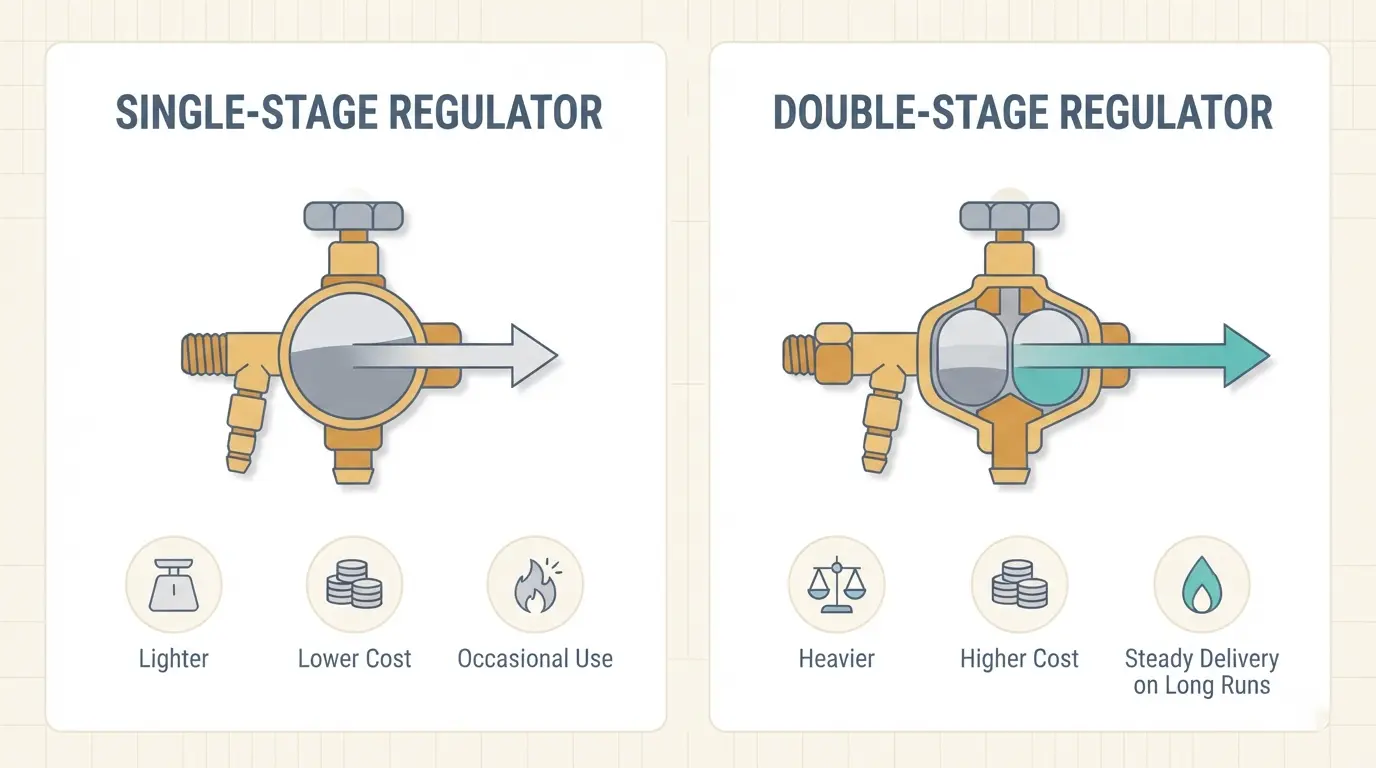
All regulators reduce pressure in stages. The number of stages determines how steady the delivery stays.
- Single-stage regulators use one pressure-reducing stage. They are lighter, simpler, and less expensive. Delivery pressure will rise slightly as cylinder pressure falls, which means you may need to tweak the adjustment knob during a long run. For general workshop use, short cuts, and occasional home oxygen backup, a single-stage is usually enough.
- Double-stage (two-stage) regulators reduce pressure in two steps inside one body. The first stage drops cylinder pressure to an intermediate pressure, the second holds delivery pressure constant even as the cylinder nears empty. They are heavier and cost more, but they hold a steady flame for precision welding and give a constant flow for extended medical use without constant re-adjustment.
| Feature | Single-Stage | Double-Stage |
|---|---|---|
| Delivery stability as cylinder empties | Drifts slightly — periodic adjustment | Very stable — set and hold |
| Weight and size | Lighter, compact | Heavier, larger |
| Cost | Lower | Higher |
| Best for | General fabrication, short jobs, backup oxygen | Precision TIG/MIG, long cuts, continuous duty, high-flow CO2 |
| CO2 freeze resistance | Lower — can freeze at high flow | Higher — manages pressure drop better |
If you run a CO2 cylinder at high draw, consider a CO2-rated regulator with a heated option or a double-stage body. CO2 expands and cools rapidly across the seat, and a standard oxygen regulator can ice up and throttle flow. That freeze-up is covered in detail in our shop-floor guide to common welding equipment problems.
5 Checks Before You Buy a Pressure Regulator for Your Gas Cylinder
Use these five checks in order. They prevent the error that forces most returns — the right pressure rating with the wrong fitting.
1. Name the gas first — regulators are gas-specific
A regulator is engineered for one gas family. The seat material, diaphragm, inlet thread, and outlet pressure range all assume that gas. Oxygen regulators handle high oxidizing pressure and must stay oil-free. Acetylene and LPG regulators work at very low delivery pressures (acetylene often 0–1.5 bar) and use left-hand threads with a notch so a fuel fitting cannot be confused with oxygen. Argon and CO2 regulators for welding often include a flowmeter calibrated to that gas at a given temperature and pressure. Never interchange them. If the label does not name your gas, it is the wrong regulator.
2. Match the inlet to your cylinder valve
Cylinder valves in India follow IS 3196. The thread direction is your first safety check:
- Oxygen, nitrogen, argon, and CO2 cylinder valves typically use right-hand threads.
- Acetylene and LPG use left-hand threads, often with a groove or notch on the nut.
Medical oxygen cylinders add a second safety layer: the pin-index system (IS 7285 reference). Two small pins on the regulator yoke must line up with holes on the cylinder valve. If the pins do not match, the regulator will not seat — that is intentional. This is why an industrial oxygen regulator must never be fitted to a medical cylinder, and vice versa. For a deeper explanation of why the gases themselves differ, read our guide to medical oxygen vs industrial oxygen.
When you shop, bring the cylinder size and valve photo: B-type compact, D-type, E-type, or jumbo. B-type often uses a smaller pin-index valve for home use; jumbo industrial valves use bulk bull-nose fittings. The regulator inlet must match that exact valve, not just the gas name.
3. Match the outlet and delivery range to the job
Delivery range is as important as inlet fitting:
- Oxy-fuel cutting and welding: needs adjustable delivery pressure (often 0–10 bar on oxygen, very low on the fuel side). You set pressure at the regulator and fine-tune flame at the torch.
- Argon shielding (TIG/MIG): needs steady low flow rather than high pressure. Choose a flowmeter regulator calibrated in LPM or CFH. A typical TIG setup wants 15–20 CFH, MIG 15–40 CFH depending on cup and breeze.
- Medical oxygen: needs precise low flow, 0–15 LPM on the flowmeter, with home use commonly at 1–5 LPM through a cannula. The medical regulator-flowmeter is a combined unit that meters flow directly; pressure alone does not tell you dose.
If the regulator shows only a pressure gauge and you need flow control, add a separate flowmeter downstream or choose an integrated regulator-flowmeter from the start.
4. Choose the flowmeter arrangement
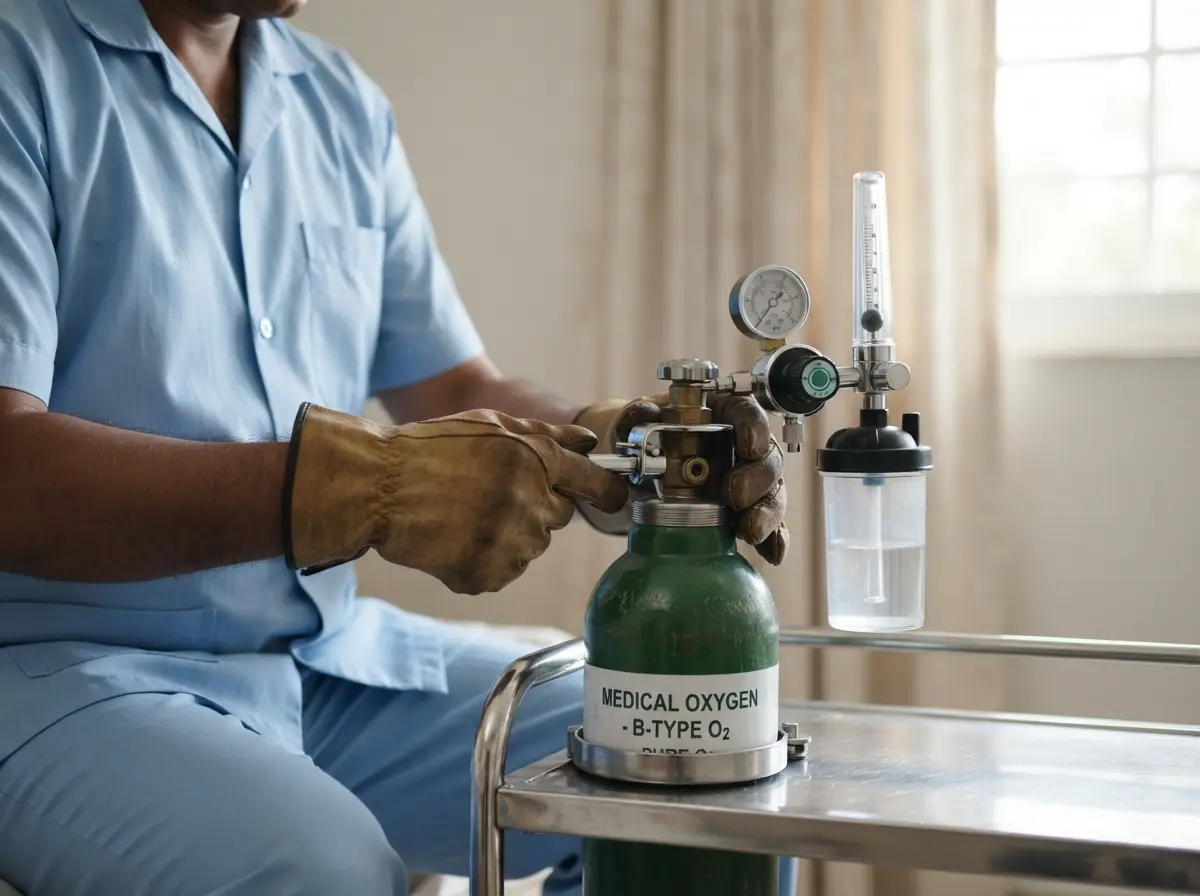
For medical use, the chain is cylinder → regulator with integrated flowmeter → humidifier bottle → tubing → cannula or mask. The humidifier adds moisture for comfort on longer sessions.
For industrial use, the chain is cylinder → regulator → (optional separate flowmeter) → hose → tool or torch. Industrial flowmeters are often bobbin-type or dial-type; medical flowmeters are usually ball-type with a clear LPM scale and barb outlet.
Choose an integrated medical regulator-flowmeter for home oxygen because it is calibrated as one unit and avoids a second joint that could leak. For a workshop that runs both argon and CO2 on different jobs, a separate regulator with interchangeable, gas-calibrated flowmeters can be more economical — just keep the flowmeter labelled to its gas.
5. Match duty cycle and environment — especially for CO2
If you run long beads, purge large vessels, or supply oxygen through a night, a double-stage regulator pays back in stability. For short, occasional work, single-stage is fine.
For CO2 at high flow, cold is the enemy. As high-pressure liquid CO2 flashes to gas across the regulator seat, it absorbs heat and can form frost that restricts flow. A CO2-rated double-stage body, or a heated CO2 regulator, manages this better than a standard single-stage oxygen regulator. If your CO2 regulator ices, flow drops and gauges swing — that is a selection problem, not a refill problem.
Medical Oxygen Regulators vs Industrial Regulators — Never Cross Them
This distinction deserves its own section because mixing them is the most dangerous shortcut.
Medical oxygen regulators use pin-index yokes, are built for low, precise flow, and are often combined with a flowmeter that reads 0–15 LPM and a humidifier bottle. They must remain oil- and grease-free. Oxygen under pressure reacts violently with oil. Even a thin film can ignite. The treating doctor sets the flow rate. The device displays the rate; it never decides it. This is general equipment information and not medical advice.
Industrial oxygen regulators use threaded bull-nose or similar high-pressure inlets, handle higher delivery pressures for cutting, and may show delivery pressure in bar or psi rather than LPM. They are not calibrated for patient flow and lack pin-index safety.
Physically they should not interchange, and where an adapter would force them to, never use it. Keep your medical setup as a matched set — cylinder, medical regulator-flowmeter, humidifier, tubing — and your industrial setup as its own matched set. If you are costing a home setup, our overview of medical oxygen cylinder price in India will help you plan the kit, but always confirm availability and current options with Prem Gas Solutions at 9470017017.
Never use oil, grease, or Teflon tape on the threads of a medical oxygen regulator. If a thread needs sealant to stop leaking, the fitting is damaged or mismatched. Replace it, do not dress it.
How to Fit and Test a Regulator Safely
Fit the regulator the same way every time. Routine prevents the small error that becomes a leak.
- Secure the cylinder. Keep it upright on a trolley or stand, chained, with the safety cap on until you are ready.
- Remove the cap and inspect. Look at the valve outlet and the regulator inlet seat. No dents, no cracked washers, no dirt. Blow a brief puff by cracking the valve for an instant and closing it again to clear dust — stand clear of the outlet.
- Fit by hand first. Offer the regulator to the valve and turn the nut by hand. It should engage smoothly. Then snug with the correct spanner. If you have to force it, stop — the threads are wrong.
- Connect the outlet. Attach hose or flowmeter to the regulator outlet. For welding, fit the flashback arrestor between hose and regulator or torch as the kit instructs. Colour code matters: red for fuel gas, black for oxygen (IS 3933).
- Crack the cylinder valve slowly. Open a quarter turn slowly and watch the high-pressure gauge rise. Then set delivery pressure or flow with the regulator adjustment knob. Never stand in front of the gauge face when opening.
- Bubble-test every joint. Brush leak-detection solution over the valve-regulator joint, regulator outlet, and hose connections. Bubbles mean a leak — close the valve, vent pressure, and remake the joint. Never use a naked flame to find a leak.
- Close and cap when done. Back off the regulator pressure, close the cylinder valve, vent downstream pressure, and refit the safety cap before moving the cylinder.
Oxygen + oil = fire risk under pressure.
Keep hands, spanners, and gauges free of oil and grease whenever you handle oxygen. Store oxygen cylinders away from heat, sparks, and fuel gases, and always follow the cylinder handling steps in our complete guide to gas cylinder accessories: valves, regulators, keys, hoses and equipment.
For transport and storage between uses, keep cylinders upright, capped, and chained on a trolley so the valve stays protected.

Common Mistakes That Waste Gas or Create Danger
- Forcing a thread. If the nut will not turn by hand for the first two threads, it is the wrong regulator. Forcing it deforms the seat and guarantees a leak.
- Using one regulator for every gas. Argon and CO2 flowmeters are calibrated to different densities. Swapping them without recalibration gives a false reading.
- Reading pressure as flow. Setting 4 bar on the delivery gauge is not 4 LPM at the torch or mask. Use a flowmeter where flow matters.
- Ignoring CO2 freeze. A standard single-stage on a cold CO2 cylinder at high flow will ice. Choose a CO2-rated double-stage or heated body.
- Skipping the bubble test. A joint that feels tight can still leak slowly. A 30-second brush of leak solution after every fit is cheaper than a lost fill.
- Oil on oxygen fittings. Even hand cream counts. Keep oxygen threads dry and clean.
- Leaving pressure on the regulator. Back off the adjustment knob and close the cylinder valve when work stops. Leaving it pressurised tires the diaphragm and seat.
Quick Buyer Checklist: Take This to the Shop
Run through this before you pay. It takes two minutes and prevents a second trip.
- Name the gas exactly — oxygen medical vs oxygen industrial matters.
- Note cylinder size and valve type — photo of the valve outlet helps.
- Check inlet thread — right-hand vs left-hand vs pin-index yoke.
- Choose stage — single-stage for occasional use, double-stage for precision or continuous duty.
- Choose gauge vs flowmeter — pressure gauge for cutting, flowmeter (LPM/CFH) for shielding or medical flow.
- Add the safety chain — flashback arrestor or non-return valve where the process needs it, plus leak-detection solution.
- Plan storage — trolley, chain or strap, and safety cap so the cylinder stays upright and the valve stays protected.
- Get a matched quote. Regulators vary by gas, valve, and whether the flowmeter is integrated. Contact Prem Gas Solutions at 9470017017 for current availability in Khagaria.
A well-chosen pressure regulator for your gas cylinder does not draw attention to itself. It threads on without force, the gauges move smoothly, the flow holds steady as the cylinder empties, and every joint passes a bubble test the first time. Buy by gas, by valve, and by job — not by what fits on price alone. Keep the medical and industrial kits separate, keep oxygen fittings dry, and keep the valve key with the cylinder. That is how a cylinder works safely, fill after fill, in a Khagaria workshop or a home beside it.
Need help matching a regulator to a B-type, D-type, or jumbo cylinder? Call Prem Gas Solutions at 9470017017 or chat on WhatsApp and bring your valve photo — the match is faster than any guess.